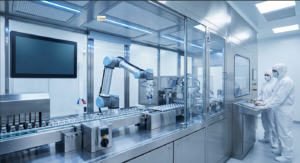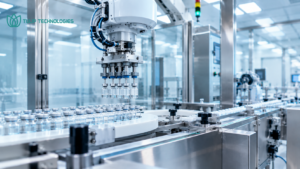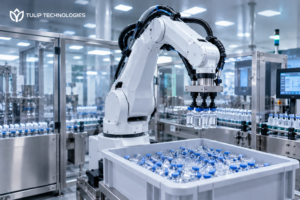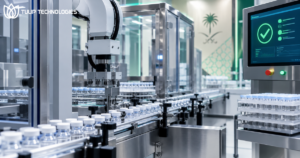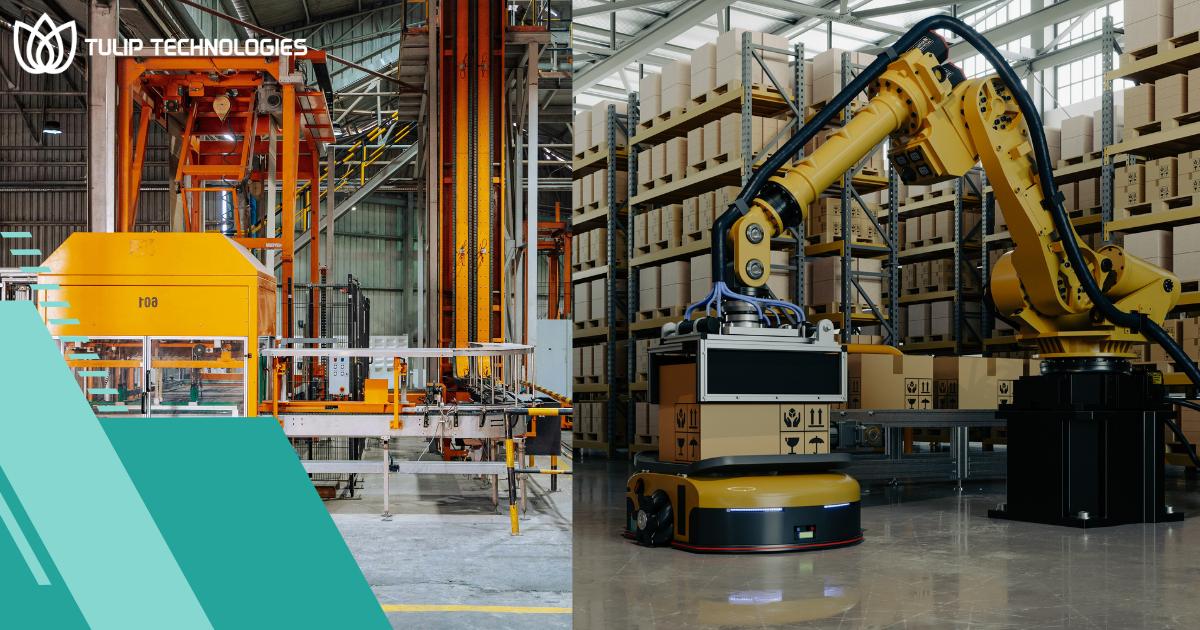
Manufacturers today face growing pressure to stay competitive in fast-changing industries. Rising labor costs, higher customer expectations, global competition, and the demand for faster production with better quality are pushing factories to modernize quickly. Automation has become a practical solution for improving efficiency, reducing downtime, increasing consistency, lowering operational costs, and improving workplace safety. Tulip Technologies helps Saudi factories to modernize operations through robotics, AI-powered industrial vision, Industrial IoT, smart factory automation, and plug-and-play robotic systems.
1. Slow Production Speed
Slow production rate within the factory is an obvious indicator of the need for automation. Machines can perform more quickly and accurately than human workers. Production slowdown means output is decreased and customers’ orders delayed. Automation can help businesses to be faster, on-demand and efficient without adding more workload.
2. Frequent Human Errors
In production, frequent errors result in poor product quality and waste. In manual work, errors are expected, particularly when working for extended periods of time. These errors can be minimized by automation, which is based on a set of instructions. This helps to reduce errors, material wastage and quality uniformity of products, every time!
3. High Labor Costs
An excess expenditure of money by the factory on workers can lead to a loss of profit for the factory. Staffing, training and managing employees is costly. Automation reduces the need for a huge workforce. In the long run, machines are less expensive in the long run to perform repetitive activities. This enables you to save cash and increase the profitability of your business.
4. Low Production Consistency
If the quality of the product varies from one batch to another, it means that the product is not consistent. Customers have come to expect the same level of service throughout. There is a variation that occurs with manual work. Automation guarantees that all products are produced in the same way and have the same quality. This fosters trust and strengthens your brand’s presence within the market.
5. Workplace Safety Issues
When there are safety issues or high accident rates in your factory, it’s a big problem. Humans should not always be at the top of the list to perform dangerous tasks. dangerous tasks. Risky tasks can be safely performed with automation. This decreases injuries, safeguards workers and makes working conditions safer. It also reduces the compensation and insurance expenses of the company.
6. Difficulty Meeting Demand
If the number of customers’ demands is more than the factory’s capacity, it displays a capacity issue. Manual systems have low productivity and efficiency. Automation means constant output without getting tired. It enables your company to expand more quickly, manage big orders, and remain competitive in expanding marketplaces without delays or stress.
7. Poor Data and Monitoring
It’s difficult to improve production performance if you aren’t able to track it properly. Manual systems typically don’t have current data. Automation offers a precise monitoring and reporting system. Production levels, errors and efficiency can be viewed at a glance. It will facilitate decision-making and an ongoing improvement process in your factory.
Which Industries Benefit Most from Automation?
Automation is valuable for many different industries because it saves time and decreases the number of errors that may happen. Robots are used in manufacturing to make products quickly and securely. Its common in healthcare for tests, records, and surgeries for accuracy. Machines are used in agriculture to harvest and plant crops efficiently. Retail involves the use of automated systems to process orders, manage inventory and billing.
Its employed in banking to handle transactions, detect fraud and serve customers. Automated navigation and transportation logistics systems. Automation is employed in testing and updating in IT and software. In general, automation makes the industries work faster, increases the quality, decreases the price, and lets the staff focus on other important tasks easily.
Future of Automation for a Competitive Business Success
Automation will be a significant factor in business success in the future. There will be more use of smart machines, artificial intelligence and robotics to enhance production speed and quality for companies. Workplaces will be more cost-effective, accurate and safe due to automation. Early adoption of automation will give a company an edge.
It will also assist with real-time monitoring of data and improved decision-making. The systems are flexible and will serve both small and large factories. Its not about replacing humans with machines in the coming years, but it will complement humans to make their work easier, faster and more efficient for long-term growth and success.
Conclusion
Summing up, the seven warning signs, i.e., low production, high defects, rising costs, safety risks, low visibility, stronger competitors, and heavy manual work, show automation is now essential. Tulip Technologies improves growth, profit, and Industry 4.0 readiness through automation. The sooner factories adopt it, the faster they gain efficiency and long-term competitiveness.
Frequently Asked Questions
What is the benefit of factory automation on productivity?
Automation saves man-hours, increases production speed, decreases downtime, and enables factories to produce in a uniform manner with consistency.
In future, will automated systems be used in every factory?
No. Modern robotic systems are scalable and can be used in small, medium and large-scale manufacturing plants.
Which industries are most likely to benefit from factory automation?
From FMCG to automotive, metal fabrication, pharmaceuticals, plastics, packaging and logistics, automation is a clear advantage to many industries.
Industrial IoT is useful for factories in what ways?
Industrial IoT offers real-time monitoring, predictive maintenance, energy optimization, production visibility, and other features that help to enhance factory performance.