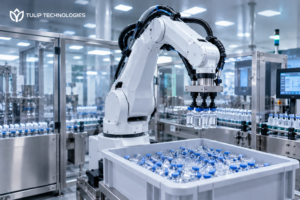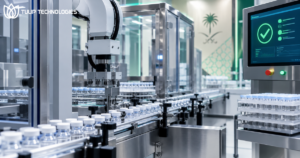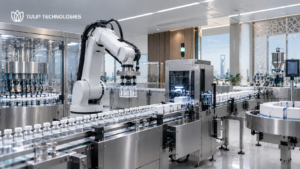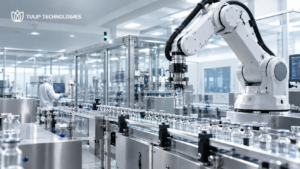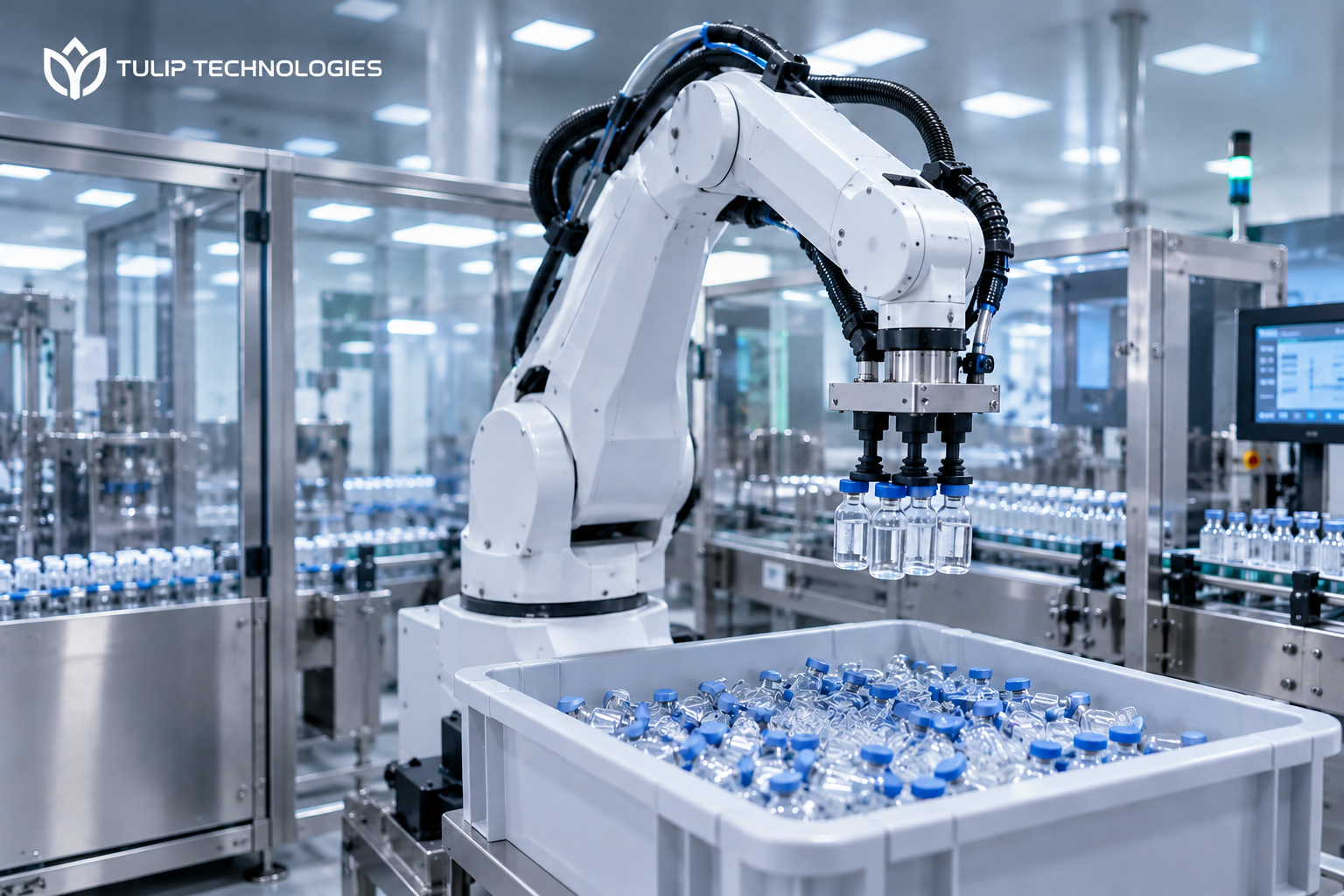
Pharmaceutical companies in Saudi Arabia are facing tough pressure to speed up their manufacturing processes, achieve maximum precision, and comply with strict regulations at the same time. A significant improvement brought by automation in this field is bin picking. This is a process of using robotic equipment and advanced vision technologies to pick loose items like syringes, vials, and bottles from a bin or a tray. With the implementation of smart factory automation as part of the wider industrial vision of the Saudi market, bin picking has gained the status of one of the most effective solutions. It is effective in decreasing the amount of manual labor applied, achieving better consistency, and contributing to cleaner and safer manufacturing processes.
Bin picking is a technique that employs automated robotic arms assisted by advanced software and hardware technologies. It is used to identify, grab, and move individual components from a box containing loosely arranged parts. In the pharmaceutical industry in KSA, it usually involves picking such components as prefilled syringes, vials, or bottles that are mixed together. In contrast to heavy industries where components are mostly opaque and solid, pharmaceutical bin picking means dealing with fragile and transparent parts. This needs to be handled extremely carefully while ensuring compliance with strict sanitary and safety requirements imposed by the industry.
Why Pharmaceutical Bin Picking Is More Complex
Bin picking has been used in manufacturing for many years, but new challenges appear in pharmaceutical applications. Various parts are usually transparent or reflective, making it difficult for camera systems to perceive them correctly. Additionally, the fact that products may be very fragile and require careful handling should also be considered. In addition to everything mentioned above, every single action done by machines should be documented for tracing purposes. All these requirements form the foundation for the advanced machine vision technology in the pharmaceutical bin picking industry.
Main Application Areas in Pharmaceutical Production
Application of bin picking can be observed at different stages of production. It is often used for sorting and separation of vials or syringes before filling. The components may also be used for feeding products into production on packaging lines and for the late customization of medicine and drugs. Bin picking technology can also be helpful during laboratory processes in which small parts or samples should be constantly handled in the same way.
Key Applications on the Production Floor
Improving Accuracy and Reducing Contamination Risk
One of the greatest advantages of bin picking, apart from the reduction of human contact with delicate materials, is the reduced possibility of contamination. This is especially true in situations where sterilized or almost sterilized conditions are in effect. Using robotic methods empowered by an AI system for vision enables consistent picking accuracy and prevents items from being dropped, damaged, or misplaced. Such pinpoint accuracy cannot be achieved when relying on humans for picking, since people are prone to errors, especially over long hours of work or during busy hours of production.
Supporting High Mix, Low Volume Production
Pharmaceutical producers in Saudi Arabia have to deal with small dosages and rapid changes of production series, especially for custom-made medicines. Traditional automation proves ineffective in such situations. However, AI-based bin picking systems manage to adapt seamlessly. For example, AI-based bin picking can be easily reprogrammed to work with a new object without requiring the entire cell to be rebuilt. In this manner, bin picking represents an efficient alternative in situations that require speed and flexibility.
Boosting Traceability and Compliance
In the pharmaceutical industry, it is important to keep accurate records of production processes, which is possible with the help of bin picking technology. It allows for logging each pick, thus keeping a copy of all handling processes, which can be used when checking time of use and other segments of the action chain. This technology helps to simplify audits and the process of making reports. It provides automatic records of every action performed on the production line instead of requiring manual documentation.
Freeing Up Skilled Workers for Higher-Value Tasks
One of the goals of introducing bin picking systems is freeing up workers’ time. One of the main problems of manual picking is that it is monotonous and, thus, tiring. Even though such work requires qualified specialists, they can now focus on quality checking, troubleshooting, and other management tasks instead of spending their precious time on the manual stuffing process.
Bin Picking and the Smart Factory Vision
Bin picking is seldom a stand-alone solution. In a modern smart factory, it links to sensors and production software and quality systems to form a single workflow. Data from every pick can also be used for broader analytics, helping teams identify bottlenecks or quality trends early. As AI and robotic solutions develop, bin picking is becoming a key element of larger automation strategies, not just a standalone tool. This interconnected approach is central to how forward-thinking manufacturers are designing their floors.
Bin Picking and the Saudi Market's Industry Vision
Pharmaceutical manufacturers in Saudi Arabia are taking a keen interest in smart factory automation as the country pushes to develop manufacturing and a more diversified economy. As local manufacturing capacity ramps up, facilities are looking for ways to meet rigorous SFDA standards and still stay competitive with global producers. Bin picking is a natural fit for this shift and presents a practical entry point into robotic solutions to improve quality, reduce contamination risk, and support the broader industry vision of building resilient, technology-driven pharmaceutical manufacturing across the region.
Choosing the Right Bin Picking Solution
Not every bin picking system is suited to pharmaceutical needs. The best solutions rely on reliable 3D vision, gentle gripping technology, and software that can adapt to different components without major rework. Also, it is important to have a system that integrates with existing production lines and quality software, rather than existing as a separate island of automation. With sensitive materials, manufacturers should look for proven performance, strong traceability features, and a track record in regulated environments.
Getting Started with Smart Automation on Tulip
Tulip helps pharmaceutical manufacturers in Saudi Arabia connect robotic solutions like bin picking with real-time data, digital work instructions, and quality tracking, all in one place. Instead of automation working in isolation, Tulip brings it into a single connected view of your production floor. If you are exploring how bin picking and broader automation fit into your smart factory plans, book a demo with Tulip today and see how connected automation can support your production goals.
Frequenty Asked Questions
What types of pharmaceutical components can bin picking systems handle?
Bin picking systems are commonly used for syringes, vials, bottles, and other small components that arrive in bulk or loosely arranged trays.
Does bin picking reduce the need for human workers on the line?
Bin picking reduces the need for repetitive manual sorting, but it doesn’t remove people from the process. Workers shift toward tasks like quality oversight.
Is bin picking suitable for small batch pharmaceutical production?
Yes. AI-powered bin picking systems are well suited for high-mix, low-volume production, since vision software can often be reprogrammed for new components without rebuilding the entire cell.
How does bin picking support GMP and SFDA compliance?
Bin picking systems can automatically log every pick, creating a real-time digital record of production activity. This supports GMP documentation requirements.