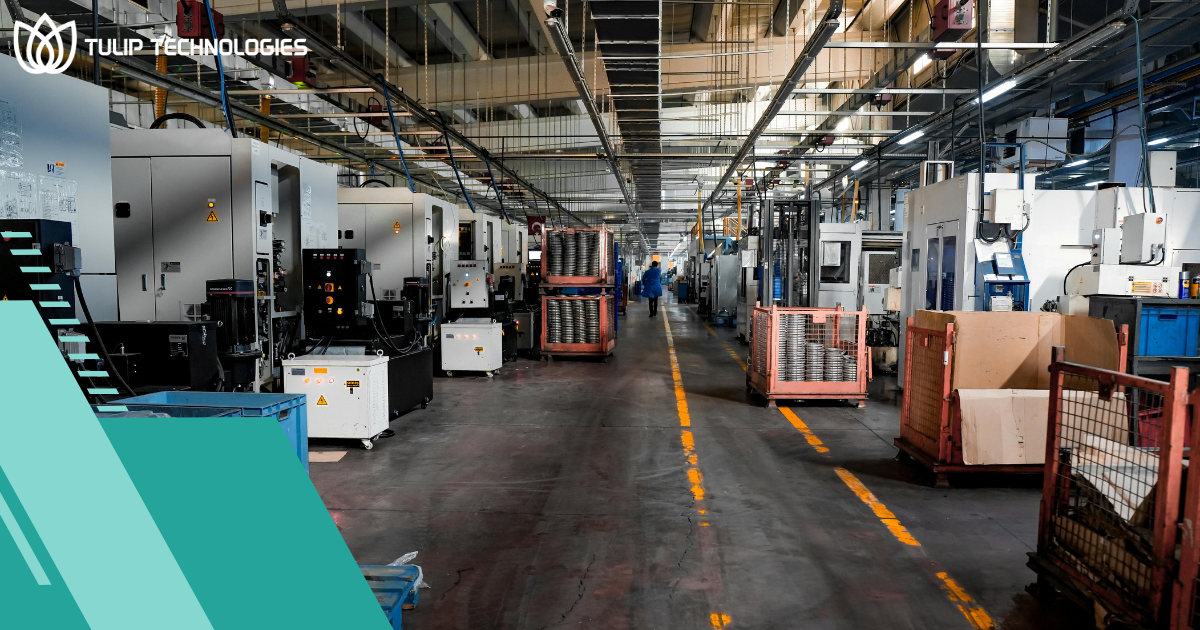
Saudi Arabia is rapidly transforming its manufacturing sector under Vision 2030 by adopting smart factory technologies, automation, robotics, and digital manufacturing systems. Manufacturers across the Kingdom are investing in Industry 4.0 solutions to improve productivity, reduce operational costs, and achieve higher efficiency in competitive global markets. Tulip Technologies is helping industries in KSA accelerate this transformation by delivering advanced robotics, automation, and smart manufacturing solutions that support future-ready factory operations.
Popularity of Smart Factory Solutions in Saudi Arabia
Smart factory solutions are becoming more popular in Saudi Arabia, where a large number of businesses are utilizing digital solutions to enhance manufacturing. Automation, sensors, and data systems are being adopted by factories to lower costs and improve efficiency. The government has also introduced major plans to promote modern manufacturing processes in leading industries such as oil, gas, and construction.
Businesses always look for quicker manufacturing and improved quality assurance for smooth operations. Smart factories also minimize the opportunities for human error and increase safety, due to which more and more companies are investing in Industry 4.0 technologies as awareness expands. The overall demand for smart manufacturing is growing rapidly throughout the country with the growth of the economy and efforts on digital transition.
Saudi Arabia is setting up Industry 4.0 to diversify its economy because the nation has a desire to lessen its reliance on oil. By implementing smart manufacturing, productivity can be enhanced, and global competitiveness can be achieved. Digital technologies are used to help achieve Vision 2030 objectives. In industries, automation decreases the cost and increases efficiency, and establishes new skilled job opportunities for youth.
Data-driven manufacturing leads to better decisions and higher quality of production. Smart factories are taking massive benefits by attracting foreign funds and innovation quickly. By using modern technologies, Saudi Arabia aims to build a strong industrial base that will bolster long-term economic growth and sustainable development at the national level.
Core Technologies Involved in Smart Factory Solutions
IoT and Sensors
IoT and sensors help to collect real-time machine data for all sizes of businesses. Data is used to monitor and identify issues early on where it also enhances efficiency and minimizes downtime. IoT brings devices together in the factories for communication and enhanced control, driving productivity improvements quickly and significantly across operations in Saudi Arabia.
Artificial Intelligence & Machine Learning
AI and machine learning maximize production by analyzing large amounts of factory data. Machine learning helps with product quality assurance and helps to perform quicker decision-making. They save costs and enhance efficiency, boosting the growth of Saudi industries in Industry 4.0.
Robotics and Automation
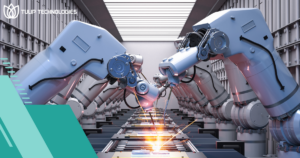
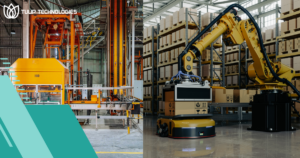
In a factory, robotics and automation lead to increased productivity. Robots do repetitive and heavy jobs, which enhance the production speed and accuracy. It also helps to minimize human error,m workplace hazards, and can be used around the clock and without breaks. They play a crucial role in satisfying high industrial demands while positively contributing to the growth of manufacturing in Saudi Arabia in an effective and secure manner.
Cloud Computing and Digital Twins
The factory information is stored and processed in the cloud, which makes it possible to access it whenever and wherever you may. Digital twins are the virtual models of factories that are used to test and continuously refine processes. Cloud platforms aid collaboration and data sharing to reduce infrastructure costs and boost flexibility to address manufacturing in Saudi Arabia.
Common Barriers to Industry 4.0 Adoption in Saudi Arabia
Industry 4.0 technologies come with a number of obstacles for Saudi Arabia. There are still a lot of companies that use the traditional systems, which makes it difficult to take up for small businesses because of the implementation costs. Lack of qualified personnel working in high-tech fields of industry is also a problem. Some regions lack adequate digital infrastructure, which hinders progress. There are industries that are unaware of the benefits of a smart factory.
Companies also lack confidence due to data security concerns. Integration of old machines with new systems is challenging. The government, however, is devising steps to enhance the training and infrastructure. Though with obstacles, adoption is slowly climbing in most fields, thanks to the country’s robust support and economic modernization efforts, steady progress is being made.
Industries Benefiting Most from Smart Factories in Saudi Arabia
Smart factories have the potential to benefit numerous industries in Saudi Arabia. Automation is a vital solution in the oil and gas industry for efficiency and safety. It also helps manufacturing industries to improve production speed and quality control. Digital systems play a pivotal role in healthcare, enhancing patient care services and helps to manage goods tracking by logistics companies.
Data analytics tools are used by energy companies to make decisions about optimizing their operations. Current industries serve as a basis for the national growth and diversification, helping the diversification of the Saudi economy from dependency on oil under the Vision 2030 programs. Smart manufacturing also provides new jobs for young employees and promotes rapid industrial transformation throughout the country.
The Future of Smart Manufacturing in Saudi Arabia
Saudi Arabia’s smart manufacturing prospects are bright beyond the year 2026. Advancement of Industry 4.0 technologies will spread across a number of factories at a fast pace. More and more AI and robotics will be used. Data will be leveraged by companies for better decision-making. The savvy systems will boost effectiveness and cut costs. Innovation and growth will be fueled by government support.
Workers will be prepared with new skills training programs. Saudi Arabia will be a leader in manufacturing in the region. This will be a complete industrial ecology with widespread connectivity of digital infrastructure, bringing in technology partners and investors from around the world, greatly enhancing the country’s economy and competitiveness today.
Conclusion
We recap challenges manufacturing in Saudi Arabia, like inefficiency, downtime, and quality issues. Smart factory solutions improve productivity, reduce costs, and increase efficiency. Industry 4.0 is now a necessity for global competition. Tulip Technologies is a trusted partner in Saudi Arabia. Start your smart factory transformation journey today.
Frequently Asked Questions
What industries can benefit from smart factory solutions?
Industries including automotive, food processing, logistics, pharmaceuticals, petrochemicals, and packaging can benefit significantly from smart manufacturing technologies.
What role does AI play in smart factories?
AI enables predictive maintenance, automated quality inspection, production optimization, and real-time decision-making in manufacturing operations.
Why are robotics important in modern factories?
Industrial robotics improves production speed, precision, consistency, workplace safety, and operational efficiency while reducing manual labor dependency.