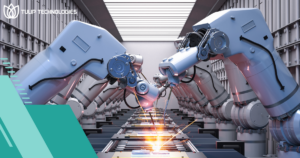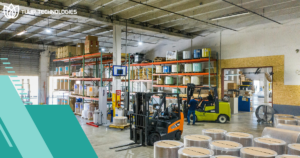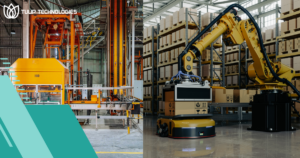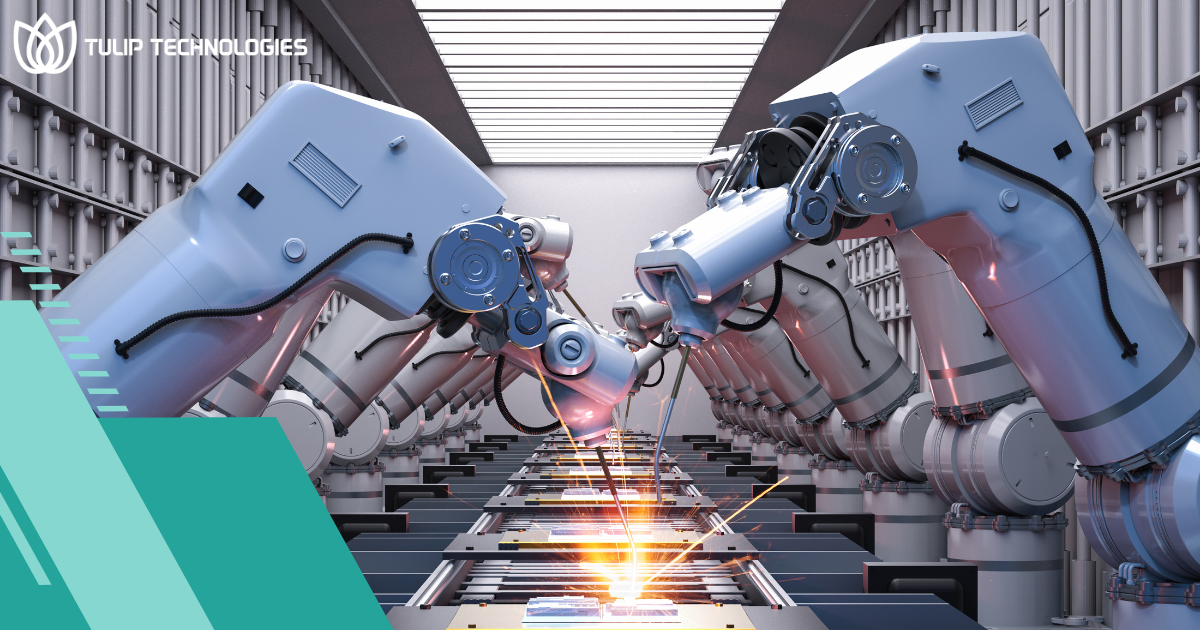
Modern manufacturing is rapidly evolving with automation, robotics, and digital technologies at its core. Factories today focus on higher speed, precision, and cost efficiency, which traditional manual systems often cannot achieve. Industrial robots are now widely used to handle repetitive and complex tasks, improving productivity and reducing human error. This shift is turning traditional production lines into smart manufacturing systems that are more connected, data-driven, and efficient. Tulip Technologies helps industries adopt advanced automation solutions, making it easier for factories to upgrade and stay competitive in modern industrial environments.
Understanding Production Requirements
The first step in choosing industrial robots in the MENA Region is to understand the production requirements for better functionality. The robot tasks, whether they are welding, assembly, packaging, etc., must be clearly identified. This will assist you in selecting the correct size, speed, and power for your manufacturing line and prevent any needless investment.
Payload and Reach Capacity
There are several factors to take into account when choosing an industrial robots, including payload and reach. It is essential to know how much weight the robot will bear and the distance the robot can reach with the arm. In this way, the operation remains smooth, there is a lesser chance of overload, and it also enhances safety and productivity for the daily manufacturing operation.
Speed, Accuracy, and Repeatability
Speed, accuracy, and repeatability are key performance factors in industrial robots. Working at high speed allows for faster production output, and accuracy ensures that work is done correctly. Repeatability ensures reproducibility in each cycle. Overall, these properties play a vital role in maintaining product quality, minimizing errors, and boosting efficiency within automated manufacturing settings.
Integration with Existing Systems
One of the key factors to consider when selecting industrial robots is their ability to integrate with existing systems. Current machines, software, and workflows should function seamlessly with the robot. Appropriate integration decreases downtime, improves communication between systems, and achieves effective production. There is no need for major changes to your current manufacturing setup or processes.
Cost, Maintenance, and Safety
Cost, maintenance, and safety are among the factors that are of importance in choosing industrial robots. Initial investment, maintenance costs, and safety aspects are things to consider. An excellent robot has to be cheap, can be maintained easily, have systems to prevent damage to workers, and have long-term reliability in factories.
Types of Industrial Robots and Their Applications
Articulated robots
The most widely used robots in industrial applications are the articulated robots. They have rotating joints which allow them flexible motion like a human arm. Hence, they are quite common in welding, painting, and assembly operations. These industrial robots are capable of working in a complex environment with high precision work and efficiency applications by means of their flexibility.
SCARA Robots
SCARA robots are made for swift and accurate horizontal operations. They are also typically applied in assembly, pick and place applications, and electronics manufacturing. Hence, they are rigid at the vertical axis, which offers stability and speed in horizontal tasks. This makes them ideal for repetitive production processes where accuracy tasks are required.
Cartesian robots
Cartesian Robots work on 3 linear axes and offer simple and accurate movement. They are commonly used in CNC machines, 3D printing, and pick-and-place applications. The structure enables them to be easily programmed, to operate with high precision, and to function reliably in repetitive industrial applications.
Collaborative robots
Cobots are collaborative robots that are meant to safely work alongside people. They can be built with sensors and safety aspects so that shared workspaces without barriers can be used. Cobots can be programmed with ease, are highly flexible, and have been adopted by numerous small to medium-sized industries to boost productivity and decrease manual work.
Step-by-Step Process to Select the Best Industrial Robots
Identification of Major Tasks
When choosing an industrial robot, be sure to identify the tasks clearly. The person should know the various processes that can be automated by tools, like welding, packaging, or assembly. This helps to identify robot needs and make sure that the robot being selected meets production requirements. This will improve production efficiency and minimize production floor errors, thus effectively increasing overall performance.
Analyze Workload
Carefully analyze the workload and see the amount of work that is to be done by the robot. This includes payload, cycle time, operating conditions, etc. Workload information allows us to pick a robot that will work consistently over long use and never breaks down.
Choose the Best Robot Type
Select the appropriate robot type, depending on application requirements. Various robots, like articulated, SCARA, Cartesian, and collaborative robots, are used for varying purposes. By choosing the right model, you can enhance the overall performance, efficiency, and suitability for your industrial applications and production goals and needs seamlessly.
Focus on the Integration
Test integration with other machines and software systems. These industrial robots should be able to operate with the existing production lines and communication protocols. Reduced downtime, enhanced coordination, and improved efficiency are achieved with proper integration, giving seamless operation without disrupting existing manufacturing workflows or the systems in general.
Assess Cost & Support
Knows how to consider cost/support prior to finalizing the robot. Take into account the price, installation cost, maintenance costs, and technical support. Your production line can operate efficiently and cost-effectively over long periods. This is possible with a reliable supplier assuring long-term performance, easy servicing, and enhanced return on investment.
Future of Industrial Robotics Beyond 2026
The future of industrial robotics after 2026 is definitely bright while participating in different sectors. They will be centered on smarter automation, advanced artificial intelligence, and enhanced human collaboration. Industrial robots will be more intelligent, adaptive, and can learn tasks rapidly. Industries will enhance precision and safety with the use of advanced sensors and machine learning techniques. In the future, collaborative robots will be used together with humans in common work areas.
Cloud will enable remote monitoring and control of production lines. Costs come down, and robots are brought to small businesses. Energy efficiency and sustainability will be enhanced as well, improving the possibility of industries reducing waste and boosting production in the manufacturing fields across the globe in a vastly more efficient and safe way in the future.
Conclusion
Selecting the right industrial robots is important for any manufacturing setup. Poor decisions can cause delays, higher costs, and reduced efficiency. Proper planning and expert guidance improve safety, quality, and performance. Automation partner, Tulip Technologies helps achieve successful industrial transformation. Smart robot selection leads to smarter competitive manufacturing systems.
Frequently Asked Questions
Which robot is best for small manufacturing businesses?
Collaborative robots (cobots) are very common in the small business manufacturing sector due to flexibility and safety.
How do industrial robots improve productivity?
They automate repetitive tasks, reduce errors, and increase speed
Are industrial robots difficult to integrate into existing systems?
It depends on compatibility; expert support simplifies integration
What industries benefit most from industrial robots?
Automotive, electronics, packaging, pharmaceuticals, and logistics benefit the most from industrial robots.