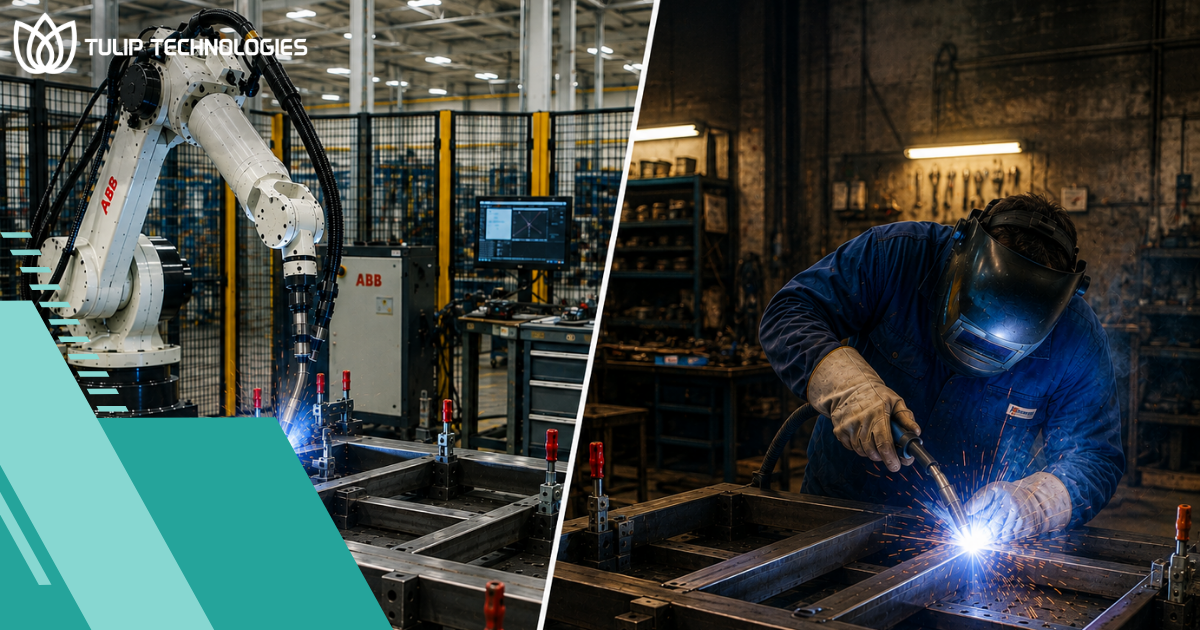
Welding is one of the most important components of the manufacturing process. At some point, every Saudi factory manager has had a similar dilemma. Is it better to go for robots or human welders? This decision has a direct influence on the budget, performance, and the quality of the final product. The answer to this question is not straightforward and varies from case to case because it all depends on the level of production, budget, and type of products manufactured. In this article, we will provide information about the costs of both approaches in greater detail.
What Is Robotic Welding?
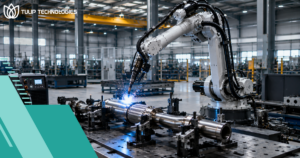
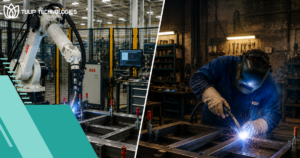
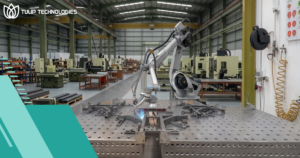
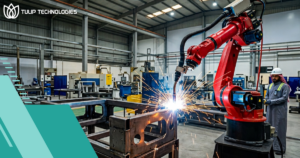
Robotic welding is the process of using machines to weld metal parts. Smart factories in Saudi Arabia are utilizing this technology. It involves the use of a robotic arm that is programmed to cooperate with machines in the course of the operation. In this case, welding is performed automatically without the possibility of human interference. People only program the robot and monitor the work of the machine. Robotic welding is widely used in automotive and large factories. The technology works best in cases of tasks that require a lot of work to be done.
What Is Manual Welding?
In manual welding, a qualified human welder does the job. That means holding the torch and controlling the welding process by hand. The quality of the welds depends on the amount of both expertise and practice the welder has. It works especially well for small amounts of production and for custom work. Manual welding is able to tackle projects with complicated shapes, while robots may not succeed in handling them. It is also cheaper at the start than automated welding. However, the quality will depend significantly on the skills of the welder. Over time, welding quality will be affected by fatigue and a bigger chance for human error.
Robotic Welding vs Manual Welding Comparison
Initial Investment Costs
It requires considerable amounts of money to invest in robotic welding. You need to buy the robot, controller, and safety equipment. Programming and integrating will also involve more expenses. To get a simple robotic welding cell, you will have to pay tens of thousands of dollars. With manual welding, the cost of the investment is much lower because it is enough to buy just a welding machine, torch, and safety equipment. The lower cost of start-up makes manual welding appealing for small businesses.
Labor Costs Over Time
The workforce of manual welding consists of well-trained welders. The costs of hiring workers, training, and medical benefits stack up every month. However, the demand for well-trained welders is growing at the same time. Robotic welding eliminates the need to hire any more welders. The benefit of using welding robots is that one person can operate many robots at the same time. Thus, the overall labor cost decreases significantly over time. In particular, after several years of using robotic welding, the companies often find it cheaper than hiring manual welders despite the initial investment. It is especially true for businesses in Saudi Arabia with large production.
Speed and Production Output
In many cases, welding robots can perform the welding operation faster than a human welder. They never need breaks, rest, or someone to replace them. The machines can keep welding for hours. This results in a very high increase in the daily output of the production plant. Meanwhile, manual welders cannot work with the same efficiency, as human welders tend to take breaks from time to time. Their productivity declines with time.
Quality and Consistency
Robotic welds have a great deal of consistency from weld to weld. The robot must take the same path repeatedly. This results in fewer defects and lower rework costs. Unlike robots, manual welds can differ greatly depending on the welder. Even highly skilled and experienced welders make errors every now and then. Each error requires rework, causes material loss, and delays. Robots provide better quality and lower costs over a larger time period. Robots have created fewer defects, resulting in fewer returns and satisfied consumers.
Material Waste and Efficiency
Robots work with a very precise program and minimize waste as much as possible. They apply the exact amount of filler that is needed for a particular welding task. This allows for less waste than manual processes. By using manual welding methods, welders tend to use more materials. The reason for that is human error. For example, unnecessary welding leads to wasting resources and money.
Maintenance and Downtime
Maintenance of robotic systems is a very important task that must be provided on a regular basis so that these systems are able to operate accurately. The maintenance of robots involves checking their sensors, motors, and software. When maintenance is not planned well, the costs of downtime will be quite high. Maintenance of manual welding equipment is easier and cheaper to do. The repairs of welding equipment and torches are very simple because they consist of just a few machined components. However, the downtime of robots is rare provided that the equipment maintenance is done properly. Maintenance schedules help to avoid unexpected stoppages of production.
Flexibility for Different Projects
Manual welding is more flexible for working on different tasks. A welder must be able to work with objects of different shapes and materials. Manual welding is a perfect solution for companies that constantly change their designs. Robotic systems require reprogramming, which takes some time. This is why robotic welding is not as flexible for small jobs as manual welding. Nevertheless, modern robots are becoming more flexible because of the appearance of easy-to-use software. Nevertheless, when it comes to highly customized jobs, manual welding is still a better option.
Safety and Working Conditions
Welding releases heat, smoke, and bright light that can be harmful to the human welder over a long period of time. Thanks to robotic welding, the need for direct human exposure to these dangers is removed. Thus, safety at work increases substantially. Manual welders are required to use special safety equipment and also have high-quality ventilation. However, this does not guarantee safety in the long run. The fewer injuries that happen at the workplace, the lower the insurance costs will be.
Which Option Costs Less Over Time?
In the case of high-volume production, the costs of robots are lower. The real savings in labor, speed, and quality of work cancel out the high initial expenses. In a few years, businesses get a return on investment. However, in the case of low-volume production where a high level of customization is needed, manual welding will prove cheaper in the long run. Here the initial investment is low, but flexibility is retained. Every company has to calculate its volume of production and decide on the best option for itself.
Making the Right Choice for Your Business
The first step in the process is to examine everything that has to do with production. If production involves large-scale production, using robotic welding technology will lead to better and faster results. However, if production is of a small quantity with unique specifications of the product, manual welding is better as it involves less investment at the start.
Following an assessment, it is also worth considering the financial resources dedicated to the purchase of the welding technology. Robots demand higher expenses as compared to manual welding. However, over time robots become a more economical option to use. Manual welding requires less initial cash investment, but it costs more per unit in the long run. Consulting industry experts is a good idea before any decision-making.
How Technology Bridges the Gap
Sometimes, the application of both options is possible. Robots operate with repetitive welds, while human hands can get the job done when it comes to unique products being manufactured. Modern factories often combine both methods for best results. Robots handle repetitive, high-volume welds efficiently. Humans handle custom, complex, or low-volume parts. This hybrid approach balances cost and flexibility well. Digital tools also help manage both processes smoothly. Real-time tracking shows which method performs better for each job. This data helps businesses make smarter decisions over time. Combining automation with human skill often gives the best overall results.
Track and Optimize Your Welding Operations With Tulip
Choosing between robotic and manual welding is only half the battle. Tracking performance, quality, and costs matters just as much. Tulip helps manufacturers in Saudi Arabia monitor welding operations in real time. It connects machines, workers, and data on one simple platform. You can track cycle times, defect rates, and downtime easily. “BARIQ”, the robotic welding machine from Tulip Technologies, is the perfect solution for automating welding processes in your factory. This helps you decide where robots or manual welders perform best. Tulip turns raw factory floor data into clear, actionable insights. Ready to optimize your welding process? Explore how Tulip can help your team make smarter, cost-effective decisions on the factory floor today.
Frequently Asked Questions
Is robotic welding always cheaper than manual welding?
No. Robotic welding saves money mainly for high-volume, repetitive jobs. For small or custom orders, manual welding can be cheaper overall.
How long does it take for robotic welding to pay off?
Most businesses see return on investment within two to five years. This depends on production volume and labor savings achieved.
Do robotic welders replace human welders completely?
Not usually. Many factories use both. Robots handle repetitive tasks, while humans manage custom or complex welding jobs.
Is manual welding better for small businesses?
Often yes. Manual welding needs less upfront investment. It suits small businesses with lower production volume and varied projects.
Can Tulip help track welding costs and performance?
Yes. Tulip monitors machines and workers in real time. It helps identify inefficiencies and reduce overall welding costs.