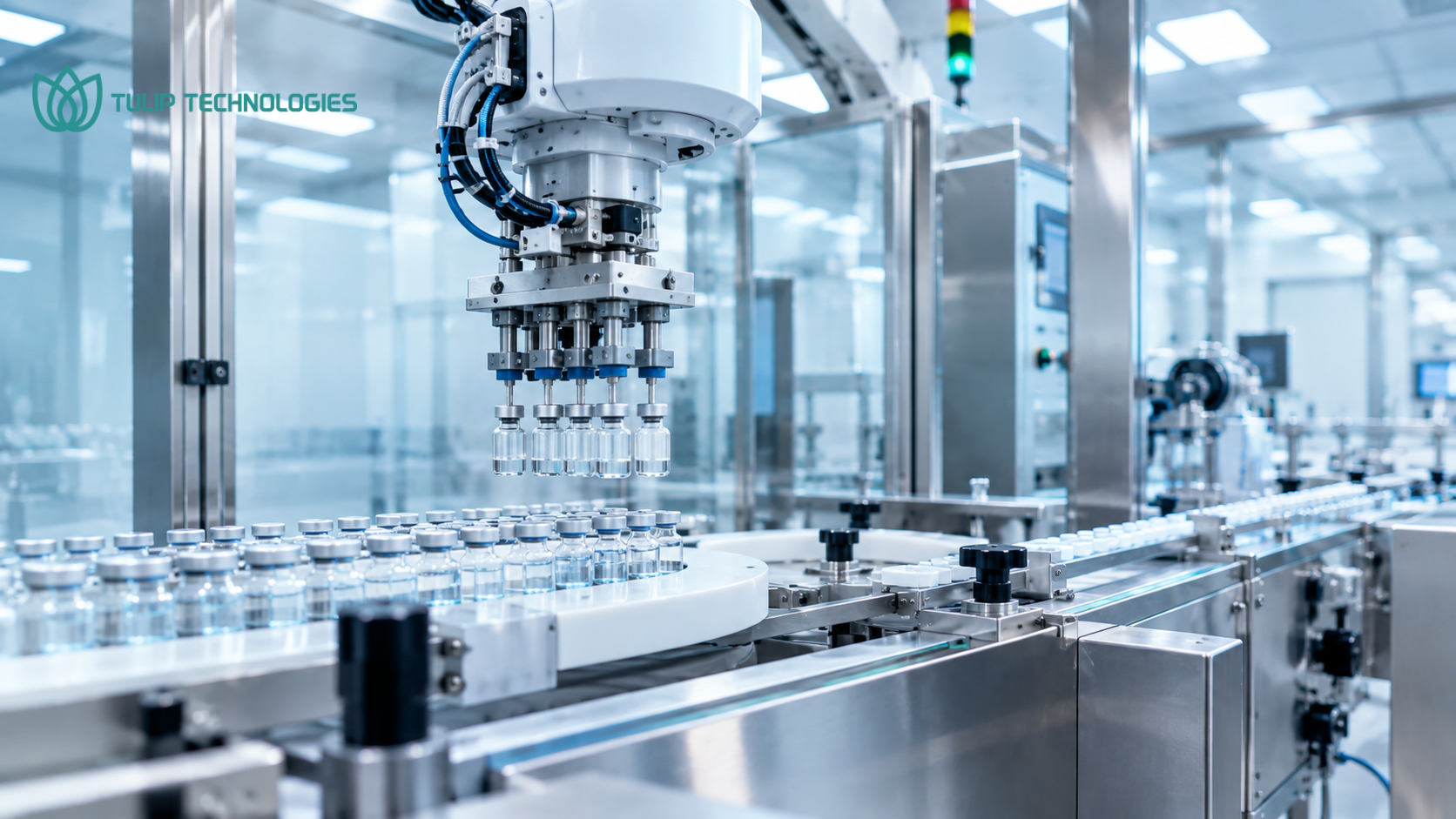
Most pharmaceutical production begins in cleanrooms. This makes maintaining a cleanroom free from contamination one of the biggest challenges presented to pharmaceutical manufacturers in Saudi Arabia. As the demand for pharmaceuticals continues to increase and regulations become stricter. More and more plants will resort to new technology, including robotics and smart factory automation, to maintain product integrity and enhance the volume of production. However, cleanroom automation is not just an application of common tools. It has to be thoroughly planned in terms of its components, classification of understood parts, and the placement of the automation systems. In this article, pharma manufacturers will learn about some of the points manufacturers need to keep in mind when automating cleanroom processes.
Cleanroom Automation Is Not Standard Automation
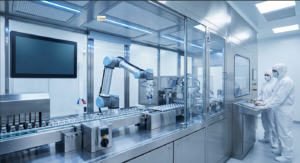
A cleanroom is an enclosure where the presence of dust, microorganisms, and any particles needs to be minimized. Conventional automation and robotics have not been designed for such operations. Cleanroom automation, on the other hand, requires special sealed components, materials that do not produce particles, and oil-free lubrication to prevent contamination. Equipment in cleanrooms can be put to work only after it obtains a cleanliness classification.
What Makes Cleanroom Automation Different
A cleanroom is an enclosure where the presence of dust, microorganisms, and any particles needs to be minimized. Conventional automation and robotics have not been designed for such operations. The process requires special sealed components, materials that do not produce particles, and oil-free lubrication to prevent contamination. Equipment in cleanrooms can be put to work only after it obtains a cleanliness classification. It must prevent human-generated contamination. It must control hyper-sensitive environmental variables like airflow, pressure, and microscopic particles. Artificial intelligence and IoT sensors accumulate, analyze, and act on ecological data in real time. Main technologies used for it include;
- IoT Sensor Networks
- Remote Sensing & Satellite Imagery
- AI Computer Vision
Understanding Cleanroom Classifications
The cleanroom requirements differ from one another. The pharmaceutical industry in Saudi Arabia implements a range of cleanliness requirements from highly sterilized isolators to zones with some minimal restrictions. The higher the classification of the cleanroom, the more limits are imposed on either the contaminants or human intervention. The manufacturers must ensure that their automated systems correspond to the classification of the zone. The wrong choice of equipment for a certain class cleanroom might lead to failure to comply with cleanroom regulations in convertible and other areas.
Reducing Contamination Risk Without Removing People
Though an automation process is often considered as the way to eliminate contamination risk, the number of cleanrooms featuring total automation is insignificant. Even the most sophisticated and automated devices imply that people are needed to perform general maintenance, replace parts, and manipulate the disposable parts. However, automation helps to minimize the degree of interaction between humans and materials to a certain extent.
Choosing the Right Robotic Solutions
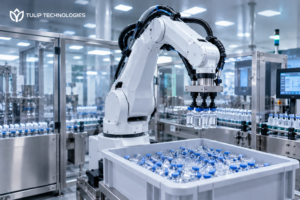
Compared to standard industrial robots, cleanroom robots have some important differences. Using enclosed designs that inhibit the shedding of particles, they are created to resist decontamination processes such as vaporized hydrogen peroxide cleaning. It is critical for manufacturers to choose robots certified for cleanroom usage instead of modifying general-purpose devices. While previously mentioned criteria are important, it is of high importance to choose equipment with great cleanability and good compatibility with decontamination techniques.
Where Automation Helps the Most
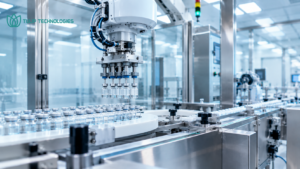
Automation in cleanrooms works best if applied in cases where tasks are performed with high frequency and accuracy. This includes dispensing processes, sorting, assembling kits, simple machine tending, and packaging. Such tasks are marked by high precision and minimized manual operations by an employee that eventually contribute to reduced contamination probability and risk. Instead of automating the entire process, many companies prioritize manufacturing processes based on contamination probability, and automate them first and then proceed to automate the rest of production.
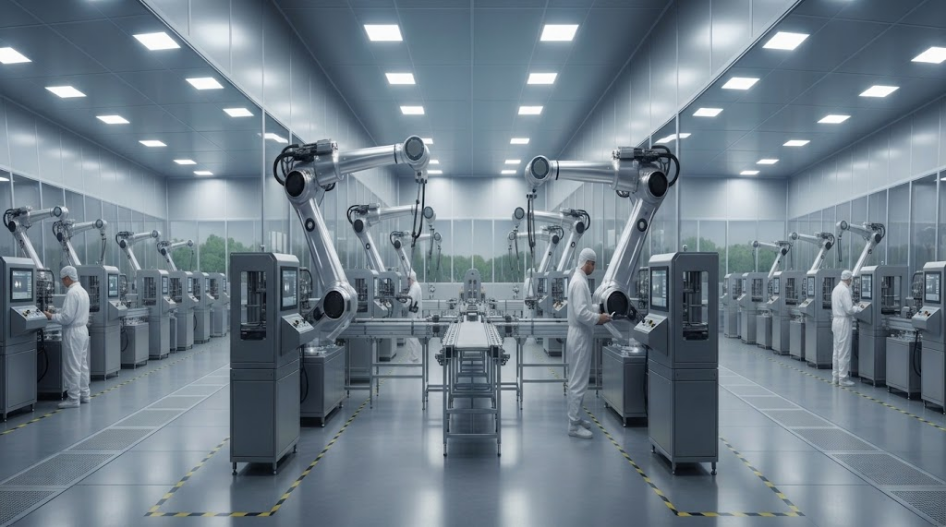
The Growing Role of AI in Cleanroom Operations
AI is mostly contributing to cleanroom automation, especially in vision systems and process supervision. With AI-supported cameras, robots can perform accurate handling of fragile or even oddly shaped parts. AI-based monitoring creates an opportunity to identify unusual occurrences in equipment operation before anything goes wrong. With smart factories becoming reality, AI offers advanced decision-making possibilities as it analyzes manufacturing data in real time, helping to detect quality issues at the earliest stages of faulty production.
Integration with Other Systems
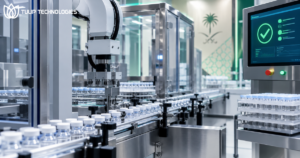
Cleanroom automation becomes more efficient when it is integrated into the activities of the production process rather than regarded as a stand-alone initiative. Robots and supervision systems have to be able to exchange information with quality management software, batch records systems, and production management dashboards. This kind of integration allows for tracking individual production stages and helps to easily identify bottlenecks.
Planning for Maintenance and Changeovers
Routine maintenance is required even in the most automated clean rooms and must be carefully planned. Improper disassembly and reassembly of equipment for cleaning or repairs is a contamination hazard in itself. Manufacturers should provide clear guidelines on how maintenance should be carried out, including specific methods for dealing with single-use components and reassembling machines afterward. If you skip this step, you will lose much of the contamination control benefit that automation is intended to provide.
Tulip Technologies and automation solutions for frontline operations allow pharma manufacturers in Saudi Arabia to integrate cleanroom automation, digital work instructions, and real-time quality data into a single, connected system. Automation is not an isolated island. Tulip provides teams with full visibility into what is happening in the cleanroom and on the wider production floor. Instant alerts flag pollution the moment thresholds are crossed. Predictive models forecast smog, weather events, and resource waste early. It helps shift environmental governance from reactive cleanup to proactive, automated, data-driven decision-making. Planning your next step in cleanroom automation? Book a demo with Tulip today and see how a connected approach can help support your compliance and production goals.
Frequently Asked Questions
Can cleanrooms be fully automated in pharmaceutical manufacturing?
Full automation is rare. Most cleanrooms still require human involvement for maintenance, changeovers, and handling certain components.
What is the difference between standard robots and cleanroom robots?
Cleanroom robots use sealed, encapsulated designs to prevent particle shedding and are built to handle decontamination procedures like vaporized hydrogen peroxide cleaning. General robots are designed for general industries.
Where should manufacturers start when automating a cleanroom?
It is usually best to start with repetitive, high-precision tasks like dispensing, sorting, or packaging, rather than trying to automate an entire cleanroom at once.
How does AI support cleanroom automation?
AI helps robots handle delicate or unusually shaped components more accurately through improved vision systems.
Who is the best company for smart factory automation solutions in Saudi Arabia?
Tulip Technologies is the best company for smart factory automation solutions in Saudi Arabia.