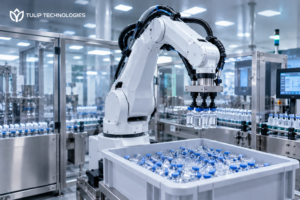
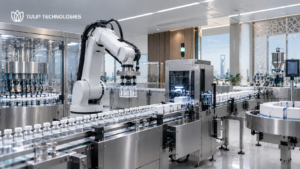
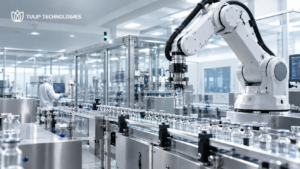
In the manufacturing process, product inspection is a necessary part. Traditional manual inspection is lengthy, unpredictable, and susceptible to errors made by humans. The implementation of AI Industrial Vision Systems provides a solution through the automation of product inspections, resulting in increased speed and precision. Manufacturers can significantly improve their overall production line by integrating Artificial Intelligence into Machine Vision Technology. By doing so, they can substantially lower the amount of waste produced by their manufacturing processes and also increase overall productivity.
AI Industrial Vision Systems consist of a series of technologies, including high-resolution cameras, real-time image processing technology, and the use of machine learning algorithms for automated inspections of products. It automatically detects defects in the manufactured products, measures the dimensions of products going through production, confirms that products are correctly assembled, and tracks the traceability of the products within the manufacturing process. This system performs all of these inspections much more accurately than a human inspector would be able to do so, allowing manufacturers to improve the quality of their products significantly. It also helps in reducing the cost of waste by substantially increasing the efficiency of the production line at the same time.
How AI Vision Improves Automated Inspection
Real-Time Defect Detection
AI Vision Systems provide manufacturers with consistently lower defect rates due to their ability to immediately detect defects as the product moves down an automated line. These AI systems make it possible to evaluate images as the products move down the production line, thus eliminating the time delays experienced with batch samples and manual checks. This rapid feedback loop allows manufacturers to quickly investigate and flag or remove defective products before they spend any time or money on them, before they reach the shelf for consumers.
Consistent Level of Inspection Quality
The systems, unlike human visual inspections and human inspections, do not suffer from distractions, fatigue, and other types of performance variations. They provide consistently high levels of inspection quality during every shift, regardless of how many products are made throughout that day or week. This consistency minimizes variability and eliminates one of the challenges associated with manual inspection systems.
Key Benefits of AI Vision in Manufacturing Inspection
Faster Throughput & Reduced Bottlenecks
Automated vision inspection carries out machine-speed inspections of thousands of items per hour, increasing production and removing bottlenecks experienced with slower, more manual inspections performed by humans. Because FMCG & electronics manufacturers need to continually produce at such high rates of output, this type of inspection will yield greater value to those types of manufacturers and meet their customers’ quality expectations.
Reduced Labor Costs and Dependency
The automation of repetitive inspections allows manufacturers to utilize their skilled employees in more valuable positions, such as addressing issues that arise on the production floor or improving manufacturing processes. This enables manufacturers to have less reliance on human labour for inspection activities and reduces the overall labour cost for inspection, all of which will be critical as the number of workers available in the workforce declines globally.
Better Traceability and Data Insights
In addition to their ability to perform quality inspections, AI vision systems are generating fully documented inspection data as well. This information is beneficial for referencing defective products back to their root cause, revealing patterns of occurrence, and guiding the improvement of manufacturing processes through data analytics. Manufacturers can be more productive by reducing waste and improving the reliability of their products over time.
Reduce Human Error
There are many possibilities of error in manual quality inspections due to human stress and fatigue, biases, and inconsistent decisions based on an individual’s level of experience. AI vision clears the issues associated with these variances, since it will only provide objective visual intelligence. As a result, every part will be objectively judged according to uniform criteria and will thus improve reliability and reduce costly errors.
Tulip Advantage in AI Industrial Vision
At Tulip Technologies, we deliver uniquely customized AI and industrial vision solutions for today’s manufacturing sectors, built on the foundation of Industry 4.0. These advanced vision solutions can be easily integrated with the current industry standards, allowing factories to continuously monitor their quality, increase their production quality, and embrace automated solutions rapidly. Packaging defects, measuring accuracy, and tracking production quality assurance are just a few examples of how Tulip’s vision technology improves the manufacturing process by providing measurable improvements tailored to a company’s production demands.
Custom Industrial Vision Solution
Tulip’s vision products are not off-the-shelf products but provide custom builds that match the needs of individual factories. Products can be configured to fit any specific requirement or application that may arise, including but not limited to high-speed packaging inspection, dimensional checks, assembly verification, and predictive quality results. This tailored build approach ensures that each product performs at optimal inspections for maximum benefit to the company.
Use Cases of AI Vision in Automated Manufacturing
Electronics & Precision Components
In the electronic manufacturing environment, even minute flaws can cause the complete failure of a product. Artificial intelligence vision can inspect very small components (e.g., circuit boards, connectors) to verify they meet all quality and compliance standards within the electronics industry.
Automotive Components Inspection
Automotive products are considered safety-critical components and, as such, require manufacturers to provide flawless quality of all of their automotive parts. AI vision systems are able to check many different types of automotive parts at very high speeds. This allows automotive manufacturers to provide consistent quality and maintain the safety of their products.
Packaging and Label Verification
AI Vision is the best type of system to verify packaging for accuracy. This means that everything from bar codes being legible to labels placed properly and expiration dates is being checked for accuracy. Verifying label accuracy before a product is shipped prevents a manufacturer from shipping incorrectly labeled merchandise and protects the manufacturer’s brand image.
Traceability of Products in Complex Production Lines
The use of AI vision systems in complex multi-stage manufacturing processes ensures the traceability of products throughout the entire production process. By having complete visibility of each product throughout the entire manufacturing process, a manufacturer can more quickly resolve any quality concerns by knowing when and where a quality concern occurred.
Overcoming Traditional Inspection Challenges
Eliminating Subjectivity
The subjective aspects of human inspection are removed with the introduction of AI vision systems. These systems utilize objective standards based on machine learning that help ensure greater accuracy and fairness in decision-making.
No Fatigue from Non-stop Processing
Unlike humans, AI vision systems can run continuously without any degradation in their functionality. The reliability of these machines enables nonstop production to take place and thus supports manufacturing on all days of the week at all times.
Investing Wisely Will Increase Your Competitiveness
Integrating AI industrial vision systems will not only provide a technological upgrade but also help you form a more strategic focus on your manufacturing business. It will provide shorter inspections, lower waste, lower rework associated with inspection processes, greater traceability of products through supply chains, and increased customer satisfaction. This decodes into greater quality and improved scalability and profitability of production.
Why Choose Tulip Technologies
Are you looking to implement smart manufacturing and improve your inspection processes in KSA? You can do so with advanced AI industrial vision systems from Tulip Technologies that are customized for your production line. By providing direct assistance, customizing your installation, and integrating with other Industry 4.0 methods, Tulip allows factories in Saudi Arabia to identify and resolve quality problems accurately and more cost-effectively. To find out how you can begin automating your quality inspections and relying on data for decisions on quality, contact Tulip Technologies to schedule a consultation.
Frequently asked question
What’s AI Industrial Vision?
An AI Industrial Vision System combines cameras and AI to perform visual inspections automatically. It identifies defects in products, measures the dimensions of manufactured items, and guarantees to provide consistent high-quality assurance of output without any human input.
How AI vision benefits manufacturers by improving inspections?
By making real-time analyses of images, it can detect defects more quickly and accurately than human inspectors. It provides fair outcomes and eliminates inspection bottlenecks.
Will AI vision work with my current factory configuration?
Yes. Many AI Vision Systems are developed to work with current production lines and automation systems, resulting in minimal disruption while maximizing existing workflows.
Is AI vision too costly to implement?
The upfront costs of implementing an AI vision system will vary depending on the configuration of the system. The return on the investment can be significant as manufacturers that implement AI Vision have realized greater quality, reduced waste, and reduced labor costs over time.