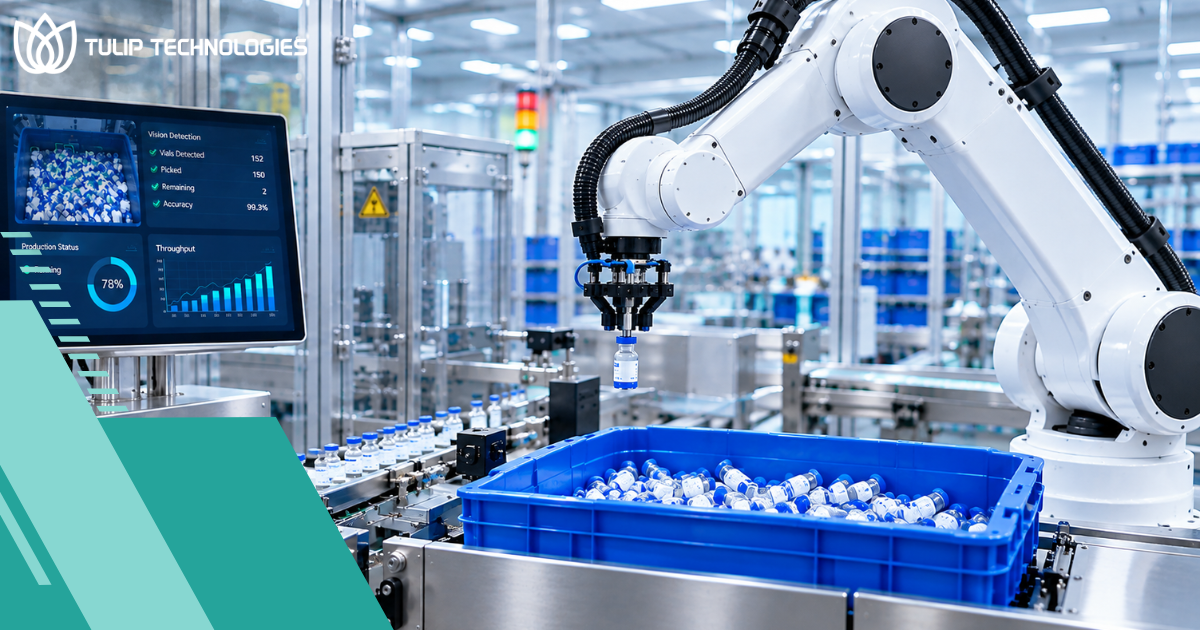
If you are responsible for quality assurance or manufacturing in a pharmaceutical, cosmetic, or medical device production plant in Saudi Arabia, you are aware of the fact that “zero-touch” is more than just a marketing phrase. Tulip creates automated pharmaceutical equipment systems that eliminate human handling in the production process and uses a combination of two systems: SAED and Bin Picking. Together, these approaches allow achieving zero-touch in practice as opposed to just on paper.
What Zero-Touch Production Actually Means in a Pharma Context
Zero-touch does not mean “less automation.” It specifically entails having no physical person at every stage of the process location where the risk of contamination, dosing mistakes, or incorrect labeling arises. In controlled processes, the cycle will proceed in the same way. The auditor can distinguish between controlled and uncontrolled processes based on the amount of data they receive, which is crucial in determining whether a process is controlled.
Facility managers in production units realize that reaching this ideal is way more complicated than it seems. A human is still involved in activities like transferring material from one bin to another or packaging it, although everything else seems fully automated. The technology was created specifically to rectify the already mentioned inconsistency. It starts with analyzing the human touch, and then it substitutes it with machines designed to operate within the realm of good manufacturing practices.
How Bin Picking Eliminates Human Contact at the Most Critical Points
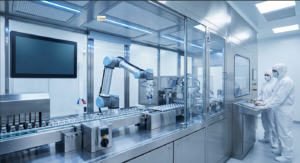
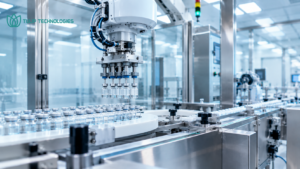
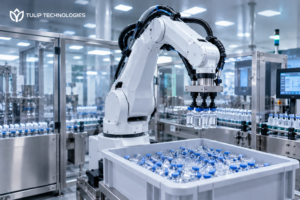
The automated pick-and-place technology known as Bin Picking, by Tulip, ensures that the operator is not involved from the time the material is taken from stock to the moment it is in use. Since the operator is all but eliminated at this stage, there will be minimal chances of contaminating the process, as well as inaccuracies resulting from poor dosing. Moreover, every single process in bin picking is conducted exactly the same, so there will be no differences in picking results caused by fatigue or different human approaches. This technique is essential for pharmaceutical companies in Saudi Arabia that need to ensure that they can respond to any questions related to their operations that arise during the SFDA checks.
Consistency That Satisfies Article Requirements
Every cycle of picking in the process stays the same, ensuring that accuracy of position does not vary in the 8-hour shift, unlike manual management. This strongly aligns with SFDA/GMP regulations about reproducibility and validation of processes since inspectors ask that you prove that you obtained the same results all the time and not just most of the time. As a result, pharmaceutical lines that switched to automation in their bin picking processes have experienced less frequent deviation reports in terms of material handling.
Sterile Handling Without an Operator's Hand
The fact that no glove hands will contact the sterile handling process stage excludes one form of contamination pathway. This could only be managed by manual standard operating procedures but was impossible for the latter to eliminate. The difference is that designing out the risk is a matter of structural engineering, not procedural engineering. This means that quality assurance people will have to read their audit trail in a different way.
- This is Tulip’s solution to automated packaging execution of sterile processes. Given that this system is designed to be cleanroom-compatible, all of its materials, movements, and footprints were selected according to the existing particulate control and contamination requirements in your facility.
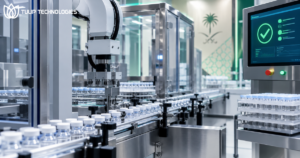
- SAED has been developed for use in GMP-compliant settings. This will tell you what it implies in practice. The system is designed in such a way that the users do not need to make or edit complex programming texts, eliminating possible causes of operator errors in packaging systems. Instructions are given once, checked, processed, and then repeated over and over again. This is the very reason that SAED packaging can be used in environments with heavy auditing procedures where every detail has to be justified.
- Since the operations performed by the system do not change throughout the process, batch documents generated within SAED are the same for all the cycles. The system eliminates small changes that appear in the process over time, replacing them with a standardized procedure. For production units in the context of frequent SFDA checks, this feature of SAED brings the greatest benefit.
From Assessment to Deployment: What the Process Looks Like with Tulip
The process of adopting reliable zero-touch production in Saudi Arabia doesn’t start with equipment installation. It commences with SIRI Assessment to identify all the risk areas associated with each stage of the production process: which stages use manual handling, which stages are prone to contamination, and which are most likely to draw the auditors’ interest. It provides you with an important document instead of a promotion detailing what needs to be changed and why.
Solution Design and Installation
After the assessment is finalized, Tulip develops a specific solution instead of a standard one for you. The installation process takes one day on average and doesn’t stop the production process, which is another concern of most companies that consider transitioning to zero-touch production in Saudi Arabia as advised by the authorities.
Training and Ongoing Support
Once the installation is complete, your staff receives practical instruction, so they never fall behind in terms of new skills when the system gets implemented. Tulip then keeps supporting the operations to ensure that there is always help available, in case there is a problem during the next SFDA check-up, and people are already familiar with the equipment. This is how zero-touch manufacturing can be launched in Saudi Arabia without causing disruptions.
Is Your Facility Ready for Zero-Touch Automation?
It is important to recognize that not every business requires the usage of this technology immediately. Bin Picking and SAED are practices that prove to be beneficial to businesses that are classified with the highest contamination risk levels. These are businesses that are engaged in high-volume production and that perform a large number of audits where human intervention is a major source of risk. In case a company operates with low volumes of production and low frequency of audits, gradual implementation of the technology can be a better strategy than an immediate extensive transition.
In case the organization is under pressure due to SFDA audits and still relies on manual processes, this could be considered the first step in achieving the goal. Something that can be implemented at present rather than in the future. Using GMP compliant robots Saudi Arabia inspectors will be able to confirm the suitability of these devices. This technology is completely ready for implementation.
Ready to Build a Zero-Touch Production Line?
For pharmaceutical, medical device, and cosmetics manufacturers across the Saudi market, the path to zero-touch production does not need to be a leap of faith. It starts with data about your own facility, not assumptions borrowed from another industry. Book a consultation with Tulip’s pharma automation team, and we will start with a SIRI Assessment to map your exact risk points. The same assessment referenced throughout this article is applied to your specific line, your specific audit history, and your specific compliance targets. Book a Consultation with Tulip’s Pharma Automation Team Today.
Frequently Asked Questions
What does “zero-touch” mean?
No human contact during critical steps like material transfer, sterile handling, and packaging. Every cycle is identical and fully documented for audit traceability.
How is Bin Picking different from standard pick-and-place robots?
It is built specifically for pharma. Validated against GMP and pharma-specific standards, not adapted from general manufacturing.
Does SAED require a cleanroom redesign?
No. It is built to work within your existing particulate and airflow standards. Most integrations need no structural changes.
How long does installation take, and will it stop production?
About one day, scheduled around your production line so it does not stop. Training and support start right after setup.