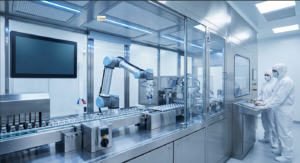
It is not easy to manage any type of factory in Saudi Arabia. There are broken machines. The staff may also be overwhelmed with tiredness. Orders often accumulate quickly in any factory. What the manager expects is clear: maximum production with less waste. This is the point where factory optimization comes in. Working hard is absolutely unnecessary, and working smart is what is needed. This article presents and analyzes ten sustainable practices that will help you increase productivity, decrease downtime, and make your production floor more effective. Let’s start.
Factory optimization techniques apply root approaches like lean manufacturing, automation, and predictive maintenance to reduce waste and boost output. Key practices include cutting workflow waste, upgrading digital monitoring, and improving maintenance routines. Adopt smart factory automation, robotics solutions, and smart tools to increase production volume and product quality.
Automate Repetitive Manual Tasks
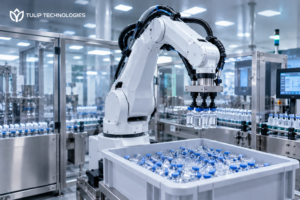
Manual functions slow down the productivity of all operations. However, we also have to deal with mistakes caused by manual operations. When processes are automated, processing of orders becomes easier, and workers get an opportunity to do more important things. Robots don’t need tiresome rest and work at the same speed all day. It means that the cost of production has decreased because of automation. To achieve the best results, one has to start with the most problematic process and then grow from there.
Implement Lean Manufacturing Principles
Lean manufacturing efficiency is focused on reducing waste: reducing time waste, cutting material waste, and cutting motion waste. The goal is clear: creating more value with fewer resources. Methods like 5S, Kaizen, and value stream mapping can help find inefficiencies. Once the inefficiencies have been found, it is time to solve them. Lean is not a one-time solution; it is an attitude. Companies that get used to lean thinking are continuously improving. They are linked with lean manufacturing automation.
Use Predictive Maintenance for Machines
Machine breakdowns negatively change productivity. Machines can put whole production lines on pause. Predictive maintenance is a method of using sensors and data to prevent breakdowns from actually happening. Instead of fixing the machines after they break down, they fix them in time. This way, unplanned downtime is reduced to a minimum. It also extends the life of the equipment and cuts down repair expenses. Factories that move to predictive maintenance suffer fewer surprises.
Optimize Factory Floor Layout
Poor floor layouts waste time. Employees have to walk too much. Materials are in bad places. Products have to move back and forth for no reason. A good layout clusters processes that are similar. This way, the transport distance is minimized, and production is optimized. It is important to think about the material flow first and then to locate machines according to the flow. Even minor changes to the layout can save lots of time on each cycle of production.
Train and Upskill Your Workforce
Automated systems are essential, but human resources are even more significant. An effective employee commits fewer errors and achieves better productivity. Regular training allows personnel to stay updated with skills and innovations. The effectiveness of cross-training is undeniable as workers who are acquainted with several processes serve as substitutes in case of the absence of their coworkers. Relying on the employees is always beneficial as experienced staff members act confidently and contribute to higher productivity.
Use Real-Time Production Monitoring
Without visibility, there is nothing to improve. Real-time monitoring means real-time access to factory operations. The dashboard displays the machine status, the output of the whole shop, and quality problems at the same time, which means that issues can be resolved very early and production is not stopped for a whole shift. It allows managers to make decisions based on real information as opposed to guessing.
Standardize Work Instructions
When workers don’t carry out operations uniformly, they get unexpected results. When each worker does it differently, quality suffers. Standardized instructions help all workers follow the same procedures. It helps speed up training and brings huge advantages as it is easier to identify troublesome points.
Improve Inventory and Supply Chain Management
Running out of materials signifies an immediate halt in production processes. On the contrary, surplus inventory is a waste of money and space. Resources have to be managed smartly in order to be stocked properly and on time. On time logistics and proper information exchange with suppliers help reduce delays. Everything runs smoothly. If the warehouse is maintained well, then the process will not stop.
Utilize IoT and Smart Sensors.
Smart sensors are able to turn facilities into a channel of data transmission. IoT devices are able to monitor temperature, vibrations, speed, etc. Therefore, any issues will be noticed before the situation worsens. Moreover, they will show where it is inefficient to manufacture. Factories with IoT technologies are aware of the situation every day, so they can make better decisions.
Pay Attention to Safety and Ergonomics
Safety is efficiency. When someone is hurt, production slows down, and morale suffers. Good ergonomic conditions reduce tiredness and thus boost output and production optimization. By making a few small changes for example, using mobile desks and proper lifting machines, your facility will become more efficient.
Ready to put these strategies into action to have manufacturing efficiency? Do you want to implement these strategies? With the no-code solutions from Tulip Technologies, manufacturers in KSA can transform their production floor digitally. Manage their production in real-time, standardize instructions for work processes, and troubleshoot problems before they happen. Tulip Technologies eliminates issues at any factory, regardless of its size. Adopt smart factory automation for production optimization.
Frequently Asked Questions
What is factory productivity optimization?
It means improving how a factory uses time, labor, and materials to produce more output with less waste and cost.
How can small factories improve productivity affordably?
Start with simple lean techniques, standardized instructions, and basic training. These cost little but bring quick, noticeable results.
What role does technology play in factory optimization?
Technology like IoT sensors and monitoring software gives real-time data. This helps spot problems early and speeds up decision-making.
How long does it take to see results?
Small changes like layout fixes can show results in weeks for manufacturing efficiency. Bigger shifts like automation may take a few months to fully pay off.