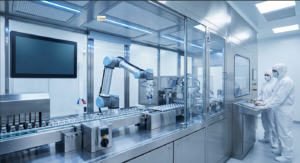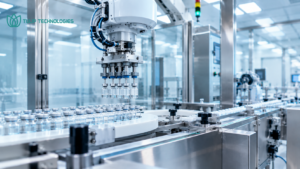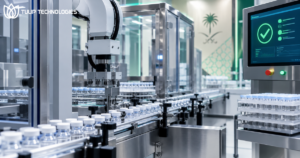
The manufacturing of pharmaceuticals in Saudi Arabia comes with a set of strict regulations, known as Good Manufacturing Practice (GMP). Compliance with these regulations is challenging as humans can make errors. Paperwork can be misplaced, and files can be illegible. Here is where automation comes in. GMP automation involves the employment of technology, machinery, and computer programs to handle the job. It assures quality. It follows each step. It preserves accurate records automatically. Thus, it improves the process of manufacturing in Saudi factories and increases safety. It also simplifies audits as the information is processed in advance.
GMP automation means utilizing digital technologies, sensors, software, and networked machines to perform and record manufacturing processes as required under Good Manufacturing Practices. Unlike manual methods that use paper logs for recording and checking, automated systems automatically capture data, monitor compliance with standard operating procedures, and alert managers about deviations in operations. This technology covers the spectrum of activities from automatic weighing and blending to environmental monitoring and electronic batch record keeping. Thus, it is all about making sure that technology meets the industry compliance regulations while practicing it so operators are decongested from the burden of manual work.
Why is GMP automation important for Pharmaceutical companies?
Pharmaceutical manufacturing in KSA does not tolerate mistakes that may harm the patients and lead to costly recalls and regulatory penalties. Hence, the importance of GMP automation, which connects the dots between paper-based processes and technological accuracy demanded by regulators. It helps eliminate variances in performance brought by shift change or by different operators, faster production processes, and creation of proper documentation for inspections. Thus, apart from making compliance possible, automation allows for increased efficiency, reduced waste, and the ability of professionals to escape tedious work for documentation purposes.
How Automation Supports GMP Compliance
The three aspects that are maintained through GMP compliance are consistency, control, and traceability. These features can be provided through automation. The operators are guided by automated workflows in their validated procedures, meaning that all process steps are followed and mistakes that come with skipping any procedure are avoided. This is achieved through sensors that collect parameter changes continuously within the production site, which alert the personnel whenever some deviations take place. All the timelines, periods, and signatures are captured by the automation system, automatically providing the complete trace record of the process without possible errors of human entry. This real-time presence within the whole process allows the managers to spot existing issues before they result in unacceptable deviations. It gives an opportunity to make fruitful inspections by regulatory bodies.
Key GMP Automation Technologies Used in Pharma
Modern pharma facilities in Saudi Arabia rely on a mix of interconnected technologies to maintain GMP standards. Common examples include:
- Manufacturing Execution Systems (MES) for guiding and tracking production steps
- SCADA and PLC systems for controlling equipment and processes
- Electronic Batch Records (EBR) replacing paper batch documentation
- Environmental monitoring sensors for temperature, humidity, and air quality
- Robotics and automated guided vehicles for material handling
- Laboratory Information Management Systems (LIMS) for quality testing data
Together, these technologies create a connected ecosystem where data flows automatically between the shop floor and quality systems.
How Automated Systems Reduce Human Error
Manual data entry as well as paper-based processes are two of the main causes of deviations in pharmaceutical production. Automation can help minimize this risk by taking tasks away from the human eyes of operators. With digital work instructions, errors can be avoided since operators follow every step exactly as needed, while built-in sensors stop the process in case of any related deviations. Automatic data collection resolves the issue of errors not only coming from operators’ side, but also stemming from data transfer from paper to electronic database. Since this method prevents transcription errors, it makes it possible to avoid any discrepancies.
The Role of Automation in Contamination Control
Contamination control is among the most critical areas of pharmaceutical manufacturing, and it is here that automation can be of great help. Automated environmental monitoring systems provide the necessary tracking of the particle counts, pressure sensor readings, and microbial counts in the cleanroom. Moreover, robotic systems as well as isolation technologies enhance the process of contamination control, as they reduce human presence in the critical zones and thus eliminate the risk of contamination, which is the effect of operator behavior and actions. In addition, due to automated cleaning and sterilization cycles, the repetitiveness of the process is ensured, and there is no guessing in the operations.
How Data Logging Supports GMP Requirements
According to the GMP standards, every production batch has to be tested to ensure that it meets the highest industry standard, keeping all records of the production as accurate, complete, and tamper-resistant. The automation tools for data logging are equipped to collect the parameters and actions taking place during production as soon as they happen. This allows for making adjustments in the batch production without long wait times experienced when using manual logbooks. The process of data logging has provided a reliable audit trail that makes sure data integrity requirements of the ALCOA+ principles are met (Attributable, Legible, Contemporaneous, Original, Accurate). The importance of automated data logging can be seen during inspections. The records can be retrieved immediately by the quality team, thus making tracing faster.
Automated Monitoring and Processing in Pharma
Automated process monitoring and control systems constantly keep and adjust the production technology parameters to ensure that they remain within the validated levels. Sensors installed on equipment monitor fluctuations of parameters such as temperature, pressure, pH, and flow speed that enable the control system to work properly without any human intervention. It provides the system with the possibility to monitor and adjust the process without depending on manual operation.
How Robotics Improve Pharmaceutical Manufacturing
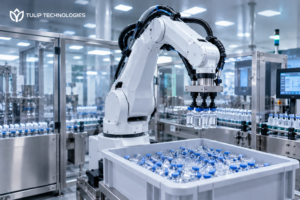
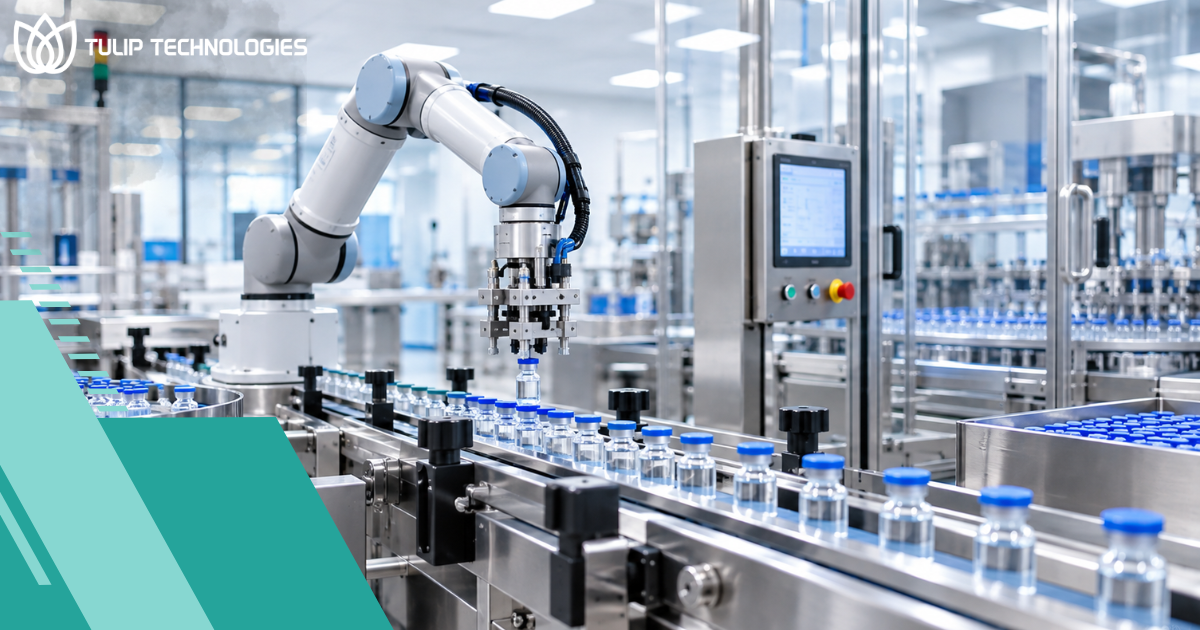
Robots inherently provide accuracy, speed, and consistency in performing tasks that are typically hard for humans to perform efficiently in large numbers. Pharmaceutical manufacturing makes extensive use of robots, which automate tasks like filling, capping, and packaging of containers along with material transfers. Robots contribute to reducing the risk of product contamination due to the reduced involvement of humans in sterility processes, which is crucial for aseptic manufacturing. It also helps increase worker safety as robots can work in hostile and high-security conditions and take care of dangerous substances. As labor costs increase and the need for accuracy in processes is taken seriously. Using robotic technologies has become an effective solution for both increasing outputs and ensuring compliance in Saudi manufacturing facilities.
GMP Automation and Electronic Batch Records
Electronic Batch Records are a clear example of implementing GMP automation. Instead of using paper batch records, which are prone to mistakes and can be incompletely filled out in illegible handwriting, EBR-based systems assist operators performing manufacturing operations and collecting data automatically. The application of built-in logic allows the elimination of enforcing rules forbidding actions such as skipping steps or performing them out of the established order. The process relying on the use of electronic signatures makes it possible to receive valid evidence and timestamps.
Challenges of Implementing GMP Automation
Even though there are many advantages of implementing GMP automation, the whole process can be quite complicated. A million-dollar investment is required for hardware, software, and system validation, especially for small businesses. Merging an automated model with legacy devices and existing IT infrastructure usually requires custom engineering work. Validation of these systems is a time-consuming task since they must be demonstrated to work exactly as planned. And there is also a problem with change management. Training professionals to believe in new digital systems and use them correctly takes time. The selected vendor matters, for not every automation system is compliant with pharma requirements.
Best Practices for GMP-Compliant Pharmaceutical Automation
Getting automation right requires more than just installing new technology. Companies that succeed tend to follow a few consistent practices:
- Start with a risk-based approach, prioritizing the highest-impact processes first
- Choose systems built for 21 CFR Part 11 and data integrity compliance
- Involve quality and validation teams early, not after implementation
- Design for interoperability so systems can share data across the facility
- Train operators thoroughly and gather their feedback during rollout
- Validate incrementally, testing each system before scaling further
Get Best GMP-Compliant Pharmaceutical Automation by Tulip
Tulip has created a robotic system in Saudi Arabia for a manufacturing system that has the capability to facilitate the various processes that need to be followed by pharmaceutical companies. The use of ‘no code’ robots allows the operations or quality teams to develop the needed work instructions and electronic batch records. The data integrity provided by Tulip robotic solutions and software adds to the advantage of using this technology because having such data is an important requirement in the world today. With the help of this advanced automation system, companies do not need to invest in costly technologies anymore in order to make sure that the product is manufactured by fulfilling vigilance standards. Tulip Ready to Deploy Robot Machines are the best for automation in pharmaceutical companies in Saudi Arabia.
Conclusion
The state-of-the-art robotics and automation system provided by Tulip helps pharmaceutical manufacturers in Saudi Arabia build effective and streamlined manufacturing processes that will deliver products of desirable quality. It should also be pointed out that the implementation of the new system is not free of challenges for the companies. However, it is important to keep in mind that the new approach to production management includes smart automation and improved product quality.
Frequently Asked Questions
Is GMP automation mandatory for pharmaceutical companies?
Automation itself is not mandatory, but meeting GMP data integrity and traceability expectations at scale is very difficult without it.
Does automation replace the need for human oversight?
No. Automation handles repetitive, data-heavy tasks, but trained personnel still oversee processes and review exceptions. They make judgment calls that automated systems are not designed to make.
How long does it take to validate a GMP automation system?
Timelines vary widely depending on system complexity, but validation takes some months, covering installation, operational, and performance qualification stages.
What is the difference between GMP automation and general manufacturing automation?
GMP automation is specifically designed to meet regulatory requirements like data integrity, electronic signatures, and audit trails.