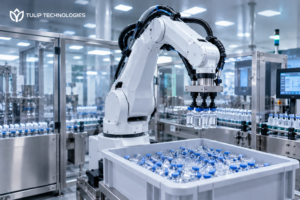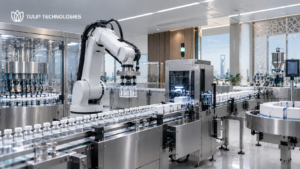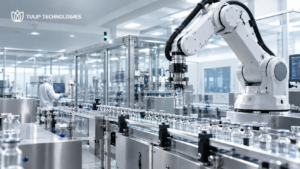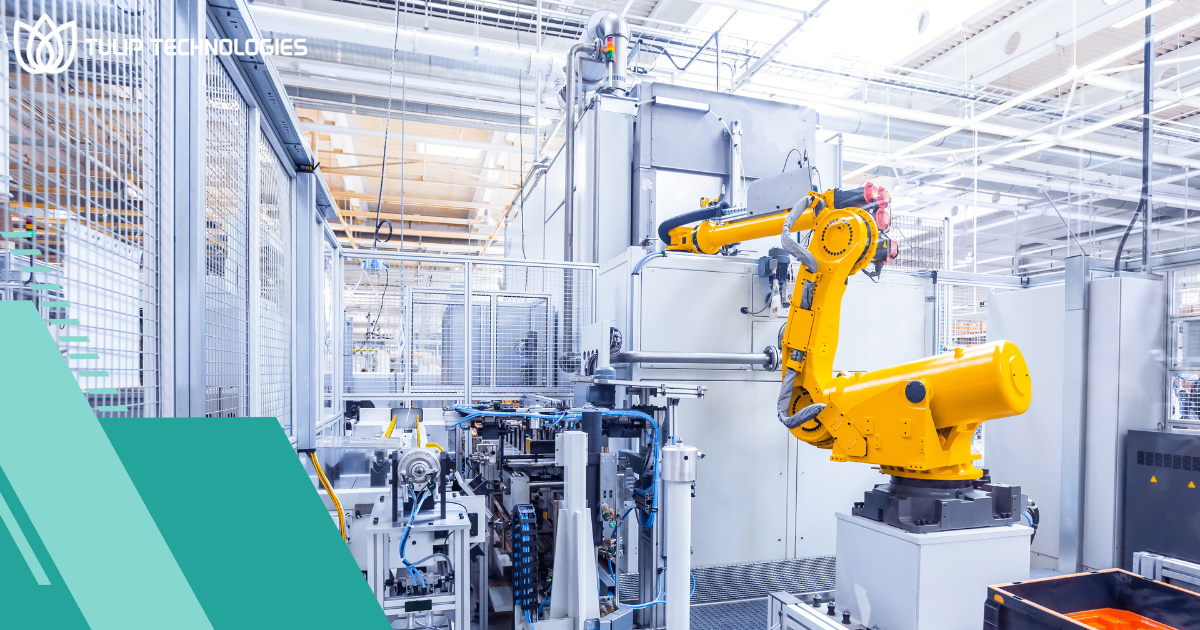
The GCC region Saudi Arabia, UAE, Qatar, Oman, Bahrain, and Kuwait is quickly becoming a strong manufacturing hub for Robotics. These countries are moving away from oil-based economies and building diverse industrial sectors. Industry 4.0 and robotics are driving this transformation by improving efficiency and productivity. Today, manufacturers must adopt automation to stay competitive in a fast-changing market. Tulip Technologies supports this journey by helping businesses integrate robotics, AI, and smart factory solutions.
This guide explains how robotics is transforming manufacturing within the GCC region.
Improved Production Speed
Robots can manufacture products at a much higher rate than a human workforce. They can operate around the clock without stopping, which boosts production. It is helpful for large-scale production objectives in GCC countries. The quick turnaround also enables businesses to respond to the increasing demand in the market and remain competitive in a global market.
Better Product Quality
Robots execute tasks in a very precise and consistent manner. This minimizes the possibility of human errors and defects in products. GCC manufacturers apply robotics to ensure that products are manufactured to a high standard of quality. Therefore, the customers are assured of obtaining reliable products, leading to enhanced brand reputation and customer satisfaction.
Enhanced Worker Safety
Robots are capable of performing hazardous tasks, such as heavy lifting or working in extreme environments. This helps to lower the risk of workplace injury. Companies are increasingly prioritizing worker safety, and robotics is one of the major aspects of a safer workplace in the GCC region.
Over Time Cost Efficiency
While the high initial robot cost, lower long-term labor and operational costs. They also minimize waste and rework. These savings can be passed on to GCC manufacturers, leading to more efficient and financially viable operations in the long run.
Flexibility in Manufacturing
Robots of today can be easily programmed to undertake other tasks. This enables the rapid changeover between products at factories. This flexibility is utilized by GCC industries to meet customers’ demands in the automotive and electronics industry sectors.
Assistance for Smart Factories
Robotics is a key part of smart manufacturing systems. Robots can communicate with other robots and software. This is supporting digital transformation efforts and accelerating the progress towards Industry 4.0 in the GCC, thereby enhancing overall efficiency and decision-making for companies.
Common Challenges in Implementing Robotics
The high initial investment required for the robots is one of the main issues. The challenge of generating skilled labor for the operation and maintenance of robotic systems is another challenge for many companies. It can be difficult and time-consuming to integrate with other systems. Change may be resisted by some employees because of the fear of losing their jobs.
Also, frequent repairs and upgrades are necessary to ensure that robots operate effectively. Low local expertise and reliance on foreign technology providers can also be a barrier to adoption in the GCC region. Proper planning, training, and support are needed to overcome these challenges.
Significant Real-World Use Cases in the GCC
The use of robots is already revolutionizing various sectors in the GCC region, with promising and impactful applications. Robotic systems are used in the automotive industry to improve manufacturing efficiency, accuracy, and safety, for example, in assembly tasks, welding, and other automated processes.
Robots are used in electronics manufacturing to ensure high precision in component placement, reducing the risk of errors and defects in sensitive electronics. Automation is also being adopted across the food and beverage sector to package, sort and inspect products to ensure that companies meet the mandatory standards regarding hygiene.
Robots are used in oil, gas and petrochemicals to undertake inspection and maintenance work in hazardous environments. This will help in further minimising the risk of human workers in these locations. Smart warehousing and logistics, meanwhile, result in faster and more efficient supply chain operations across the region, thanks to the autonomous robots used to manage inventory, complete orders and handle materials.
Why Traditional Manufacturing Models Are No Longer Sustainable?
The traditional manufacturing approach is not sustainable in the fast-changing industrial world. Manual processes are not scalable, efficient or accurate, and pose a risk to businesses competing on the market. Meanwhile, customer demands for quick delivery and faster speed are creating a need for flexibility in production systems.
In addition, environmental issues and more demanding sustainability regulations put manufacturers under further pressure to be more efficient and cleaner in their manufacturing. Furthermore, legacy systems are not equipped to deliver timely information and insights for rapid decision-making. With increased competition worldwide, firms employing legacy models find it difficult to be nimble, cost-efficient, and responsive to market requirements.
How Tulip Technologies Helps GCC Manufacturers?
Tulip Technologies is a technology solution provider that supports the GCC manufacturers with easy-to-use technology solutions for robotics and automation. They assist in the design, implementation, and management of robotic systems for companies. They have platforms that let companies monitor the production data in real time, enhancing decision-making.
Tulip Technologies also provides training and support, ensuring that workers are able to adapt to new technologies more easily. Their integration capabilities help minimize downtime and expenses while simplifying how they work with current systems. Their solutions enable manufacturers to boost productivity, quality and safety and assist them in their digital transformation journeys throughout the GCC region.
Conclusion
To sum up, Manufacturing in the GCC is moving from traditional methods to robotics-driven smart factories. Robotics is no longer optional; it is essential to stay competitive. With strong growth potential, the GCC can become a global manufacturing leader. Tulip Technologies helps businesses adopt robotics and Industry 4.0 solutions with confidence.
Frequently Asked Questions
Is robotics expensive for small manufacturers?
Initial costs can be high, but long-term savings and flexible solutions make it viable even for SMEs.
How does robotics improve product quality?
Robots ensure precision, consistency, and eliminate human error in repetitive tasks.
What is the role of AI in manufacturing robotics?
AI enables predictive maintenance, real-time analytics, and intelligent decision-making.
Can robotics replace human jobs in the GCC?
Robotics shifts jobs rather than eliminates them, creating demand for skilled technical roles.