Modern manufacturing in KSA has experienced significant changes in how quality assurance is done. Vision sensors have introduced new levels of speed, accuracy, and reliability to the quality assurance process by leveraging AI to provide real-time inspections of product quality, enabling the immediate identification of defects. Incorporating vision sensors on smart manufacturing lines and automated robotic systems minimizes the potential for human errors and production waste. By utilizing these sensors for all aspects of quality assurance, manufacturers can ensure that every product meets industry-standard quality requirements, which supports an overall improvement in production speed, efficiency, accuracy, and reliability.
Vision sensors collect and analyze visual data from your manufacturing environment for use in Industrial Automation. They integrate cameras, processors, and artificial intelligence algorithms to perform various functions such as inspecting products, guiding machines, and verifying processes. They automate many of these tasks, including defect detection, measurement, and positioning. Tulip Technologies industrial vision solutions integrate with robotics systems in factories in Saudi Arabia. This system provides quicker and more accurate inspections, facilitating the implementation of smart manufacturing and data-driven manufacturing systems.
Role of Vision Sensors in AI-Driven Quality Control
Vision sensors are the primary data source in AI-driven quality control automation, with the ability to capture high-resolution images. They use Machine Learning (ML) models to detect anomalies, deviations, or any irregularities in manufactured goods. That means you can compare manufactured items quickly and safely, across multiple locations. Added benefits include continuous visibility of all aspects of your operation, including Quality Control and process improvement.
Vision Sensors vs Traditional Inspection Methods
Where traditional manual inspection is bound by human limits (fatigue, mistakes, inconsistencies), vision sensors provide manufacturers with the ability to continuously capture images of products at speed, accuracy, and consistency. They allow manufacturers to create valuable information that helps them optimize their processes, and allow manufacturers to utilize their most talented inspectors to create extraordinary results. As such, vision-based inspections have become very popular in Industrial Standards 4.0.
How Vision Sensors Detect Defects with High Precision
Smart Production Lines with Vision Sensors
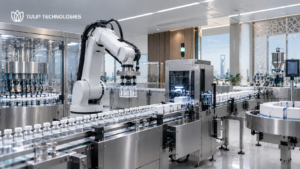
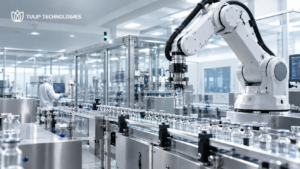
Vision sensors help create smart manufacturing. In addition to enabling smart production lines, they have become an integral part of the continuous, automated inspection process during manufacturing. The sensors generate visual images in real time for identifying product defects, checking the accuracy of assembly, and maintaining a consistent production result from batch to batch. When integrated with AI technology, they help make data-driven decisions about production processes. This provides a more efficient way of producing and allows for consistent, high-quality products across many types of production systems in large-scale manufacturing facilities.
Integration of Vision Sensors with Industrial Robots
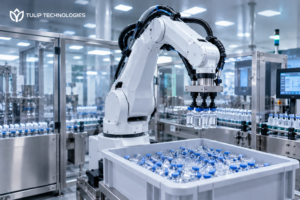
Vision sensors allow for fine guidance, object recognition, and adaptive motion control used in industry. Robots can thus accurately determine the orientation of products and are able to detect differences, as well as check the quality of products through automated means, while performing industrial operations. These developments make possible the improvement of inspection accuracy, decrease cycle time, and provide flexible automation capabilities. Vision-guided robotics automates the quality control processes and boosts overall productivity while reducing the amount of time spent conducting manual inspection work.
Real-Time Quality Monitoring Using Vision Sensor Data
Vision sensors give constant feedback to manufacturers with live full-colour images and associated production data. The real-time quality assurance (QA) enables manufacturers to identify any defects in their products quickly and correct any variations in their processes. It also prevents defective products from reaching customers. This proactive method enables manufacturers to decrease wastage, limit the need for rework, and ensure a consistent quality output while still being able to produce products at high rates in fully automated manufacturing environments.
Reducing Human Error and Inspection Costs
Automated quality checks using machine vision greatly reduce the chances that human error could introduce variations to the quality inspection process. While manual inspections can introduce errors and fatigue, machine-automated vision sensors provide consistent, objective evaluations for every production run, thereby providing an accurate basis for evaluating the quality of manufactured products. Minimizing manual labour needs means that less time is spent performing inspections, which helps to lower operational costs. Additionally, automating inspections allows manufacturers to produce more products and gives quality assurance teams more time to focus on the optimization of the process.
Predictive Quality and Process Optimization
The ability of AI-driven visual sensors utilizes the analysis of both historical and real-time inspection data to reveal pattern recognition and the ability to forecast product quality problems prior to occurrence based on predictive analytics. By predictive capabilities, manufacturers have the ability to optimize their processes and proactively adjust their parameters. They achieve consistent product quality through sustained monitoring and analysis of manufactured products. Ultimately, predictive quality assurance reduces models of unplanned production downtime and increases manufacturing yield. It supports opportunities for continuous improvement initiatives within intelligent manufacturing settings.
Adaptive Quality Control Through AI Learning
AI-based visual sensors keep learning along with new production data, inspection data, production results, etc. This allows them to adapt when the process or product changes or when new types of defects occur. This constantly evolving learning process allows for increased accuracy in inspections and decreased false rejections. Ultimately, this adaptive quality assurance supports manufacturers in achieving consistent quality in an ever-changing, dynamic manufacturing environment. Adaptive Quality Control allows manufacturers to maintain their high standards of quality and produce multiple product lines with flexible manufacturing practices.
Automated Compliance & Standard Enforcement
Vision technologies enable the automatic enforcement of both regulatory and Quality Standards. An AI-powered inspection system uses vision data to confirm that every product’s dimensions, labeling, surface quality, and assembly accuracy meet all specified criteria for compliance with industry standards. Vision technology provides companies with the ability to confirm that their entire product portfolio is compliant. Automated compliance is designed to significantly reduce audit risk and avoid expensive recalls. This provides traceable inspection documentation, which enhances the Quality Oversight of regulated manufacturing.
Early Defect Detection of Defects
Early detection of product defects through vision systems saves time and cost by stopping defective products from moving through the production process. Reducing the number of rejected products also reduces the time and materials needed to fix problems in the future. When manufacturers are able to identify issues as they occur, they can increase their manufacturing output and protect downstream manufacturing processes and investments. A proactive approach helps to lessen quality-related costs and increases the efficiency of manufacturing.
Future of Quality Control with AI Vision and Smart Factories
This technology ensures the integration of vision sensors with robotic systems and predictive analytics platforms to ensure automation for better decision-making. This strategy helps to optimize production lines with better strategies to deliver high-quality production. This advanced technological solution is considered the best for operational resilience in the next-generation manufacturing ecosystem. It ensures high quality assurance.
AI-Powered Vision Systems for Intelligent Quality Control
Tulip Technologies is revolutionizing refined manufacturing with robotic solutions to deliver high-grade, advanced AI-powered vision systems to change the traditional production method in Saudi Arabia. This technology is promoting smart manufacturing with an automated quality control system. Robotics, automation, and artificial intelligence sensor systems are bringing extraordinary and ingenious ideas to boost production performance in Saudi factories. We utilize machine learning and high-precision imaging that enable manufacturers to achieve consistent product quality. The amazing vision system detects surface defects, dimensional deviations, and assembly errors in real time. It masterfully helps the factories to produce with accuracy and quality assurance.
Smart Production Enablement with Robotic Vision Integration
Tulip Technologies industrial vision solutions integrate with robotics systems for smart production lines. Our vision-guided sensors boost automation and adaptability for responses on the factory floor. This has tremendously helped to minimize manual intervention with better process visibility. Our solution offers robotic vision integration and promotes smart production and smart factories in Saudi Arabia, thus continuously improving operational procedures with predictive quality control.
Upgrade Your Quality Control with AI Vision Sensors
Ready to stop defects, reduce inspection costs, and future-proof your manufacturing operations in KSA? Partner with Tulip Technologies to deploy AI-driven industrial vision systems tailored to your production needs in Saudi Arabia. Contact us today to schedule a consultation and start your journey toward smarter, more reliable quality control.
Frequently asked question
What are vision sensors?
Vision sensors collect and analyze visual data from manufacturing facilities to boost industrial automation processes.
How do vision sensors improve quality control in production?
They integrated cameras, processors, and artificial intelligence algorithms to perform different functions to inspect products and their specifications and verify the process of quality assurance. They capture high-resolution images and use machine learning models to detect irregularities in the manufacturing process.
Which company offers the most advanced smart manufacturing solutions in Saudi Arabia?
Tulip Technologies offers the most advanced smart manufacturing solutions in Saudi Arabia. Tulip Technologies industrial vision solutions integrate with robotics systems for smart production lines.
Can I find reliable integration expertise for robotic solutions for factory manufacturing?
Contact Tulip Technologies for reliable integration expertise for robotic solutions for factory manufacturing in KSA.