Nowadays, factories in Saudi Arabia rely on more than just equipment and workforce. Factories run on data that flows from one end of the facility to the other. This revolution has occurred due to the IIoT, which connects machinery, sensors, and people. If you are a factory manager in the year 2026, you must have heard this term at some point. But what is its relevance to how you run your daily work? This blog post explains what IIoT actually means to you.
The Industrial Internet of Things (IIoT) means a network of machines, devices, and sensors that are transmitting data automatically without the involvement of a human being. Rather than walking the production floor with a notepad, managers follow what is happening on a display in real time. Factories that adopt this approach tend to experience clear gains in daily work. Some common benefits are:
- Accelerated identification of equipment problems
- Fewer stops in times of busy production
- Quick checks & solutions on quality control
- Better allocation and planning
- A smoother transition between shifts
These small wins quickly accumulate, turning a connected factory into a real competitive advantage.
Why Industrial IoT Matters for a Connected Factory
Connected factories depend on the constant dialogue between machines and people, and that is what the Industrial Internet of Things provides. Sharing status in real-time across all devices allows small problems to be fixed before they become costly breakdowns. Teams don’t wait for a shift report to know something is wrong. They know often before it even impacts output.
Industrial digital transformation in Saudi factories and manufacturing units is changing into intelligent ecosystems. This industrial transformation is directly supporting the Saudi Vision 2030 by boosting production capabilities. The factories can do predictive maintenance. The sensors track the equipment health and predict any failures before they occur. This way, they reduce downtime by up to 50% and extend the lifespan of machinery and equipment by 20 to 40%.
The management team can monitor performance in real time and can reduce the cost of energy and resources. This way, they can save energy and reduce waste by 15 to 25%. This way, factories in Saudi Arabia are getting better quality control and providing a safer environment for their workers. Industrial automation in Saudi factories is bringing many advantages for production businesses. The use of automation tools and machines is helping to increase the productivity and production capabilities of factory owners.
Industrial IoT and Factory Automation Software
Industrial Internet of Things sensors make factory automation software much more powerful. Our software takes data directly from the floor and turns it into easy-to-read reports for everyone. Managers no longer have to guess what the machine will do. They see actual numbers on speed, quality, and downtime, all updated without anyone having to pick up a pen.
Everyday Uses of Industrial IoT on the Factory Floor
Many factories in KSA are already using the Industrial Internet of Things without knowing how deep it runs. Temperature sensors monitor storage rooms. Vibration sensors warn of worn-out parts. Simple counters measure how many units come off the line per hour. These little tools work together quietly, providing teams with information they used to only guess at. Some of the most popular applications of industrial sensors and this technology in factories include:
- Watch for early warning signs in machine temperature and vibration
- Monitoring energy usage to reduce waste and expenses
- Quality control of products moving on the line
- Sending alerts when something has to be seen to phones
Industry 4.0 Technologies and the Bigger Picture
This year in 2026 in KSA, industrial IoT is at the heart of wider Industry 4.0 technologies that are transforming manufacturing. They are more than sensors. They bring cloud storage, predictive alerts, and mobile access to everyday life on the factory floor. Together, they level the playing field for plants of any size against bigger players who once had an unfair advantage just because they had bigger budgets.
Choosing Smart Factory Solutions That Actually Fit
Not every factory needs the same setup, so choosing the right smart factory solutions should start with your real floor — not a sales pitch. A good provider will take the time to study your equipment and workflow before suggesting anything. They provide team-fitting training and support that goes well beyond the first install. This kind of careful matching saves money and prevents downstream waste.
Tulip for Smart Factory Automation in Saudi Arabia
Manufacturers across Saudi Arabia are looking to Tulip Technologies to implement the Industrial Internet of Things in their daily operations. Tulip Technologies builds smart factory solutions that connect machines, workers, and data without the need for factories to replace what already works well. Their platform is simple enough that any worker can use it, even without a technical background.
What determines Tulip Technologies is the way its tools integrate into an existing connected factory environment. There is no need for a lengthy disruptive overhaul. Tulip doesn’t replace existing systems but adds live monitoring and factory automation software on top, yielding quick results with minimal downtime.
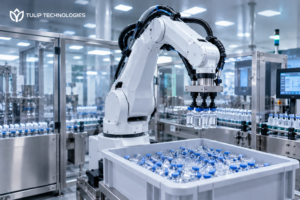
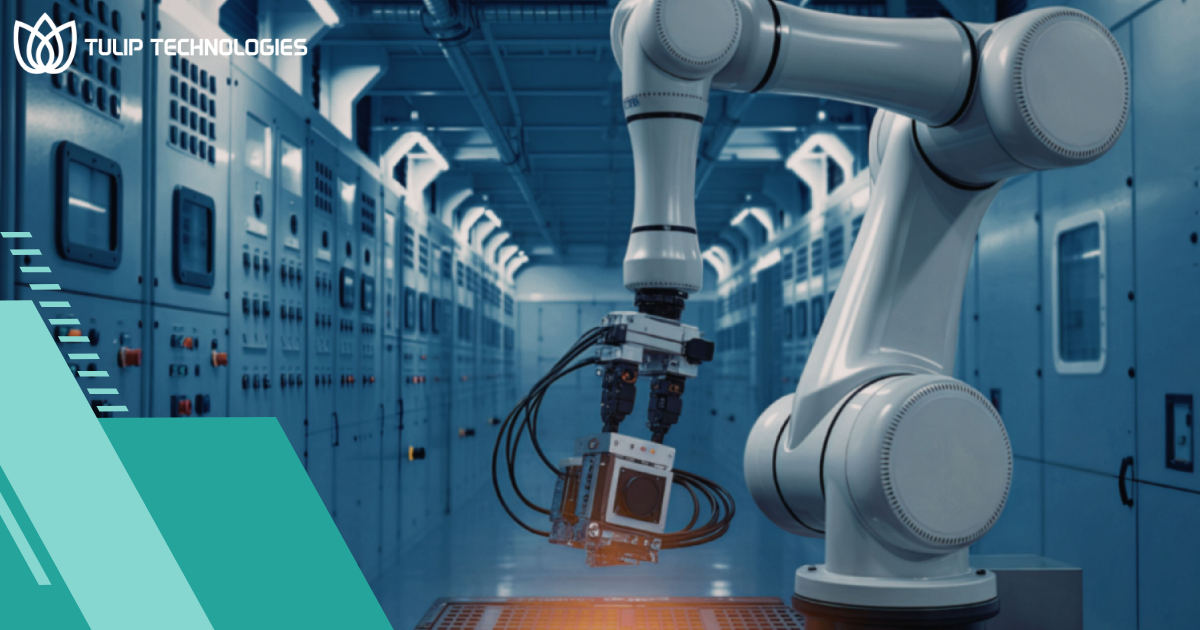
For manufacturers in Saudi Arabia who want to grow with confidence, Tulip brings proven Industry 4.0 technologies, local support, and real experience with plants of every size. Anyone serious about modernizing their factory should give Tulip a close look. We offer the best smart tools and robotic arms for smart factory production automation. We integrate the most advanced technologies to boost your production volume through automation tools.
Frequently Asked Questions
What is the main benefit of the Industrial Internet of Things?
The main benefit is real time visibility. Managers see exactly what is happening on the floor without waiting for manual reports or walking the plant themselves.
Is Industrial IoT only useful for large factories?
No. Small and medium factories often see the fastest results, since even a few sensors can remove hours of manual checking every week.
Does adding Industrial IoT require replacing old machines?
Usually not. Most sensors and tools can be added to existing equipment, so factories rarely need to replace machines that already work fine.
How quickly can a factory see results after adoption?
Many factories notice improvements within the first few weeks, especially around downtime tracking and faster response to equipment issues.