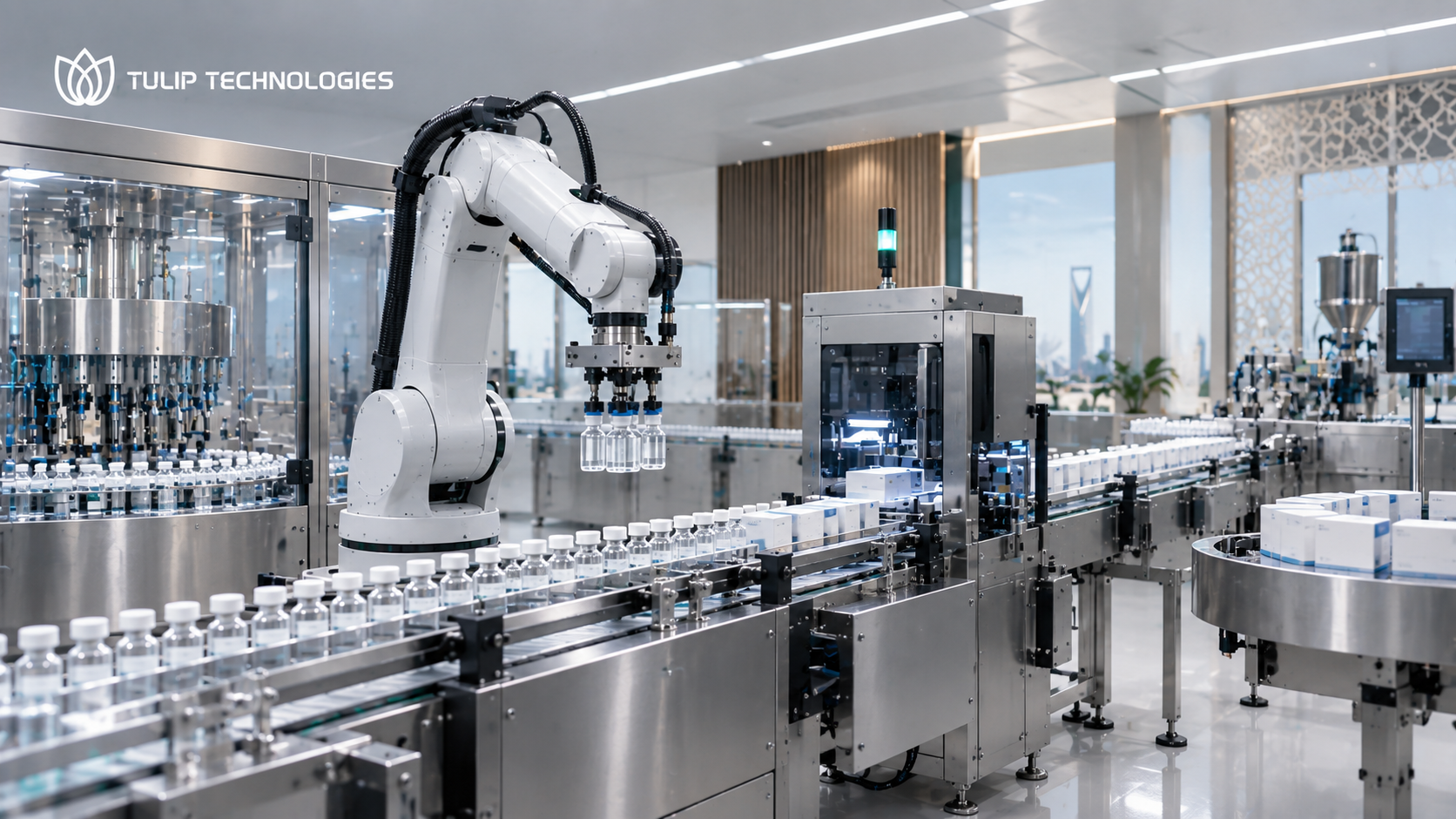
Pharmaceutical companies in Saudi Arabia are moving towards a rapid change. Robotic machines are used to perform tasks that people used to perform manually. The process is called pharmaceutical automation. This form of production allows companies to manufacture more medicines quickly and safely. Saudi Arabia is hoping to be able to produce more medications domestically. The Vision 2030 program stimulates the growth of local companies. One of the most important elements of this process is pharmaceutical automation, which will be further explained in this article.
What Is Pharmaceutical Automation?
Pharmaceutical automation refers to the utilization of technology and software in the process of manufacturing medicines. This process includes mixing, packing, and checking the medicines. Although the workers are still observing the process, the machines do most of the work. One of the benefits of this process is the elimination of possible errors. It may range from one machine used for a certain operation to a whole automated plant.
Saudi Arabia orders a significant quantity of medicines. Instead of relying on foreign imports, the government wants to produce medicines domestically. For this purpose, high-tech production plants should be built. The application of automation technologies allows compliance with production regulations and increases production rates without inflating labor costs. That is in compliance with Saudi Economic Vision 2030 as well, while the modernization of local medicines plants will enable Saudi Arabia to export its pharmaceutical products. Automation technologies raise the competitiveness of the factories.
The Mechanism of Pharmaceutical Automation
To begin with, automation is possible because the production process is monitored by sensors. Sensors allow monitoring of the temperature, weight of the ingredients, and speed of the production process. The data is processed by software that ensures control over the machines acting in real time. In the event of a malfunction, the system stops the production line to ensure the safety of the medicines. The stored data is used for recordkeeping purposes and as electronic logs instead of paper logs.
Common Automation Methods
There are various methods of automation. Robots are utilized for moving products and packaging them. Vision systems are implemented for checking whether there are defective pills. Barcode scanners are employed to keep track of every batch. Automated guided vehicles are used to carry raw materials. Software frameworks are used to connect all the machines. Some factories operate fully automated while others mix machines with human employees. This kind of process is known as semi-automation. In Saudi factories, the first step is the introduction of semi-automation.
Steps to Implement Pharmaceutical Automation in Saudi Arabia
- The process starts with planning.
- Initially, the factory needs to analyze its current process.
- Then, the factory finds troublesome or uncertain stages.
- Next, the factory selects the proper machinery.
- All the employees are trained on how to work with the new machinery.
- The first test is small in scale.
- If the factory sees that everything goes well, it begins implementing automation.
Automation Technologies Used
Manufacturing execution systems or MES track the production process in real-time. Programmable logic controllers or PLCs operate machines. Internet of Things sensors provide real-time information. Artificial intelligence controls the quality of the products. Cloud software supports information storage. The technology mentioned above works in a single system and is managed by local human knowledge.
Saudi Pharma Factories Adopting Automation
Several Saudi factories are now using automation. SPIMACO, one of the largest local producers, has automated packing lines. Tabuk Pharmaceuticals is implementing digital quality checks. Jamjoom Pharma has invested in state-of-the-art robotic systems. Automation is integrated into new factories in Riyadh and Jeddah from day one. These projects are backed by free zones and industrial cities. The growth is part of a nationwide plan to increase local production of medicines.
Robotics in Saudi Pharmaceutical Manufacturing
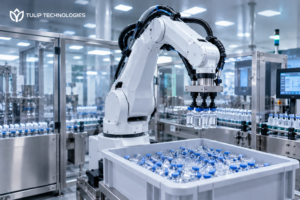
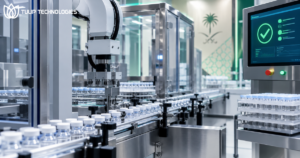
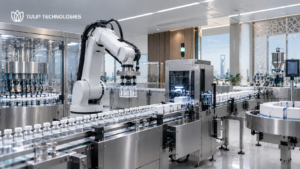
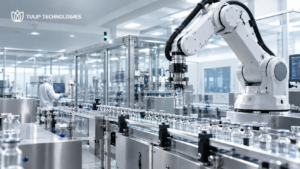
A Riyadh-based pharmaceutical plant integrated robotic arms for sterile vial filling and packaging, reducing human contact and contamination risk. Automated quality-inspection cameras flagged defective units in real time, cutting waste by nearly 20%. This aligns with Saudi Vision 2030’s push for localized, high-tech manufacturing, reducing reliance on imported medicines. The result: faster production cycles, consistent dosing accuracy, and lower long-term labor costs. It allows skilled staff to focus on process oversight rather than repetitive manual tasks.
Benefits of Automation for Saudi Manufacturers
There are many benefits of an automation system. Increases in production rates. Reduce human mistakes. Medicine quality is becoming more standardized. Every batch can be tracked easily by factories. This can help you with faster audits and inspections. Workers move into safer, higher-skill jobs. The costs decrease over time, even after the initial investment. These benefits help Saudi factories expand and compete with international medication makers.
Challenges and Solutions
Automation can be a tricky thing to get going. The initial cost can be large. Some workers fear for their jobs. Old factories may not take new machines. Training is time consuming and requires effort. But there are solutions to these problems. Factories can begin on a small scale and expand in stages. Public programs offer support and funding. Training programs assist workers to build new skills.
Robotics Solutions for Pharmaceutical Manufacturing in Saudi Arabia
For tasks that are difficult for people to complete effectively at scale, robots naturally offer accuracy, speed, and consistency. Robots are widely used in pharmaceutical manufacturing to automate processes such as material transfers and container filling, capping, and packaging. Because fewer people are involved in sterility procedures, which are essential for aseptic manufacturing, robots help lower the risk of product contamination.
Because robots can handle hazardous materials and operate in harsh, high-security environments, this also contributes to increased worker safety. The necessity for process accuracy is becoming more important as labor prices rise. In Saudi manufacturing plants, using robotic technologies has been shown to be an efficient way to ensure compliance and increase outputs.
Get Started with Tulip
Tulip makes it easy for pharma factories in Saudi Arabia to build automation. It connects machines, sensors, and workers in one simple platform. No heavy coding involved. Build digital workflows in days, not months. Tulip also generates instant records for quality checks and audits. That fits well with Saudi Arabia’s drive to develop local, modern medicine. Factories can start small and grow over time. Want to try Tulip in your factory? Book a free demo today and take the first step on the road to a smarter, safer, and faster pharma production line.
Frequently Asked Questions
What is pharmaceutical automation?
It is the use of machines and software to run pharma factory tasks like mixing, packing, and checking medicine.
Why is Saudi Arabia focusing on pharma automation?
Vision 2030 wants more local medicine production. Automation helps factories meet this goal safely and quickly.
Is automation expensive to start?
The first cost can be high, but factories often start small and grow automation step by step.
Which Saudi factories use automation today?
Saudi factories use automation in different sectors like oil and gas, petrochemicals, automotive parts, metal fabrication, and more.
What are the best Ready-to-Deploy Robot Machines in Saudi Arabia from Tulip Technologies?
Tulip offers a diverse range of robotic machines, each designed to meet specific functional needs of industries.
- SAED FAMILY
- SABEG
- BARIQ