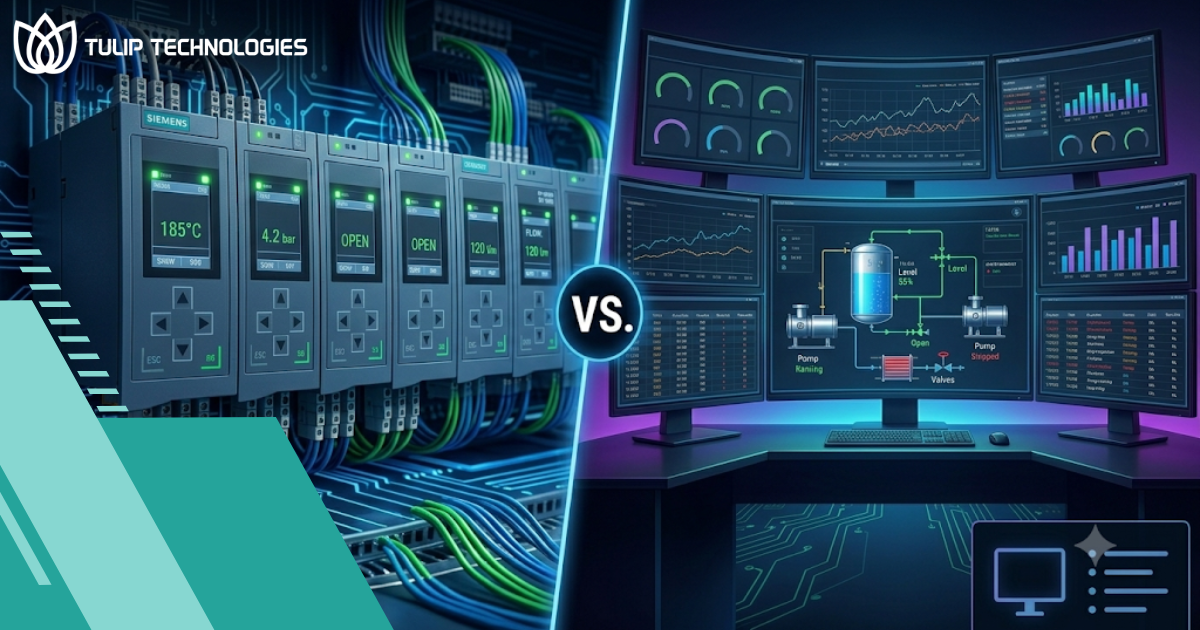
Industrial automation is developing fast in Saudi Arabia. Manufacturing businesses in Riyadh, Jeddah, Dammam, and Jubail apply smart technologies to increase productivity and minimize downtime. Many companies analyze the differences between PLC and SCADA when it comes to investing in automation. The companies that understand the difference between machine control and factory monitoring choose the correct technology that matches their operations today and in the coming years.
What is a PLC (Programmable Logic Controller)?
PLC is a computer that organizes machines’ work automatically. It receives signals from sensors, processes programmed logic, and manages motors, valves, pumps, and conveyors. The response occurs in a few milliseconds, which makes it perfect for production lines where speed, precision, and continuous operation are required without manual control over machines.
How Does a PLC Work?
A PLC, or programmable logic controller, is a secure device made for industrial applications. Computer-based PLCs act as a medium between input devices (like sensors) and output devices (such as motors and pumps). They can be programmed by users to give various commands or send a series of instructions to machines based on data coming from input devices. Thanks to PLCs, it is possible to automate numerous industrial tasks that previously required constant employee engagement.
Functions of Devices Based on PLC Technology
PLCs give their users the ability to control machines, motors, pick data from input devices, control pumps and valves, and work on improving safety systems. Manufacturing facilities in Makkah extensively use the functions of PLCs to automate processes and maintain high-level productivity during busy hours.
PLC in Major Industries
Devices based on PLC technology are widely used in factories, food processing plants, production shops, pharmaceutical enterprises, and oil refining facilities in Saudi Arabia.
Advantages of Using a PLC
The use of a controller allows the machines to respond faster, boosts manufacturing accuracy, minimizes human errors, and ensures constant operations for 24 hours. This significantly simplifies troubleshooting, as it always takes a few minutes for technicians to identify the problems with the programmed logic. Besides that, it enables factories to cut down the expenses for maintenance and optimize their manufacturing processes.
When Should You Pick a PLC?
It makes sense to implement this solution if the purpose of automation is an improvement in the work of a machine or separate piece of production equipment.
What is SCADA?
SCADA is a type of software that provides monitoring and control of production processes. It collects data from multiple controllers and devices, provides live dashboards, keeps historical data, and sends notifications in case of a problem.
How Does SCADA Work?
The software collects data from controllers, sensors, and industrial equipment throughout the facility. It takes technical data and translates it into easy-to-read screens of machine status, production output, alarms, and energy usage. One control room can monitor multiple production lines in a manufacturing plant in Riyadh, without having to physically visit each machine.
SCADA Main Functions
A supervisory system provides real-time monitoring, alarm management, historical data logging, production reporting, and performance analysis. Operators can spot equipment problems early and fix them before they impact output. These functions are particularly useful in large industrial plants where several production lines are operating simultaneously and require centralized operational visibility.
Where is SCADA Used?
Monitoring platforms are commonly used in large manufacturing plants, power stations, oil and gas facilities, water distribution networks, logistics centers, and smart factories. Centralized monitoring of industrial operations enables tracking of equipment performance, managing alarms, and improving decision-making in complex production environments on a daily basis.
SCADA Benefits
Supervisory software gives total operational visibility, faster fault detection, better maintenance planning and detailed performance reports. Managers use historical data to analyze trends and improve efficiency over time. These benefits minimize downtime, allow for better business decisions, and help manufacturers improve their production processes across multiple departments and facilities.
When Should You Choose SCADA?
The solution for monitoring multiple machines, gathering production data, producing reports, and managing alarms in a single location. The best use case for this is multi-line or distributed manufacturing operations. Often, Saudi Arabia’s growing manufacturers implement centralized monitoring for better visibility and operational control.
PLC vs SCADA: Which One Does a Factory Owner Need?
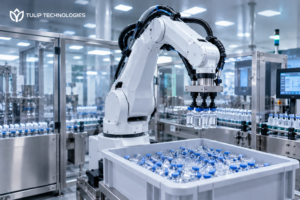
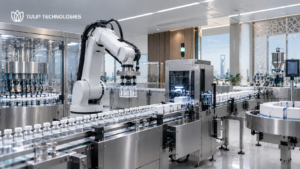
Imagine you own a factory that fills water bottles. PLC is the machine operator. It starts and stops motors, controls valves, and makes the machines work automatically. SCADA is the factory manager. It shows the status of every machine on one screen, records production data, sends alarms if something goes wrong, and lets you monitor the factory from a control room. If you only need to control one machine, use a PLC. If you want to monitor and manage the entire factory, use SCADA. Most modern factories in Saudi Arabia use both PLC and SCADA together for the best performance.
PLC vs SCADA: Key Differences
Purpose
A PLC works on direct machine control, while supervisory SCADA software works on the monitoring and management of the entire production process. One is at the equipment level; the other is plant-wide. Understanding this difference is important to determine if your business needs machine automation, centralized monitoring, or both.
Installation
The controller is a physical device (installed inside industrial control panels near machinery. The monitoring platform is a software running on a computer or server to which multiple controllers are connected. This arrangement enables the operators to oversee the entire factory, and the machines on the shop floor to continue functioning automatically and without interruption.
Data Handling
Machine control is the real-time processing of sensor inputs and outputs for the operation of equipment. Supervisory software collects, stores, analyzes, and displays production data over long periods of time. This allows managers to analyze performance trends, maintenance history, and operational reports that lead to better planning and continuous improvement throughout the organization.
Best Case Use
Use a PLC for direct machine automation such as conveyors, filling systems, and packaging equipment. SCADA software gives you access to multiple production lines and the ability to generate reports and manage alarms from a single location. Modern factories achieve the best results from the integration of machine control and plant-wide operational visibility.
Why Saudi Manufacturers Use Both Together
In Riyadh, Jeddah, Dammam, and Jubail, manufacturers are increasingly pairing centralized monitoring with machine automation. This enables equipment to run efficiently, and managers to see real-time visibility into production, maintenance, energy use, and alarms. This combination boosts productivity, cuts downtime, aids Industry 4.0 efforts, and enhances long-term operating performance.
Tulip Technologies provides end-to-end industrial automation solutions for manufacturers in Saudi Arabia. We assist in PLC programming, machine integration, SCADA implementation, and smart factory development. Whether you are looking to improve efficiency, reduce downtime, and accelerate your digital transformation from a single production line to centralized monitoring of an entire facility, Tulip can help.
Frequently Asked Questions
Which is better: PLC or SCADA?
Neither is better. One controls machines, while the other monitors and manages factory operations.
Can SCADA work without a PLC?
It can monitor some devices, but most industrial systems use controllers for machine operation.
Is a PLC suitable for small factories?
Yes. It is an excellent choice for automating individual machines and production lines.
Why do modern Saudi factories use both?
They gain automatic machine control, centralized monitoring, detailed reports, and better production management.