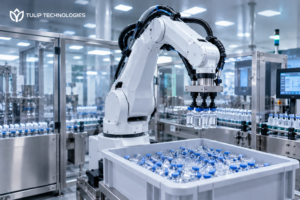
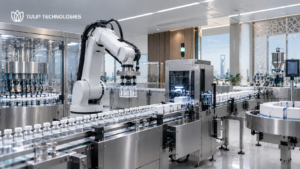
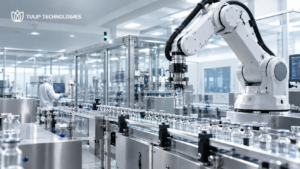
The deployment of robots in factories has altered how factories in Saudi Arabia operate through increased production capabilities. They get improved speed of delivery, Reduced Waste (Errors), better Safety and the Ability to Meet Increased Volume of Production through smart automated systems (time savings). This way, they support the Vision 2030 initiatives for making businesses more efficient and competitive in the global marketplace and in Saudi Arabia due to their Ability to meet current and future demands from competitors outside the Kingdom of Saudi Arabia.
The reason why factories in Saudi Arabia are adopting robotics for improving their performance, that it provides increased speed when delivering products/lower Error rates, Safety for their Employees/Contractors, and improved production reliability. The use of robotics and automation technology is being expanded throughout all sectors, made possible by the goals regarding digital growth of Vision 2030. Robotics enables the factories to become competitive and meet the ever-growing industrial standards in Saudi Arabia.
Smart Automation using Deployment of Robots
Smart Automation using Robots enables the Time/Ease of doing repetitive work within a factory to be greatly reduced. It provides improved quality of all products produced, it provides a safe working environment for Human beings, and it enhances production efficiencies through reducing downtime and therefore increasing overall production efficiencies. In the future, all factories in Saudi Arabia will use Robots to save money and remain Competitive.
Core Benefits of Deploying Robots in Saudi Manufacturing
The use of robots will greatly benefit Saudi manufacturers. The use of robots increases product speed, decreases the likelihood of human error, increases product quality, and provides a safe method of producing items in difficult situations. The implementation of these robots also lowers long-term manufacturing costs by automating factories. With the ability to deliver a consistent output through automating their factories, Saudi manufacturers can continue to compete in the global marketplace and foster continued growth and success.
Key Strategies for Successful Robot Deployment in Factories
Assess Factory Automation Readiness
Before implementing robot integration, it is necessary for any manufacturing facility to complete a robotic assistance assessment of its current operations. The robotic assistance assessment identifies the process gaps of the current manufacturing procedures and identifies where automation will provide the most benefit. In addition, it supports a smoother robotic implementation process. It supplies the necessary groundwork for developing a successful integrated smart manufacturing system for Saudi manufacturers.
Select the Right Robot Type
When selecting a robot, it is important to ensure that it has the appropriate capabilities for the specific task you require. For example, some robots can handle heavy weights while others are designed for more delicate applications. When you match the capabilities of the robotic system with the job requirements, you increase the level of performance in a manufacturing environment. When Saudi Manufacturers employ the optimal type of robotic system for their needs, the resultant increased efficiency, improved quality, and safer operations.
Integrate Robots with Existing Systems
Robots must integrate adequately with existing systems so that robots and current equipment, and software can interact seamlessly with one another. The proper level of system integration will reduce potential downtime of production and improve the flow of work through production processes. The ability to communicate effectively between all systems will provide manufacturers with the ability to make better use of existing data and generate better automated processes and reliability in the Saudi manufacturing industry.
Train Staff for Human–Robot Collaboration
Training of personnel to be able to collaborate with robots is important to ensure that their employees can operate robots in a safe and productive manner. Training will increase the employees’ level of comfort with using them, reducing any potential resistance and building trust between people and robots. Employees trained in using robots can monitor, maintain, and troubleshoot robots when needed. These factors combined strengthen the overall productivity of the organization and empower it to build successful and efficient human–robot partnerships.
Start with Pilot Automation Projects
Pilot projects serve as testing grounds for automation prior to full implementation. They identify problems at an early stage; they illustrate the activities that are working and those that require additional work. A smaller scale of testing decreases risk for the factory, costs money, and enables the factory to gain some level of familiarity with a new process. For the Saudi industry to increase the speed of scaling up its automation projects, the pilot phases must be successful.
Ensure Proper Maintenance Planning
Robots must be regularly serviced and maintained to work effectively. Planned maintenance limits the amount of downtime associated with a robot. Planned maintenance increases the expected life of a robot and ensures consistent output. Predictive maintenance technologies provide manufacturers with the ability to identify problems before they occur and therefore maintain factory uptime. Manufacturers in Saudi Arabia can provide more consistent reliability and long-term value through a strong maintenance plan.
Strengthen Cybersecurity for Smart Systems
Smart factories are dependent on connected robots; therefore, there is a heightened need to be concerned about cybersecurity. Systems must be secured in order to avoid theft or disruption of data. To ensure that their systems are secure from both a network security and audit perspective, manufacturers in Saudi Arabia must implement robust security protocols and practices. Additionally, a combination of secure software updates as well as a proactive approach to risk management creates a safe and reliable automation solution for factories in Saudi Arabia.
Optimize Workflow for Robotic Efficiency
Robots are suited for structured workflows in factories, which will create efficient and organized production lines. The removal of production bottlenecks and the creation of physical layouts that allow for robots to flow through them will allow robots to operate optimally. Organizing the production line with clear pathways between production stations will improve the robot’s ability to work. An efficient workflow provides for time to be saved when producing goods, which will ultimately lead to increased production. To fully maximize the benefits of automation, the production environment in the Saudi Arabian manufacturing industry should be optimized.
Use Data Analytics to Monitor Robot Performance
Factories use data to understand the performance of their robots. With this data, factories can determine which areas are slow or need improvement. This data provides insight into energy consumption and output performance, and it also provides insight into maintenance requirements. Using analytics, factories have the ability to make data-driven decisions to improve the efficiency of their production processes and to prevent or prepare for issues before they occur. The Saudi manufacturing industry will better regulate its production processes when it uses real-time performance data on its robots.
Team Up with Reputable Automation Partners
Partnering with reputable automation providers will yield better results for manufacturing. These established experts will assist factories with robot selection, installation and will continue to offer support. In turn, factories will have fewer errors while experiencing a more efficient solution and a greater level of success with automation. Industry experts understand the requirements of the manufacturing industry; therefore, partnering with an experienced partner provides manufacturers with increased efficiencies and quicker resolution of automation challenges. Tulip Technologies offers the best robotic solution in KSA.
Popular Types of Robots Used in Saudi Industrial Automation
Collaborative Robots (Cobots)
Collaborative Robots are robots that are able to work safely in the environment of workers and assist in repetitive, lighter tasks. Cobots are able to increase the speed and accuracy of welding while reducing the physical strain on workers. Cobots’ programming is simple, and they can be set up within a short time period. By being able to install them within factories where space may be limited, they make it possible for manufacturers in Saudi Arabia to implement automation without significant changes to their manufacturing floor plan.
Robotic Arms (for Welding, Packing and Assembling)
Robotic arms are specifically designed to perform heavy and/or precise tasks. They perform the three important areas of the manufacturing process—welding, packing and assembling—with extreme precision and reliability. In addition to reducing production errors and shortening production times, robotic arms have been proven to operate efficiently in the most extreme work environments. They have become popular with Saudi Arabian manufacturers for their consistent quality assurance as well as the ability to meet the high volume requirements necessary to remain competitive in a dynamic market.
Autonomous Mobile Robots (AMRs)
Autonomous Mobile Robots (AMRs) transport goods from one location to another in a factory without any human interaction. They are equipped with various types of sensors and mapped information to avoid collisions when sharing common pathways with workers. AMRs take away the need for employees to move items manually and shorten wait times by moving items from one point to another without having to wait for an employee to arrive. The speed of workflow has increased efficiency and lowered the amount of strain placed on workers.
Artificial Intelligence (AI)-Powered Inspection Robots
AI Robots perform inspections of manufactured products with a very high degree of precision. They are a replacement for inspectors; they perform inspections quickly by detecting defects early in the manufacturing process. Using real-time data, they can help identify a problem with the production process early. AI Robots help Saudi companies maintain an international quality standard by creating confidence in their customers about their products.
Innovating Today, Empowering Tomorrow
Bringing to market innovative solutions for digital transformation and smart Automation. Tulip Technologies’ state-of-the-art technology allows factories to maximize efficiency, minimize mistakes and increase productivity through the integration of systems and the delivery of AI-driven insights. Our technology helps companies to create a competitive advantage in an ever-evolving Saudi marketplace. Transform your business today with tulip technologies – contact us now!
Revolutionize Your Factory in KSA with Tulip Robotics
Tulip Robotics delivers advanced automation solutions for factories in Saudi Arabia. Our robots handle repetitive, heavy, and precision tasks with unmatched speed and accuracy. From assembly lines to quality inspection, Tulip Robots reduce errors, improve safety, and boost productivity. Designed for seamless integration, they empower factories to achieve smarter operations and higher efficiency. Upgrade Your factory today with Tulip Robotics – Get a Free Consultation!
Frequently Asked Questions
What is robot deployment in factories?
Robot deployment means using robots to perform tasks like assembly, welding, packing, or inspection to improve efficiency and reduce errors.
Why are Saudi factories adopting robots?
To boost productivity, reduce costs, improve safety, and stay competitive in line with Vision 2030 goals. Upgrade Your factory today with Tulip Robotics – Get a Free Consultation!
What types of robots are commonly used?
Cobots, industrial arms, autonomous mobile robots (AMRs), and AI-powered inspection robots.
How can factories ensure successful robot deployment?
By assessing readiness, selecting the right robots, training staff, integrating systems, and maintaining proper cybersecurity. Contact Tulip Technologies for the best robotic solutions and smart automation in production.