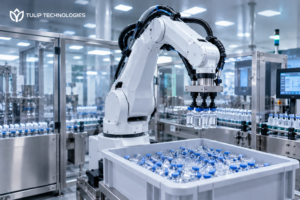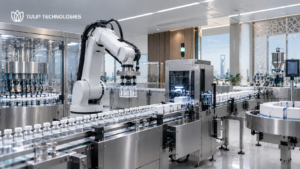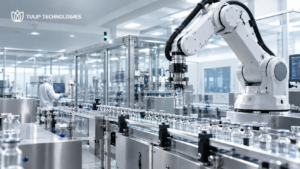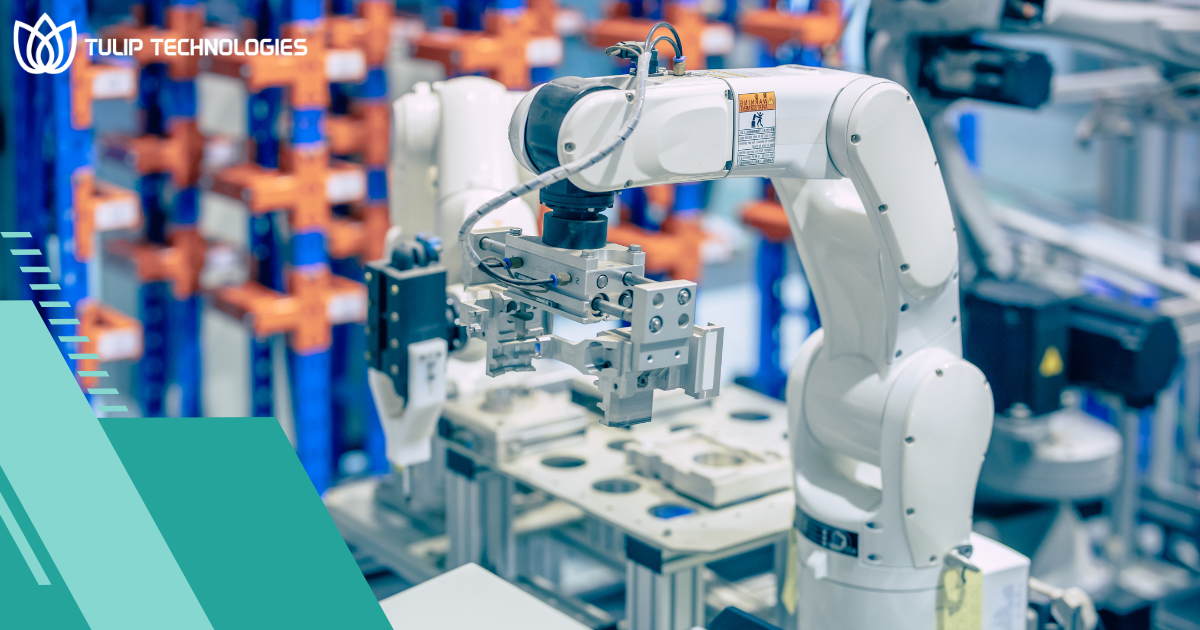
Saudi Arabia is rapidly entering the global robotics manufacturing space to have a wider industrial transformation for the Vision 2030 strategy. The rise of global industrial robotics is playing a key role in automation, smart factories, and across different manufacturing sectors worldwide. In Saudi Arabia, automation is now reshaping both oil-based and non-oil industries by improving performance, safety, and production quality while reducing operational costs. This shift has led to the development of “Saudi-made industrial robots”.
Companies such as Tulip Technologies are contributing to this ecosystem by producing locally engineered robotic systems that support this transition. In this context, AZM Focus represents Saudi Arabia’s ambition to lead industrial innovation and establish a strong presence in global robotics advancement.
Automation in the industrial sector in Saudi Arabia has evolved at a very fast pace in the last several decades. In the beginning, industries were utilizing manual labor and primitive machinery, which, however, changed with the emergence of global competition and technological development. In recent times, companies have started to embrace automated systems.
Robotics, AI-intelligent systems, and smart sensors are very common today in smart factories to enhance productivity and safety. Large-scale automation was initially used in the oil and gas industry, in manufacturing and logistics. This revolution has lowered the cost of operations, enhanced productivity, and enhanced the quality of products. This is the reason why Saudi Arabia is gradually transitioning into a fully digital and automated industrial ecosystem in line with international standards.
Vision 2030 and Its Role in Robotics Development
Vision 2030 is a national strategy in Saudi Arabia that significantly contributes to the development of robotics and automation. It seeks to diversify the economy to stop relying on oil, investing in technology, innovation and modernizing the industries. One of the major areas under this vision is robotics, particularly in manufacturing, healthcare, and smart cities.
The government encourages research, collaborations and foreign investments to boost the robotics industry. Smart factories and the integration of AI are some of the initiatives promoted within the industries. Vision 2030 is speeding up the introduction of robotics, turning Saudi Arabia into a leader of the region in terms of highly industrialized technologies and innovation-based development.
AZM Focus: Driving the Robotics Revolution in 2026
AZM is the primary player in the robotics revolution in 2026, with emphasis on innovation, automation solutions, and smart system integration. The company focuses on the creation of new robotic technologies, which are specific to industrial, logistics, and service markets. It works with world technology partners to improve the local capabilities and develop competitive solutions.
AZM also invests in research and development to develop efficient, cost-effective, and scalable robotics systems. Being aligned to the national ambitions of digital transformation, AZM is helping Saudi Arabia to achieve its vision of being a leader towards automation. Its initiative is assisting industries to embrace robotics more quickly and successfully throughout the Kingdom.
Core Technologies Behind Saudi-Made Robots
Machine Learning and Artificial Intelligence
Modern robots of Saudi origin are based on artificial intelligence and machine learning. These technologies allow robots to learn using data and adapt to the environment, as well as make intelligent decisions. AI is used in industrial settings to enhance predictive maintenance, minimize error rates, and improve accuracy. Machine learning algorithms aid in optimizing the performance of robots over time, which enhances their efficiency and dependability in the intricate activities in the manufacturing and logistics industries in Saudi Arabia.
Internet of Things (IoT) Integration
The integration of IoT enables Saudi-made robots to be connected to other machines and systems on-the-fly. This connectivity facilitates easy communication among the devices and enhances coordination and performance. Robots have sensors that gather and send data to be analyzed. This will help industries to track performance, find faults early and to maintain smooth workflow. IoT is important in the construction of smart factories and automated manufacturing facilities in the Kingdom.
Modern Sensors and Vision Systems
High-tech sensors and vision systems assist Saudi-made robots in comprehending the world around them very well. Such technologies involve cameras, infrared sensors, and laser-based systems which capture objects, measure distances, and determine patterns. They are required in activities that demand precision like assembly, inspection and quality control. Vision systems allow robots to work safely with human beings as well as to perform well in dynamic industrial set-ups.
Data Analytics and Cloud Computing
The digital infrastructure of Saudi robotics is based on cloud computing and data analytics. Big data is stored in the cloud and processed by robots to enable real-time analysis and allow remote access. This enhances decision making, optimization of systems and predictive maintenance. Data analytics assists industries with the trends, efficiency, and minimize downtime. Collectively, the technologies enable robotics systems to be smarter, scalable and highly efficient in contemporary industrial use.
Key Industries Benefiting from Saudi Robotics
The use of robotics in Saudi Arabia is enjoying a lot of success in several industries that form its core. Automation has been applied to the oil and gas industry in exploration, drilling and maintenance, enhancing safety and efficiency. Robotics is used in manufacturing industries to have assembly lines and precision production. Warehousing and supply chain management are automated in the logistics industry.
Surgical robots and automated diagnostic equipment are being embraced in healthcare. Robotic machinery is advantageous in the construction of big projects. Moreover, smart robots are employed in farming to irrigate and harvest. These innovations are boosting productivity, reducing costs, and contributing to Saudi Arabia’s vision of having a diversified and technology-driven economy.
Robotics as Saudi Arabia's Autonomous Industrial Future
Saudi Arabia’s robotics journey reflects a rapid transformation driven by AZM-focused innovation, shaping a future of smart automation and industrial excellence. With a strong strategic vision, the Kingdom is advancing toward a global robotics powerhouse supported by innovators like Tulip Technologies, driving technological progress and integration.
Frequently Asked Questions
What is AZM’s focus on robotics development?
It represents a strategic initiative emphasizing innovation, local manufacturing, and advancement in AI-driven robotics systems.
Which industries benefit most from Saudi robotics?
Oil & gas, manufacturing, logistics, construction, and healthcare are key sectors adopting robotics.
How does Vision 2030 support robotics growth?
It promotes economic diversification, investment in AI, and the development of advanced manufacturing industries.
What is the future of industrial robotics in Saudi Arabia?
Saudi Arabia aims to become a global hub for robotics innovation and export advanced automation technologies worldwide.