The future factories define the production methods of modern times. They employ intelligent machines, mechanization and advanced systems to improve efficiency. In the time of Industry 4.0, production methods will become smart and linked together. The machines communicating with each other will be equipped for the analysis of production for optimization in real time. They will thus lead to improved quality, lower production costs, better practice, and sustainability. Knowledge of future factories will assist companies in adapting and developing in the ever-increasing complexity of industrial activity.
Future factories are the foundation for Industry 4.0. These factories employ machine intelligence, data analysis and mechanization to improve the efficiency of production methodology. These systems communicate in real time, and will allow faster and more accurate production. These new factories will decrease waste and energy consumption. The introduction of digital technologies will lead to a more flexible and sustainable production environment capable of fulfilling the task of modern industrial needs.
What Does Industry 4.0 Mean for Modern Manufacturing?
The trend known as Industry 4.0 makes clear how things are designed, produced, and delivered. Machines, sensors, and software are connected together in order that real-time monitoring and decision-making can occur. This enables manufacturers to obtain a wider range of insights into performance, quality, and repair requirements. The resulting shift to functionality improvement provides greater productivity at lower operational costs. For modern manufacturing, it means a farewell to one-off, slow, non-systematic automatic assembly, and a welcome to intelligent workflow, with automatic control of manufacturing processes. It is optimization through connected devices and data, leading to continuing development and creativity.
Transition from Traditional to Smart Factory
Traditional factories depended on manual labor and insulation. Smart factories utilize automation, artificial intelligence, and the Internet of Things so that operations are intelligent and interconnected. New smart factory operations facilitate predictive repair systems, self-optimizing machines, and digital twins, providing improved accuracy in output. This movement to intelligent manufacture provides greater flexibility and efficiency, preventing as it does, downtime and faults. The change from traditional to smart manufacturing is transforming the competitiveness and creativity of industry all over the world.
Key Technologies Powering Future Factories
Role of Artificial Intelligence and Machine Learning
Artificial intelligence and machine learning bring outstanding capabilities to manufacturing operations through intelligent prediction, process control, and fault prediction. These technological solutions allow systems to maintain optimal performance by adjusting on-the-fly. Equipment failure is anticipated and corrected before it occurs, thereby allowing continuous operation. Business process intelligence improves processes, reduces waste of materials, and allows companies to operate with speed and accuracy in changing conditions of operation.
Industrial Internet of Things (IoT) and Real-Time Data
The Industrial Internet of Things provides manufacturers with the power of real-time connectivity of devices, sensors, and systems in an integrated system. The availability of real-time information allows management to react immediately to changes in performance. With real-time monitoring, less downtime will be experienced as bottlenecks will be avoided and asset utilization strengthened. The IIoT will help in smart energy management and the attainment of sustainability in manufacturing operations, thereby ensuring the manufacturing environment is effective, reliable, and friendly.
Robotics and Automation in Smart Manufacturing
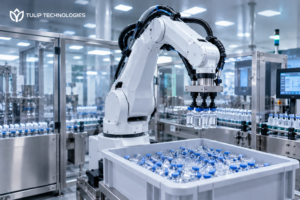
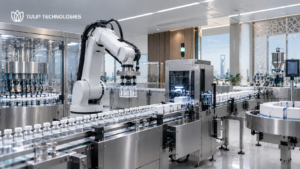
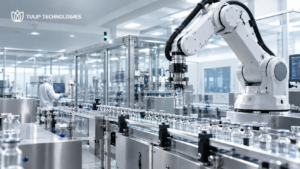
Modern robotics applied to industrial processes is producing major changes in manufacturing processes by providing precision, flexibility and safety. Collaborative robots, or co-bots, will work with personnel to optimize workflow effectiveness and minimize risks to their operators. With automation of repetitive processes, consistent and effective performance is assured. Automation technology releases personnel for planning operations. Synchronized robotic systems will produce improved productivity, improved product consistency and quality and afford relative mass production flexibility.
Cloud Computing and Edgenet Technology in Manufacturing
Cloud applications and edge smart technology will be provided for immediate data accessibility with a focus on the manufacturing origins. The cloud and edge operating mode will reduce latency and improve reaction times for decision-making. Cloud technology will provide scalable systems for storage and analytics, and smart edge technology will handle real-time critical operations for local impact on production. Together, these systems will provide infinite communication, data security and fast responses in real time.
Core Features of a Future Factory
Smart Machines and Connected Systems
Connected devices and smart networks improve communications between equipment systems and control systems. These technologies optimize production flows to identify inefficiencies instantly and regard quality as constant. Networked systems will coordinate the entire operations from raw materials to final product, ensuring flexibility, visibility, authentication and responsiveness to changing market conditions.
Predictive Maintenance and Data Analytics
Predictive maintenance is the result of data-based information being used to identify potential failures before their occurrence disrupts production. Sensor performance parameters are recorded and analyzed by tools applying responsible knowledge, which forecasts the ensuing problems. This technique leads to reduced output downtime, extended equipment life and reduced overall maintenance costs. Data analysis also leads to better operational conclusions by providing rational answers, which gives manufacturers the opportunity to improve productivity levels in the long run.
Human–Machine Collaboration for Higher Efficiency
Factories of the future will depend on human skills combined with intelligent systems. Human skills can be combined with automation to solve problems of greater complexity and defuse in quicker time scales. The application of co-operative robots will also assist people in performing a succession of repetitive or dangerous functions, improving both their safety and the accuracy of their workings. This co-operation provides the differences which enhance flexibility, encourage creativity and productive continuity in the industries.
Benefits of Future Factories in the Industry 4.0 Era
Improved Productivity and Resource Optimization
Smart production systems enable better output at minimal resource cost. Automated processes reduce the opportunity for human error, while intelligent scheduling facilitates seamless operation. The analysis of data achieved in real-time ensures efficient allocation of materials and energy, and labour in manufacturing. As a result, factories can produce more product, incur lower costs, and achieve elevated environmental standards, while maximizing productivity without sacrificing sustainability or quality of product.`
Greater Quality Control and Reduced Downtime
With the adoption of high-level sensors combined with high-speed computers, manufacturing systems have the ability to observe product output and form identification of product failures in the early stage of production. `This enables manufacturers to achieve quality assurance of the product and efficient production practices. Predictive methods of failure devaluation reduce downtimes because defects can be recognised and dealt with before they occur. Automated methods of inspection assist in improving manufacturing efficiency, quality levels of products, and ethical standards in production methods. This increases product reliability, reduces downtime in production methods, and encourages continual improvement evaluation in all factors of manufacture.
Greater Flexibility and Customization in Production
The factories of the future will enable manufacturing to become more adaptable to the present game business environment, encouraging great awareness of the changing market demands and needs of customers. Modular systems and digitally controlled interactive work methods will facilitate varied and improved product changes in the product throughout the production process without major upheaval in the current systems used. Smart machines will permit variation in manufacturing types and improved design computer vision to upgrade these manufacturing processes to permit easier adaptation to the requirements of the public purchasing the product. This allows for improved fast delivery and product service quality, improved customer satisfaction experience and greater variation in the type and business service scope of the manufacturing methods used.
Challenges in Implementing Future Factory Models
High Initial Investment and Technology Integration Issues
Building a factory that is ready for the future will require considerable financial investment. Advanced machines, automation equipment, and digital cores are expensive to establish. Integrating new systems into old machines raises compatibility issues. Organizations must develop strategic plans to hit targets of cost, minimize downtime, and ensure effective absorption of interlinked intelligent technologies at all levels of operation.
Cybersecurity and Issues of Data Privacy
As factories develop connections with digital equipment, data security will become a significant issue. Cyber terrorism, breaches of systems, and unauthorized access can spoil operations and expose sensitive data. Adding security to industrial networks will require such measures as strong encryption, recurrent surveillance, and strict compliance regimes. It will be vital for manufacturers to emphasise secure management of data to continue maintaining reliability and to protect their digital assets from ever-evolving threats.
Skill Gaps and Transformation of the Workforce
The introduction of advanced manufacturing technologies will demand a capable workforce capable of managing the digital epiphenomena of advanced systems and the tools of analytics. A large majority of employees lack automation training, in artificial intelligence, or in the management of smart equipment. It will be necessary for companies to invest in reskilling their employees and to update continuous learning. Filling this gap will assist in obtaining efficient human–machine interaction.
Real-World Examples of Smart Factories Around the Globe
Leading Companies Adopting Industry 4.0 Technologies
The leading global producers, from Siemens to BMW and General Electric, are the leaders of the application of Industry 4.0 solutions. These businesses use robotics, artificial intelligence and digital twins for increased accuracy and productivity. The organizations are making use of interconnected groups in order to augment efficiency, improve sustainability, and facilitate timely and intelligent decision-making. They are also setting new standards for innovation in intelligent manufacturing on a worldwide scale.
Relevant Lessons From Digital Transformation of Manufacturing
The successful transformations have pointed to the necessity of progressive implementations and human participation. Businesses that concentrate upon human factor training, trials, and solutions that are scalable, will find the progress towards normalization of digital a smoother progress. Also, coordination between various departments and the resulting transparency can augment long-term success. The central lesson is to balance technology with man’s ability to adapt in order to evolve efficient, sustainable and future-wary ecosystems of manufacturing compliance.
The Future of Manufacturing Beyond Industry 4.0
Emerging Trends: Industry 5.0 and Human-Centric Automation
Industry 5.0 changes the emphasis from fully automated production systems to collaboration between intelligent machines and human participation, and through creativity, emotion and customization of the manufacturing experience. Intelligent robotics, artificial intelligence and augmented reality support in human decision-making for better outcomes. It is the balance between the precision of machine or computer intelligence and the insight of human input that will help provide more flexible, effective and innovative production environments in the manufacturing of the future.
Sustainable and Green Manufacturing Practices
The next stage of industrial development is heightened attention to the ecological aspect. This attendant will be the “green” part of manufacturing, which develops energy and material efficiency, waste reduction and the recycling and conservation of renewable resources. The intelligent management systems will provide feedback on the emission ranges of the manufacturing systems, the optimised use of energy types and forms, and the efficiencies to be gained through effective recycling of various material components. Through the influence of factors and methods contributing to sustainable forms of production, industries will find their carbon footprint reduced while operational costs are lowered, thus helping the industry to match requirements expressed through the need for improved climate solutions and corporate responsibilities.
Spotlight: Tulip Technologies
Enabling the Future Factory Revolution in Saudi Arabia
Tulip Technologies is a leading company in robotics and automation solutions based in Riyadh, Saudi Arabia, specializing in the design and development of plug-and-play robotic systems, automation lines, and consulting in Industry 4.0. Tulip Technologies combines local manufacturing expertise and world-class technology to offer advanced automation solutions in Saudi Arabia, inspired by international innovation.
Smart Manufacturing Solutions
Tulip Technologies offers a wide range of robotics solutions that facilitate the digital transformation of manufacturing. Our smart production solutions and products help Saudi companies to automate factory operations for faster processing.
Robots to Implement
The emblematic robotic systems that Tulip Technologies has developed, such as the SAED family, provide plug-and-play systems for rapid implementation in packaging, palletization and assembly operations, thus bringing automation to factories at all levels.
Robots for Specific Tasks
The solutions offered by Tulip Technologies also include robotic painting units such as SABEG for precision coating and the BARIQ MIG welding robot for volume and precision metalworking.
Custom Automation Lines
All robots, conveyors, sensors and programmable logic controllers have been incorporated into complete automation systems designed by the company. It allows workplaces to develop a seamless and efficient production flow, according to the requirements of each customer.
Industry 4.0 Consulting
Tulip Technologies also offers consulting and guidance to manufacturers on digital transformation strategies, which includes assessments of status. They improve the readiness for the implementation of smart factories and the training of their work teams.
Why Tulip Technologies Stands Out
- Provides robotic systems that are locally constructed and globally benchmarked.
- Uses intelligent automation to cut down on human error and production time.
- Empowers workforce transformation with intelligent tools and training.
- Provides scalable solutions for a range of sectors, including defense manufacturing, plastics, metal fabrication, and fast-moving consumer goods.
Conclusion – Building a Smarter, Connected Manufacturing Future
To stay ahead in the rapidly changing industrial landscape, embrace digital transformation in KSA now. Invest in skilled labor, automation, and intelligent systems. Create a manufacturing ecosystem that is connected, sustainable, and future-ready to promote efficiency, innovation, and long-term global competitiveness.
Frequently Asked Questions
What is a future factory?
Automation, real-time data, and digital tools are integrated in a future factory, such as those driven by Tulip’s smart manufacturing solutions, to improve production quality and efficiency in KSA.
What effects does Industry 4.0 have on manufacturing?
In order to facilitate real-time insights, quicker production, and more intelligent decision-making, it links systems, people, and machines.
Which technologies power smart factories?
Big data, cloud computing, robotics, IoT, and artificial intelligence are some of the major technologies driving modern industrial transformation.
What is the significance of future factories?
They help industries remain competitive in a digital economy by increasing flexibility, cutting costs, and fostering sustainable growth.