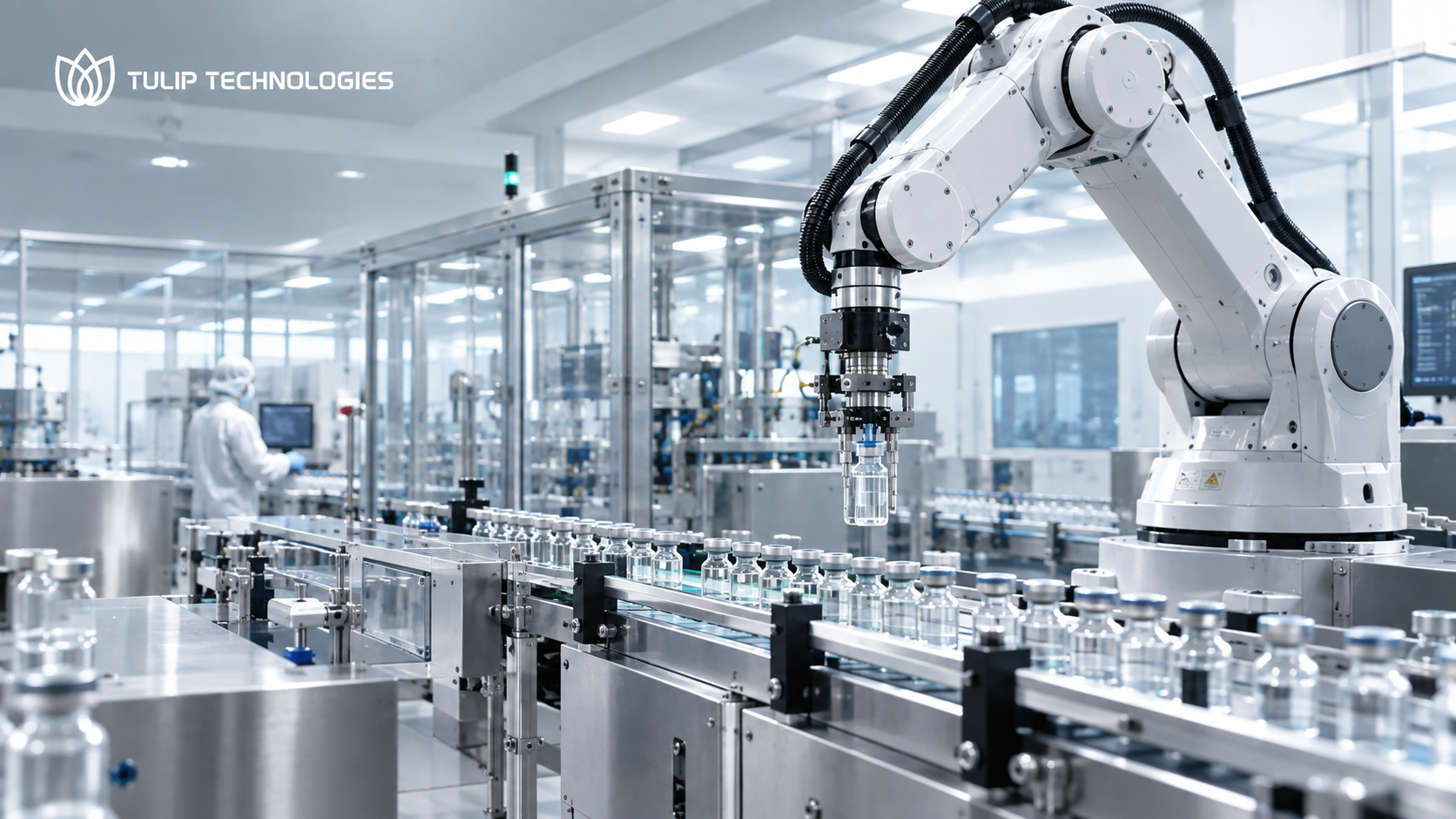
Pharmaceutical manufacturing in Saudi Arabia is facing ongoing demands. The regulatory authorities require accuracy. The patients require quickness. The marketplace demands lower prices. The zero-contact principle of production allows for achieving all three goals simultaneously. Due to the implementation of automated solutions, online resources, and software applications, humans are practically excluded from the manufacturing process. In this article, the notion of zero-contact production will be reviewed in pharmaceutical manufacturing.
Zero-touch manufacturing refers to the use of manufacturing processes that require little human intervention. The way this works is that data collection of the manufacturing process is completely automatic. Decisions are executed by the system software. Machines are able to communicate with each other directly. In pharmaceuticals, this includes utilizing electronic batch records, machines talking to each other, and using digital instructions instead of paper. The objective is not to get rid of the humans completely, but to take them out of the repetitive, highly error-prone activities. They can save their time for making difficult decisions or solving problems.
Why Pharma Is Moving Toward Zero-Touch Operations
The manufacturing industry in Saudi Arabia has its own difficulties that cannot be faced by other types of manufacturing. Each batch has to comply with strict quality requirements. Everything has to be logged for audits. Any mistake can lead to a delay in delivering the medicine. Traditional processes allow for mistakes made by humans in data entry. Paper records are subject to loss. An operator is more than likely to cause contamination by moving through clean rooms.
Key Benefits of Zero-Touch Manufacturing
Zero-touch manufacturing offers advantages at every stage of production. Here are some of the first benefits that pharmaceutical teams identify.
Better Compliance and Data Integrity
Data entry is one of the leading causes of compliance problems in the KSA pharmaceutical industry. A wrong digit or a missing signature can lead to a deviation report. Zero-touch systems gather data automatically at the source and record and save it in a reliable form for the regulators. This eliminates the risk of spelling mistakes and provides better auditing. Hence, the teams spend much less time searching for missing documents and concentrating on the improvement of the actual quality of the process.
Fewer Contamination Risks
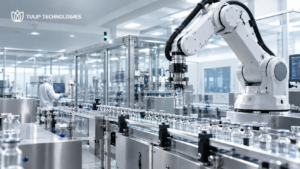
Cleanroom settings are sensitive to human activity. Each individual entering the controlled area introduces a contamination threat regardless of how careful gowning is. Zero-touch devices enable operators to minimize the number of times they touch the product or the equipment. Many processes are automated, so the physical presence of people in the critical areas is minimized. Also, fewer people means less contamination and easier management of environmental risks, which must be strictly controlled in manufacturing sterile goods.
Quicker Batch Cycles
Manual handoffs make the manufacturing process unnecessarily slow. Whenever a task involves checking the paper form or waiting for approval, the batch time keeps passing. The availability of zero-touch systems eliminates many pauses. There is no need to check the forms because automated checks happen instantly. Approvals can go through online. The equipment is configurable without human intervention.
Real-Time Visibility
In the conventional pharmaceutical industry, businesses frequently have to depend on end-of-shift reports to obtain information about what happened in the factory at that point in time. By this time, however, the challenges are already present at the facility. The use of zero-touch systems changes this situation for the better through the process of broadcasting the information. For instance, corporate managers can get access to information on the status of the equipment, the processes related to different batches, and the quality of products before any problems make themselves known. This access to information solves problems before they become big ones and allows managers to come up with better decisions faster.
Reduced Downtime
Unexpected downtimes can cost a lot of money for organizations in the pharmaceutical industry. Zero-touch systems come with predictive maintenance tools that allow for continuous monitoring of equipment health. For instance, various sensors warn about a possible breakdown long before an actual breakdown takes place, which means that maintenance staff can schedule repair during the downtime process rather than fixing the equipment in the middle of the production process.
Risks and Challenges to Consider
Every technological shift has its pros and cons. Pharma teams must consider these disadvantages very carefully before going for the zero-touch solution.
High Initial Investment
Zero-touch manufacturing requires an investment. The new sensors, the connected machines, and the software come with a price tag. For small manufacturers, the initial cost might be very high. Hence, it might be difficult to justify the price tag unless one gets a quick return on investment. It is always worth starting with making just one line or process zero-touch instead of trying to make the whole facility zero-touch from the very start. This will not only keep costs on a lower level but will also allow proving the value of the implementation before scaling it up to the whole facility.
Integration With Legacy Systems
Legacy equipment and software that many pharma plants still run on were not built to interface with modern platforms. Bridging this gap requires technical work and careful planning. Legacy systems may require additional hardware just to communicate with newer systems. Manufacturers should conduct an early audit of their existing infrastructure. Understanding what is easy to integrate and what needs to be replaced helps to avoid costly surprises later in the rollout.
Workforce Adjustment
Zero-touch systems revolutionize how operators work. Some employees may fear for their jobs or be unsure about new electronic devices. Training programs and straightforward communication are important here. Teams that explain the “why” behind automation and involve operators in the rollout seem to have an easier time with adoption. The goal should be framed as upskilling people to more valuable work, rather than simply cutting the headcount off the floor.
Cybersecurity Exposure
More connected devices also mean more potential points of entry for cyberattacks. Pharmaceutical manufacturing data is sensitive, and any interruption to production can have serious repercussions for patients waiting for medication. Manufacturers in KSA bringing zero-touch systems to market need strong cybersecurity practices from the start. This includes network segmentation, regular software updates, and control of access. Security should be part of the initial system design, not an afterthought added after deployment.
Common Use Cases in Pharma Manufacturing
Zero-touch principles show up across many parts of pharma production today. Here are some of the most common applications.
Automated Batch Records
Paper logs are exchanged for electronic batch records, a digital system that automatically captures data as production happens. This reduces transcription errors and speeds up batch release, since quality teams can review records on the spot rather than waiting for paperwork to be collected and manually checked after the event.
IoT-Enabled Equipment Monitoring
The equipment used in manufacturing has sensors that are connected and constantly monitoring temperature, pressure, humidity, and other vital parameters. This data is sent straight to the monitoring systems that notify the teams as soon as an indicator is outside acceptable limits, well ahead of when it may have an impact on product quality or raise a deviation investigation.
Digital Work Instructions
Instead of printed standard procedures for operation, operators are guided through each step on a screen by digital work instructions. Such systems can automatically look for the right instructions depending on the product to be manufactured, thus lowering the risk of applying an obsolete or wrong version of the procedure.
Robotic Material Handling
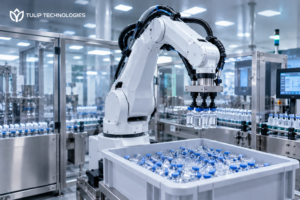
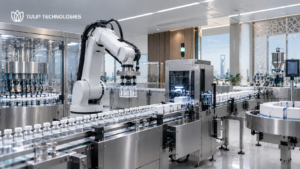
Robots are taking on an increasing role in repetitive movement of materials such as transporting vials, loading equipment, and packing finished products. It reduces the need for manual handling in controlled environments and allows operators to concentrate on tasks requiring human judgment and problem-solving skills.
Getting Started With Zero-Touch Manufacturing
Manufacturers need not automate everything immediately. A good place to start is to identify the manual process on the shop floor that is most prone to errors or consumes the most time. This may be paper batch records, manual equipment checks, or inconsistent work instructions. Solving one problem well generates internal confidence and gives a template for expanding automation elsewhere in the facility over time.
Final Thoughts
Zero-touch manufacturing is changing the way pharma companies in Saudi Arabia think about manufacturing. The benefits of improved compliance, faster cycles and less risk of contamination are huge. There are risks, from upfront costs to cybersecurity concerns, but they are manageable with careful planning. Manufacturers who begin small, invest in training and opt for flexible technology platforms are best positioned to succeed with this shift.
Want to bring zero-touch principles to your pharma facility? Tulip’s frontline operations platform allows manufacturers to connect people, machines, and data on one flexible system, without ripping out existing equipment. See how Tulip can transform your production floor and see in practice what a connected, compliant, and efficient facility looks like.
Automate Your Pharma Line with Tulip Technologies
Moving toward zero-touch manufacturing doesn’t mean starting from scratch. Tulip designs ready-to-deploy and fully customized robotic systems built for demanding production environments, including pharma. Their AI and industrial vision solutions support automated quality checks, while Industrial IoT tools connect equipment for real-time monitoring. Combined with expert robot deployment and factory optimization services, Tulip helps manufacturers in Saudi Arabia reduce manual handling, improve compliance, and modernize operations without disrupting existing production lines. Talk to us about the right automation fit for your facility in KSA.
Frequently Asked Questions
What is zero-touch manufacturing?
It is a production approach that uses automation and connected systems to minimize manual human intervention.
Is zero-touch manufacturing safe for pharma products?
Yes, it often improves safety by reducing contamination risk and human error in sensitive processes.
How much does zero-touch manufacturing cost to implement?
Costs vary widely based on scale, but a phased rollout starting with one process helps manage upfront investment.
Can zero-touch systems work with older pharma equipment?
Yes, though legacy equipment may need additional hardware or integration work to connect properly.
Does zero-touch manufacturing eliminate the need for human workers?
No, it shifts workers toward supervision, troubleshooting, and higher-value tasks instead of repetitive manual work.