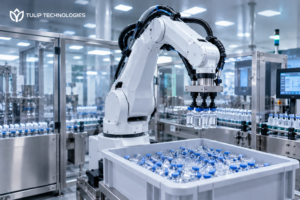
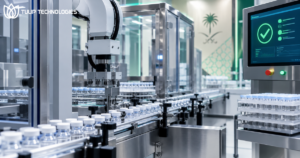
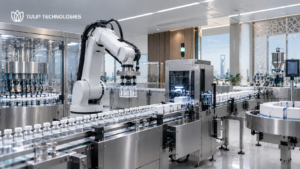
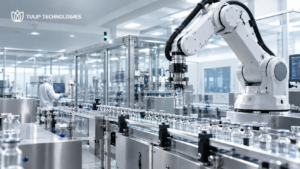
AI-Powered Vision Inspection is a technology-based quality inspection solution for industrial production lines. It utilizes an integrated system of cameras and artificial intelligence (AI) to perform visual inspections of products while they are produced. This technology allows manufacturers to conduct visual inspections of product shape, size, surface condition, and defects in real-time during the manufacturing process. Due to the speed and precision of machine vision systems, manufacturers can produce high-quality products consistently and minimize product defects. They can also reduce the likelihood of human error during visual inspection.
AI-Powered vision inspection uses machine learning algorithms with high-resolution cameras to create digital images of products as they exit the production line for visual inspections. The AI evaluates these images against predetermined standards for product quality. The systems are capable of detecting product defects, misalignments, and missing parts as they happen. As the AI engine gets the opportunity to see additional products over time, the quality of the inspection improves because the AI is learning from its experiences. These systems are designed to operate continuously and do not experience fatigue or have delays in their ability to perform inspections.
Why Is AI-Powered Vision Inspection Needed?
Factories today need to operate at high speed and high accuracy. Human beings can’t keep up with the pace or consistency of production. Manual inspection of products cannot adequately inspect the production of goods. By utilizing an AI-based vision inspection system, manufacturers can reduce production defects and rework costs by inspecting and rejecting inconsistent or non-compliant production products when they occur. The AI vision inspection system ensures consistent product quality and compliance and enables a higher level of production efficiency while reducing manufacturing waste. The system also provides data for process improvement, assisting manufacturers with better production decisions.
Components of AI-Powered Vision Inspection
The AI-Powered vision inspection system consists of all of the following components:
- industrial cameras
- proper lighting
- sensors
- AI software
- processing unit for information processing
- machine learning models for defect identification
- conveyors & actuators for the movement and rejection of product
- dashboard for reporting and reporting
All components of the AI-based vision inspection system work together for accurate, fast, and maximum production quality inspection in a factory environment.
The system includes industrial cameras, proper lighting, and sensors. AI software processes captured images. A processing unit handles data analysis. Machine learning models identify defects. Conveyors and actuators support product movement and rejection. A dashboard displays results and reports. All components work together for accurate, fast, and automated inspection in factory environments.
Procedure of AI-Powered Vision Inspection
Quality standards and defect parameters are defined, and the production line is equipped with cameras for scanning products as they move on conveyor belts. Cameras capture images of the products in real time, and AI software compares the images to reference data. Defects are flagged immediately in the system, so that rejected products are automatically removed from the production stream. A log of inspection records is maintained and provides a basis for future quality analyses. It ensures that quality checks are performed consistently and in a repeatable manner.
How Does It Work
The inspection takes place directly on the production line as products pass through the cameras at fixed intervals. The images captured by the cameras are processed by the AI algorithms in real-time, and decisions regarding whether or not to pass or fail are made immediately. Alerts indicating the presence of defective items trigger rejection mechanisms that remove defective products from the production line. The AI vision inspection system processes each product continuously without interruption or delay to the production process. The results of each inspection assist in improving production processes and maintaining high levels of production quality.
Benefits of AI-Powered Vision Inspection
Improved Product Quality
Through the real-time detection of defects and minor imperfections in products compared to a human inspector, it allows organizations to achieve consistent product quality across production lines in a factory environment. This can reduce recalls, improve customer satisfaction, and allow manufacturers to create uniform products.
Inspection Speed
It can analyze the condition of an item quickly enough that there are no interruptions to the production process due to inspection while managing large quantities of products. As a result, automated vision inspection systems enable increased production output levels and can accommodate high-volume production facilities with no delays in inspection.
Cost of Production
Detecting defects earlier in the process reduces the level of required rework and decreases the number of manual inspections needed. Over time, this combined effect can produce substantial overall cost savings and optimize resource usage.
Higher Accuracy and Consistency
An AI system offers consistent, reliable, and unbiased inspection. It uses the same standards for each product. There is no opportunity for human error, and the same level of quality will be maintained throughout all working shifts.
Data-Driven Process Optimization
The AI system records inspection data on an ongoing basis. Inspection data gives the manufacturer visibility into defect trends as well as issues with the manufacturing process. With this information, the factory can improve product quality, increase productivity, and improve the usefulness of its continuous upgrade initiatives.
Why Saudi Factories Need AI-Powered Vision Inspection
The manufacturing sector of Saudi Arabia is rapidly expanding through Vision 2030. Manufacturing plants are producing at higher volumes than ever and need to do so with precision and speed. AI vision inspection systems enable the factories to produce consistent-quality products, reduce dependence on labour, and meet international manufacturing requirements. AI vision inspection systems also support automation, minimize defect rates, and allow manufacturers to remain competitive. This type of technology is in alignment with a smart-manufacturing model that can improve the production capabilities of Saudi Arabia and assist plants in producing products both for the local market and for export.
Effect on Productivity
AI vision systems inspect products in real-time at the same rate as the product continues down the assembly line. Early defect detection reduces the amount of rework required, as well as downtime due to equipment malfunctions. Implementing an AI system improves the efficiency and throughput of the operation. As a result, manufacturing facilities produce more with a lower incidence of defects. The application of existing data from the inspection process provides manufacturers with an excellent opportunity to utilize that data to optimize their operating processes. It results in shorter cycle times, waste reduction, and productivity on an overall basis.
Industries in Saudi Arabia Using AI-Powered Vision Inspection
Manufacturing and Industrial Production
Manufacturing facilities in KSA are utilizing AI vision inspection extensively as a way of achieving QC and defect detection throughout their production process. It helps ensure greater accuracy throughout the assembly lines, metal fabrication, and plastic manufacturing operations. The system allows for greater consistency among the various manufacturing plants and reduces the amount of time spent reworking defective products. Furthermore, it can be used to support business processes and help manufacturers meet high-volume production demands. Manufacturers in Saudi Arabia also benefit from faster inspection processes than traditional QC methods when ensuring products meet international QC standards. This added benefit is especially valuable for the export-driven manufacturing industry.
Automotive & Auto Parts Industry
The automotive sector in Saudi Arabia is using AI vision systems to inspect individual automotive components and assembled vehicles. Components or assemblies can be inspected for surface imperfections (defects), misalignment of new models, or missing parts. Automating the inspection process provides greater safety, accuracy, and speed for the manufacturers that rely on the local manufacturing community to supply parts used in vehicles manufactured in KSA.
Food and Beverage Processing
In Saudi Arabia, food and beverage manufacturers are using AI-based vision inspection systems to help find hygiene issues. It makes sure that labels are applied correctly and checks that products are packaged accurately. This will allow them to detect issues such as contamination of products, defective seals on packaging, and inaccurate labelling on packages. This type of inspection also provides a solution for meeting the requirements for food safety standards, so that recalls can be reduced. By using real-time inspection capabilities, factory owners can run production at high speeds while continuing to produce high-quality products.
Pharmaceuticals and Healthcare Manufacturing
KSA-based pharmaceutical manufacturers utilise AI vision inspection in order to achieve integrity of packaging, accuracy of dosage, and labelling verification for their products. This also ensures that they are compliant with the regulations set forth by the Saudi regulations. Automating inspection procedures helps reduce human error and improve patient safety. This is important for all forms of medicinal product manufacturing, the manufacturing of medical devices, and the distribution of healthcare supplies in Saudi Arabia.
Logistics, Warehousing, and Packaging
It is employed by logistics and packaging centres that are located throughout Saudi Arabia. These systems are utilized to confirm the dimensions of all packages, to check barcode readings, and to verify the placement of products within the packaging. The use of AI for inspection purposes allows for greater accuracy when sorting packages and reduces the number of shipment errors that occur. This is extremely beneficial for the e-commerce, retail distribution, and exporting logistics hubs in Saudi Arabia.
Tulip Technologies – AI-Powered Vision Inspection Solutions in KSA
Tulip Technologies delivers advanced AI-Powered Vision Inspection systems for Saudi factories. Our solutions help manufacturers detect defects in real time, improve product quality, and automate inspections with high accuracy. Designed for industrial environments, our systems integrate smoothly with existing production lines. We support Saudi factories in achieving smart manufacturing goals aligned with Vision 2030 and global quality standards.
Smart Factory Automation with Tulip Technologies
With Tulip Technologies, Saudi manufacturers gain faster inspections, reduced waste, and data-driven insights. Our AI vision systems improve productivity while lowering operational costs. We customize solutions for different industries, including manufacturing, packaging, and assembly lines. Our expert team ensures smooth implementation, training, and ongoing support, helping factories scale and compete in local and international markets.
Ready to Upgrade Your Factory Quality Control?
Partner with Tulip Technologies to implement AI-Powered Vision Inspection in KSA. Improve accuracy, reduce defects, and boost productivity with smart inspection solutions tailored to your factory needs. Contact us today to start your smart manufacturing journey in Saudi Arabia.
Frequently asked questions
What industries can use AI vision inspection?
Manufacturing, packaging, automotive, electronics, and food industries.
Can it integrate with existing production lines?
Yes, it integrates seamlessly with most factory systems.
Does it work in high-speed production environments?
Yes, it supports real-time, high-speed inspections.
Is AI vision inspection customizable?
Yes, inspection rules are tailored to factory requirements.
Does Tulip Technologies provide local support in KSA?
Yes, Tulip Technologies provides full implementation and technical support to factories in Saudi Arabia.