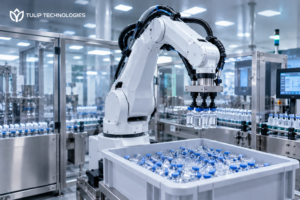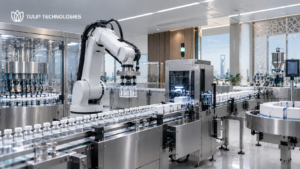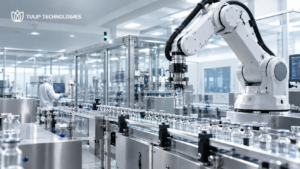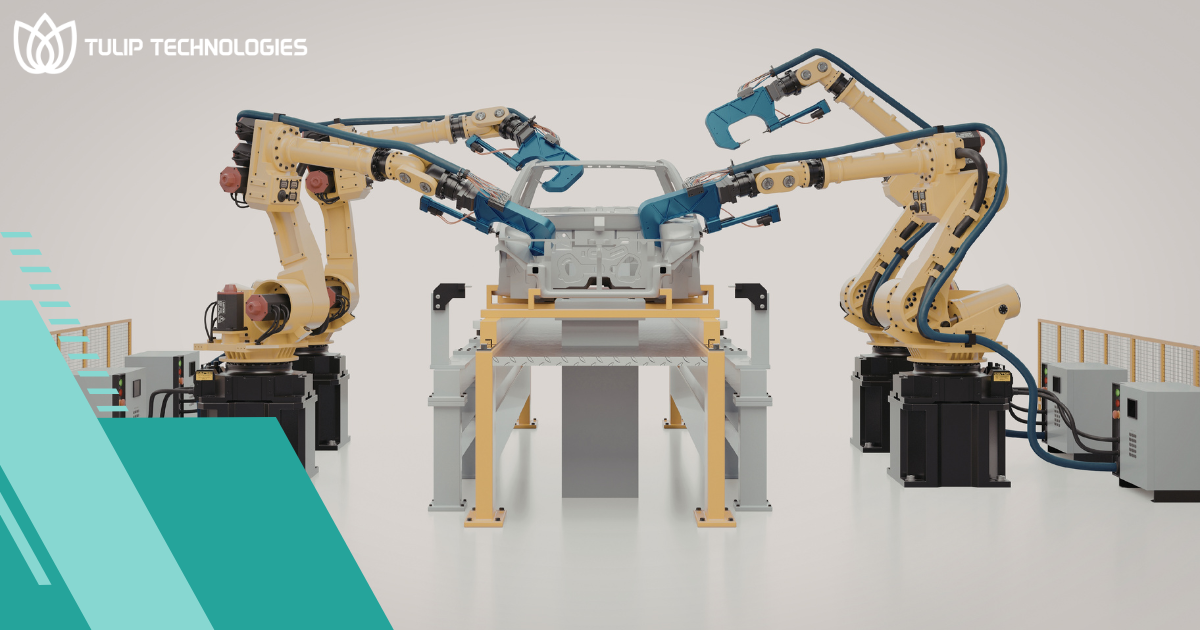
Global manufacturing is rapidly evolving through advanced technologies such as automation, data analytics, and connected systems. Smart factories use these technologies to improve efficiency, quality, and decision-making. Digital transformation is now essential for industrial sectors to stay competitive and innovative. Tulip Technologies supports this shift by enabling modern solutions. In Saudi Arabia, this transformation aligns with Vision 2030, which focuses on economic diversification and the modernization of industries beyond oil dependency.
Saudi Arabia is changing its manufacturing industry by implementing the idea of a smart factory. These factories embrace high-level digital applications, automation, and data to enhance efficiency and productivity. The nation is also putting much focus on decreasing its dependence on oil through the development of other industries like chemicals, automotive and electronics. Governments’ programs are playing a key role in making companies modern and adopt smart systems.
Connected machines and real-time monitoring are becoming part of many factories to enhance quality and minimize waste. This transition is supporting Saudi Arabia to develop a more competitive and sustainable industrial base and providing skilled job opportunities to its expanding workforce in a rapidly evolving global economy.
Key Drivers Behind Smart Factory Adoption in Saudi Arabia
Government Vision and Policies
Both industrial development and digital transformation are highly supported by the national development plans of Saudi Arabia. Companies are encouraged to use smart technologies and enhance efficiency through government initiatives. Businesses find it easier to modernize operations and shift to smart factory models, which are more consistent with long-term economic diversification objectives, due to financial incentives, investment in infrastructure and supportive regulations.
Economic Diversification Objectives
The nation is also working on decreasing reliance on oil through the growth of non-oil sectors. This is facilitated by smart factories that are more productive and open up new manufacturing sectors. Through investment in novel production techniques, Saudi Arabia can build its industrial base, generate foreign investment, and build a more balanced and resilient economy in the future.
Increasing the Need for Efficiency
The manufacturers are pressured to cut costs and boost the level of production. Smart factory technologies enable businesses to track processes in real time, minimize errors and optimize resources. This assists companies to stay competitive in the international markets whilst maintaining quality standards and cost-effectively enhancing overall operations.
Workforce Development Needs
The number of skilled workers proficient in the use of advanced technologies is on the increase. Smart factories promote training and development in such spheres as automation and data analysis. This assists in developing an educated workforce, fosters job creation and equips Saudi nationals with contemporary industrial jobs in an ever-digital manufacturing sector.
Global Competitiveness
Saudi manufacturers must embrace modernity to compete on the international level. Smart factories can produce more quickly and of superior quality, and be more adaptable. Such additions assist local businesses to achieve international standards, increase exports and make Saudi Arabia a powerhouse in the advanced manufacturing sectors both in the regional and international markets.
Significant Benefits of Smart Factories in Saudi Arabia
Improvement in Productivity
Smart factories use automation and real-time data to improve the production processes. This minimizes wastage of time and maximizes production without involving extra resources. The ability of manufacturers to manufacture more products but with the same quality gives them an opportunity to meet the increased demand and enhance their overall efficiency in a competitive industrial setting.
Reduction in Cost
Companies can save on waste, energy consumption and maintenance expenses using smart systems. Predictive technology can deal with equipment breakdowns, which is cost-saving in terms of maintenance. Effective management of resources reduces the cost of operation and raises their profits without compromising production quality and wastage on various processes involved in the manufacturing process.
Improved Quality of Products
Advanced monitoring systems will ensure that the production is of high quality. Data analysis and sensors can be used to identify defects in early phases, minimize errors, and enhance consistency. This means increased customer satisfaction and reduced returns that would cement the reputation of Saudi manufacturers in the local and global markets by being dependable and of quality goods.
Enhanced Flexibility
Smart factories can respond to market demands within a short period. This is flexible and enables manufacturers to manufacture various products without significant equipment modifications. Businesses are better equipped to address customer demands more quickly, handle disruptions in supply chains and remain competitive in a market where flexibility is vital to success over time.
Sustainable Operations
Smart factories help to sustain the environment through the minimization of energy and waste. Efficient systems maximize resource utilization and reduce emissions. This will assist Saudi Arabia in achieving environmental objectives and facilitating responsible industrialization, in that economic development is observed to be in line with the concepts of sustainability and the worldwide endeavors to conserve natural resources.
Modern Technologies Empowering Smart Factories
Saudi Arabia heavily depends on smart factories using various contemporary technologies. The Internet of Things is a system connecting machines and systems to communicate and monitor in real time. Artificial intelligence supports data analysis and the improvement of decision-making. Automation and robotics improve the production speed and reduce all kinds of human error.
Cloud computing allows one to store data and access the operations remotely. Advanced sensors monitor performance and identify problems early. The technologies are intertwined to provide a linked and smart manufacturing place. Through the adoption of these tools, companies will be able to enhance efficiency, cost reductions, and high-quality production and remain competitive in an ever-changing industrial landscape.
Outlook of Smart Manufacturing in Saudi Arabia
The future of smart manufacturing in Saudi Arabia is bright, since the country is still investing in digital transformation. An increased number of industries are likely to embrace modernized technologies to enhance efficiency and competitiveness. The involvement of the government and collaboration with the private sector will be instrumental in enhancing this growth.
Smart factories will become widespread throughout the country as better infrastructure is developed, and more talented individuals become available. This will boost the industrial sector, inspire international investors, and generate new employment. In general, smart manufacturing is bound to assist Saudi Arabia in creating a diversified and sustainable economy as well as making it a leader in the field of modern industrial innovations.
Building the Future with Smart Manufacturing
Smart factory transformation is reshaping how industries operate, making them faster, smarter, and more efficient. For Saudi Arabia, it plays a key role in strengthening the future economy and reducing oil dependence. With support from Tulip Technologies, this shift boosts global competitiveness and supports Vision 2030 as a foundation for sustainable industrial growth.
Frequently Asked Questions
How are smart factories helping Saudi Arabia?
They improve efficiency, reduce costs, and support economic diversification under Vision 2030.
What industries benefit most in Saudi Arabia?
Petrochemicals, automotive, food processing, and industrial manufacturing are key beneficiaries.
What challenges do companies face in adopting smart factories?
High costs, cybersecurity risks, and a shortage of skilled workers are major challenges.
Is smart manufacturing the future in Saudi Arabia?
Yes, it is expected to play a central role in modernizing industries and boosting global competitiveness.