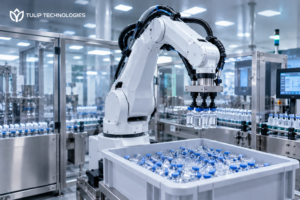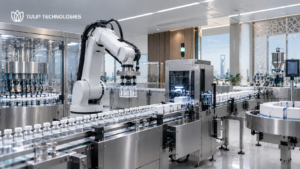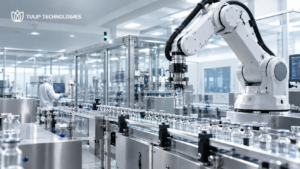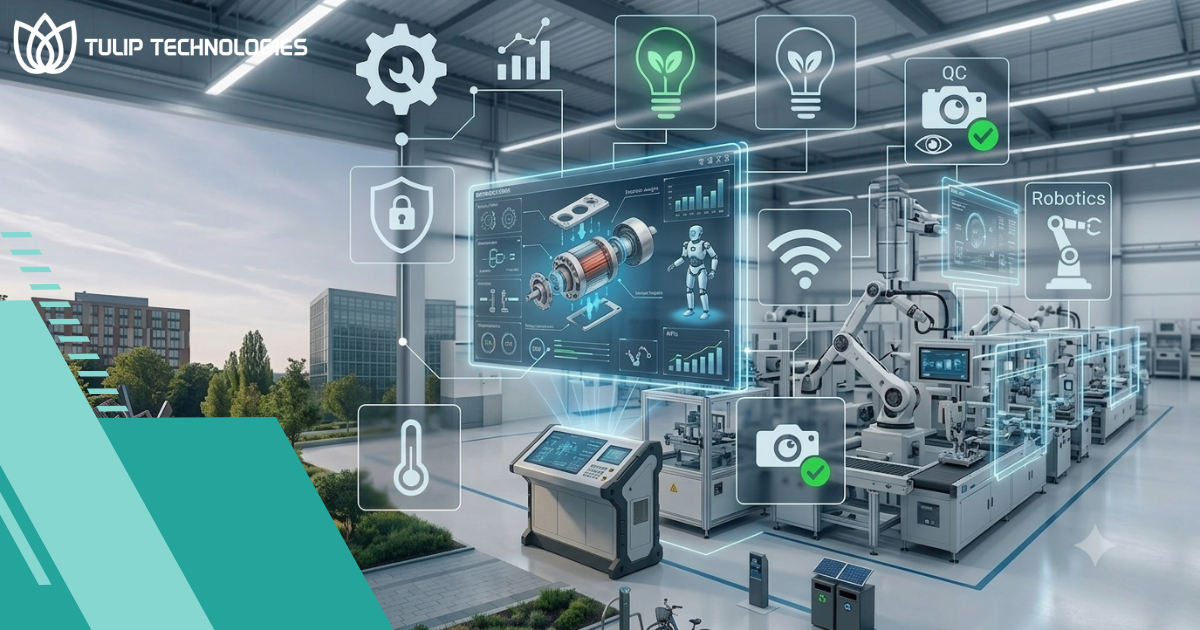
Visiting a modern manufacturing facility in Saudi Arabia today presents a very different picture than just a few years ago. Machinery interacts with one another. Information travels almost immediately. Managers can learn about problems before they arise. This is not an act of magic but rather is due to the technological capabilities of a smart factory, which has rendered all parts of the production process interconnected. Today’s factory owners in KSA understand that traditional methods belong to the past, and the use of paper-based documents, manual check-ups, and calculations only leads to money and time loss. This article will explain what modern manufacturers are, why they are important at the moment, and how the right tools can help companies run their operations efficiently.
Smart factory solutions refer to the systems and tools that enable factories to operate more efficiently and accurately. They employ a combination of sensors, software, and simple dashboards to provide clear information about what is occurring on the shop floor. Instead of relying on memory or paper reports, team members receive real-time status updates. This ultimately saves hours of work every week while also minimizing minor mistakes that could lead to costly consequences.
Why Every Manufacturer Needs a Connected Factory
A connected factory integrates tools, machines, and people within one information system. When all the parts of the factory exchange information with each other, problems are easily detected and solved quickly. Workers no longer have to search for information in different places and can get everything they need from one source.
Manufacturers gain real benefits once they connect their factory floor properly. Some of the biggest wins include:
- Faster response when a machine slows down or stops
- Clear visibility into production numbers at any hour
- Less paperwork and fewer manual errors
- Better teamwork between shifts and departments
Once these pieces click together, a connected factory becomes the backbone of daily decisions.
Factory Automation Software That Saves Time and Money
Factory automation software takes away the necessity for people to do monotonous work and assigns it to machines. This does not mean eliminating humans from the workforce. It means people will not have to do boring, repetitive work and will work on tasks that require their judgment. Good robotic software will track performance in the background, thus providing the management with reliable data without any effort on their part.
The Industry 4.0 Technologies Impact on 2026
The Industry 4.0 technologies are no longer limited to large companies only. Nowadays, even small plants have started to implement the technologies. The reason is that the price has become lower and the installation has become easier. Sensors, cloud platforms, and smart dashboards are going to give a whole picture of production efficiency in the present year. At the moment, more factories choose such flexible technologies instead of rigid ones.
- Sensors that track machine health in real time
- Cloud-based dashboards for remote monitoring
- Simple mobile apps for floor workers
- Predictive alerts that warn before a breakdown happens
These tools do not just look good on paper. They change how fast a team can react and how confident a manager feels about daily output.
Real Time Data and Smarter Decisions
Manufacturers are constantly striving to improve their decision-making times. Thanks to real-time data, efficiency is possible, as all uncertainties that previously caused delays are eliminated. When managers have access to the current quality, speed, and downtime figures, they are able to pursue instant action rather than waiting for a weekly report. This alone allows for saving many times more money monthly.
Choosing the Right Partner for Smart Factory Solutions
Choosing a suitable partner for factory automation in Saudi Arabia is equally important to choosing the right tools. A good partner is expected to know more about your factory, employees, and goals before suggesting any type of system. The chosen partner should be there for you after the installation and not be limited to the initial setting process. The partner you are looking for listens first and builds its solutions around concrete conditions at your factory.
Tulip for Smart Factory Solutions in Saudi Arabia
Manufacturers in Saudi Arabia are looking to Tulip Technologies to upgrade their manufacturing processes. They offer software, automation tools, and robotic arms that suit the demands of the factory, allowing manufacturers to connect their processes to a single, user-friendly software application. This allows anyone to use it regardless of their technological background or knowledge. The outstanding feature of Tulip automation tools is how easily they adapt to existing setups. Factories do not need to replace old systems if they want to locate common areas of their operations. Instead, Tulip connects their smart tracking and automation software to the existing systems, providing manufacturers with immediate results. Hence, Tulip is the right solution for manufacturers seeking to develop their production businesses successfully.
Conclusion
Industrial digital transformation in Saudi factories and manufacturing units is changing into intelligent ecosystems. This industrial transformation is directly supporting the Saudi Vision 2030 by boosting production capabilities. The factories can do predictive maintenance. The sensors track the equipment health and predict any failures before they occur. This way, they reduce downtime and extend the lifespan of machinery and equipment. Every factory owner in Saudi Arabia must connect with smart automation to boost his production volume smartly.
Frequently Asked Questions
What is the main goal of smart factory solutions?
The main goal is to reduce manual work and give managers clear, accurate data so they can make faster and better decisions every day.
How long does it take to set up a connected factory?
Setup time depends on plant size, but most manufacturers see basic connections working within a few weeks, with full benefits growing over the following months.
Is factory automation software expensive for small manufacturers?
Not anymore. Many providers now offer flexible pricing, so even small plants can start small and expand their automation software as they grow.
Do workers need special training for Industry 4.0 technologies?
Most modern platforms are built to be simple. Workers usually need only a short training session before they feel comfortable using the new tools daily.