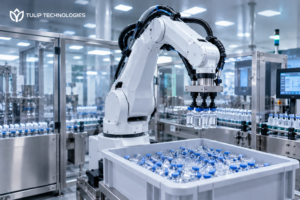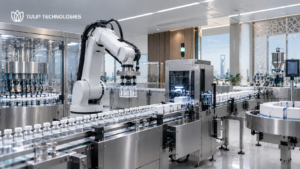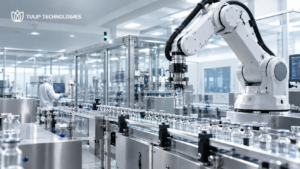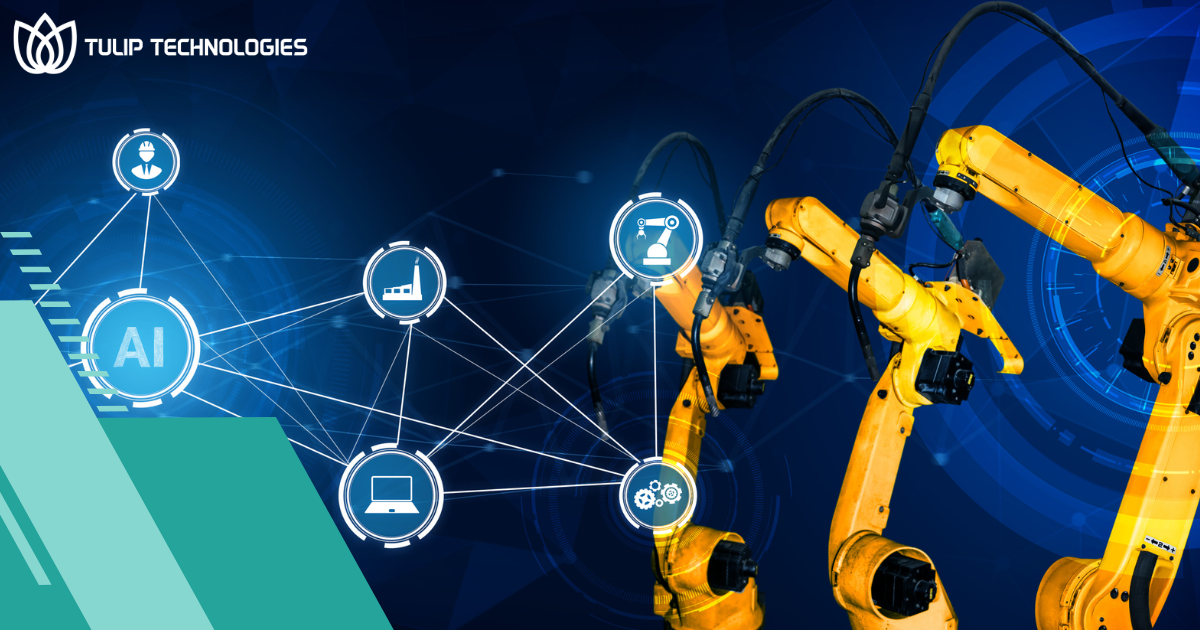
Industrial robot has become a cornerstone of modern manufacturing and production environments, transforming how goods are designed and assembled. Industries such as automotive, electronics, pharmaceuticals, logistics, and food processing are increasingly relying on automation. The shift from manual labor to human-robot collaboration, including cobots and robotic platforms, is accelerating.
Tulip Technologies supports this evolution, as according to them, industrial robot training is essential for competitiveness and growth.
Training industrial robots provides human resources with the knowledge and hands-on skills necessary to operate, program, and maintain robotic systems in the current manufacturing environment. It helps the staff in learning about safety measures, machine interfaces, and automation processes. As the use of robotics in various industries increases, training allows us to maintain a smooth cooperation between humans and machines.
Moreover, such training programs increase work efficiency, minimize mistakes, and improve safety in the workplace. Employees are taught how to troubleshoot, make the most of robot performance, and adjust to new technologies. Firms can achieve more efficiency and less downtime. In general, the training of industrial robots is needed to develop a professional workforce that can effectively help with advanced manufacturing and Industry 4.0 transformation.
Reasons Why Your Workforce Needs Industrial Robot Training
Increased Safety in the Workplace
Training industrial robots is very effective in enhancing safety in the workplace by exposing workers to how to deal with automated systems safely. Employees are taught about different safety zones, emergency shutdown and hazard awareness. Involving proper training also reduces sudden accidents, damages equipment and adherence to safety standards. It establishes a more controlled manufacturing environment in general; it is safer.
Better Productivity and Efficiency
Training also increases productivity as the workers are equipped to work with machines efficiently and minimize downtime. The employees acquire programming, monitoring, and optimizing robotic processes skills. This results in a reduction in the number of errors and increased production cycles. Professionally trained employees can maximize production but sustain quality levels throughout the manufacturing activities and increase overall efficiency.
Decreased Cost of Operation
It will help minimize the cost of operation since it will reduce errors, downtime, and misuse of equipment. Experienced workers take better care of machines and avoid expensive breakdowns, which improves the use of resources and reduces maintenance costs. By streamlining workflow and cutting wastage, companies save money, and the manufacturing process becomes cost-effective and more efficient as a result.
More Technologically Adapted
Employee training enables them to adjust swiftly to the fast-changing manufacturing technologies. Employees get acquainted with novel robotic systems, software upgrades, and automation tools. This flexibility provides easy migration when upgrading. A workforce that can adopt innovation, embrace new technologies and be competitive in advanced industrial settings is a strong aspect of companies.
Enhanced Workforce Confidence
The training of industrial robots instills confidence in employees as they get to experience the use of advanced machines. Employees obtain confidence in their skills to work with complicated systems in a safe and efficient way. The result of this confidence is an increase in performance, decision-making and less reluctance to perform automated tasks in the contemporary manufacturing setting, in general workplace development.
Key Skills Developed Through Robot Training
The training of industrial robots builds a broad spectrum of technical and analytical skills that are critical in the current manufacturing environment. Robot programming, system operation, maintenance, and troubleshooting are taught to the employees. They also learn about sensors, control systems and automation software. Training increases problem-solving skills and pays better attention to detail.
Teamwork and communication skills are enhanced since the workers work with engineers and technicians. Also, training encourages flexibility while using any new technologies and for lifelong learning. All these skills equip workers with higher levels of industrial work and enhance the general productivity, efficiency and innovation in the automated manufacturing setups.
Different Types of Industrial Robots and Training Requirements
Articulated Robots
Articulated robots are popular in the manufacturing industry because they have flexible jointed arms imitating human movement. These robots are trained to concentrate on programming multi-axis motion, mechanical joint maintenance and sensor calibration. Safety measures and accuracy control are also taught to the workers. Such robots demand high levels of operational knowledge in order to perform welding, assembly, and material-moving activities in a factory setting.
SCARA Robots
SCARA robots are typically utilized in electronics manufacturing, pick and place, production, and in more precise tasks. Training is oriented towards horizontal movement programming, cycle time optimization and tool calibration. Operators are trained in setting up systems, maintenance and troubleshooting. These robots have moderate programming requirements and are best suited to high-speed, repetitive jobs in the controlled production setting where precision and efficiency are always needed.
Cartesian Robots
Cartesian robots work in three linear directions and have common applications in CNC machining, 3D printing, and material handling. Training encompasses coordination system programming, linear motion control and precision alignment. Maintenance, calibration and safety procedures are taught to operators. These robots are easy to program, very precise and can be used in tasks where straight-line movements are needed, in organized industrial settings where precision is controlled.
Delta Robots
Delta robots are fast parallel robots that are primarily employed in packaging, sorting, and food processing. Training is on kinematic control, high-speed coordination, and integration of a vision system. Programming is taught to operators to quickly pick and place items and perform maintenance on lightweight structures. These robots need timing and accuracy and would suit quick repetitive tasks in a clean and controlled environment.
Tips for Companies to Implement Effective Robot Training Programs
Start with Clear Learning Objectives
The companies are advised to establish specific learning objectives prior to initiating robot training programs. This makes employees know the anticipated results and abilities. Organized objectives aid in the alignment of training with production requirements and safety levels. Clear goals enhance focus, efficiency in learning and enable objective evaluation of employee progress in industrial settings, which creates a consistently achieved result.
Present Practical Training
Effective learning of industrial robots requires hands-on training. To develop trust and real experience, the employees are to engage directly with robotic systems. Retention of skills is enhanced by simulated practice and real-world practice. This will minimize the mistakes, increase awareness of safety, and make workers ready to work in factories.
Continuous Skill Assessment
The constant evaluation of skills guarantees that the employees retain and enhance their skills in operating robots over time. Frequent assessments assist in determining knowledge gaps and offer room to improve it. Firms can tailor training initiatives according to performance statistics. This improves efficiency, safety and productivity in automated manufacturing settings in the long term.
Keep Things Updated and Upgraded
The companies should make sure that training programs are also updated frequently to align with the changing robot technologies and software updates. This keeps employees abreast of industry developments. Revised training information enhances flexibility and effectiveness. Periodic refresher courses assist workers in staying competent, reducing mistakes, and allowing the successful incorporation of new robotic systems into production lines.
Future-Ready Workforce Through Robot Training
Industrial robot training remains essential for workforce readiness in an automated future. Businesses must invest in human capital alongside machines, and Tulip Technologies emphasizes that training bridges the gap between technology and workforce capability. Companies that prioritize robot training will lead in innovation, efficiency, global competitiveness and long-term growth.
Frequently Asked Questions
Who needs robot training in a company?
Operators, engineers, technicians, and maintenance staff are involved with automated systems.
How long does robot training take?
It varies from a few weeks for basic training to several months for advanced robotics expertise.
Is robot training expensive?
Initial costs can be high, but they reduce long-term operational costs and increase efficiency.
Can non-engineers learn industrial robotics?
Yes, with structured training programs, even non-engineers can learn to operate and maintain robots.